
ASE/EM Ph.D. Student Earns NASA Fellowship
UT Austin aerospace engineering Ph.D. student Cade Armstrong has earned an NSTGRO fellowship to advance research in satellite constellation design for future lunar missions.
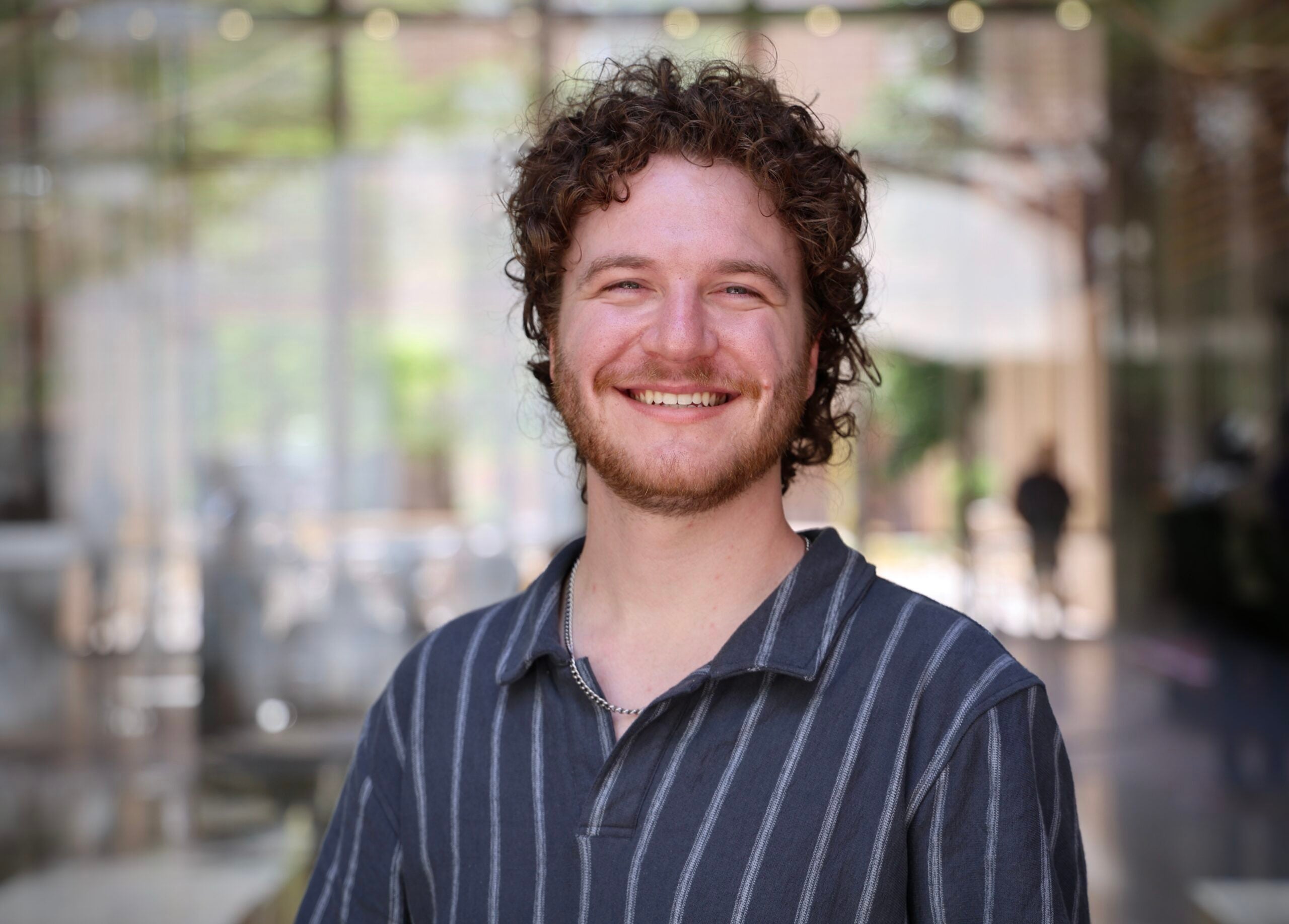
Cade Armstrong, a Ph.D. student in the Department of Aerospace Engineering and Engineering Mechanics, has been selected for a 2026 NASA Space Technology Graduate Research Opportunity (NSTGRO) Fellowship. The prestigious program supports graduate researchers with the potential to advance innovative space technologies aligned with NASA’s science, exploration and technology goals.
NSTGRO fellows receive financial support to conduct graduate research and are paired with NASA researchers who serve as collaborators. The program also provides opportunities to participate in annual Visiting Technologist Experiences at NASA centers, connecting university research with the challenges of developing and operating future space missions. Armstrong will have the opportunity to spend four summers at NASA centers, including Johnson Space Center in Houston, where his primary collaborators are based.
“Cade went to UT, his parents went to UT. He bleeds burnt orange,” said his advisor, Luke Peterson. “When I was a Ph.D. student, NSTGRO was the fellowship everyone wanted to receive. Growing up in Dallas, studying in Austin and researching at Johnson Space Center in Houston, Cade’s story reflects the opportunities made possible through publicly funded education and research, particularly here in Texas.”
Cade Armstrong
Ph.D. Student, Aerospace Engineering
Advisors: Ufuk Topcu, Ph.D. and Luke Peterson, Ph.D.
Research Focus: Cislunar Satellite Constellation Design
My research focuses on developing methods to design satellite constellations for cislunar space, the region between Earth and the moon. As space agencies work toward establishing a sustained human presence on the moon, satellite constellations will play an important role in providing navigation, communication and space situational awareness for astronauts and spacecraft.
Designing these systems presents unique challenges because the gravitational dynamics of cislunar space are complex and can make spacecraft motion difficult to predict. I combine tools from computational dynamical systems and control theory to develop methods that account for both the natural dynamics of the region and a spacecraft’s ability to control its motion. My goal is to design constellations that are fuel-efficient, resilient to instability and capable of supporting long-duration lunar missions.
Through NSTGRO, I will collaborate with NASA researcher Dr. Stephen Scheuerle and participate in annual Visiting Technologist Experiences to work alongside NASA engineers. These opportunities will help connect my research to the practical challenges of future lunar missions, particularly those supporting NASA’s Artemis program.
Receiving this fellowship means a great deal to me because I have wanted to contribute to space exploration since developing my interest in astrodynamics in high school. The opportunity to work with NASA engineers and lead a research project developed with my co-adviser, Dr. Luke Peterson, is especially exciting.
After completing my doctorate, I plan to pursue a faculty position and lead a research group focused on mission design in cislunar space and other multibody environments throughout the solar system.