Aerospace Engineering Graduate Program
Top-Ranked Graduate Education
The Aerospace Engineering (ASE) graduate program at The University of Texas at Austin is a top-10 nationally ranked program where students perform world-class research under the supervision of distinguished faculty. Students have the opportunity to complete advanced study and research leading to the Master of Science degree and the Doctor of Philosophy degree. Our graduates go on to pursue careers as engineers, scientists, inventors, astronauts, administrators, and leaders in the field of aerospace engineering.
Degree Programs
We offer advanced study and research leading to the Master of Science in Engineering degree and the Doctor of Philosophy degree in aerospace engineering. The normal prerequisite for graduate study is a Bachelor of Science degree in aerospace engineering or in a related field of engineering. Graduate study is possible for those with degrees in science or mathematics, but some undergraduate coursework will be needed to make up any deficiencies.
There are two requirements for Ph.D. candidacy in the aerospace engineering program:
- Passing the written qualifying exams.
- Passing the oral qualifying exam.
Further requirements to complete a Ph.D. degree include:
- Completing any required coursework.
- Complete annual reviews (due April 15th).
- Completing a dissertation and passing a final oral examination.
Thesis/Report Option
To obtain a Master of Science in Engineering, students must complete 30 credit hours. Students enrolled in the Thesis/Report option will complete either 24 hours of coursework plus 6 hours of supervised research thesis (ASE or EM 698A and 698B) or 27 hours of coursework plus 3 hours of supervised research report (ASE or EM 398R). Up to 6 hours of upper-division undergraduate coursework may be included in the required coursework. A faculty advisor is chosen by the student with the advisor’s agreement. The student’s advisor will approve the Program of Work (PoW) and supervise their research. In the case of the Master’s thesis, the supervised research must be taken in two consecutive semesters. For both the Thesis and the Report, the final research course must be taken in the semester of graduation.
Coursework Option
To obtain a Master of Science in Engineering, students must complete 30 credit hours. Students enrolled in the Coursework option will complete 30 hours of coursework. Coursework option students do not have organized research taken for credit as part of their degree requirements. Up to 6 hours of upper-division undergraduate coursework may be included in the required coursework. The student’s faculty advisor (normally the Area Coordinator) will approve their Program of Work (PoW).
Entrepreneurship Specialization
The new Space Tech Graduate Specialization for master’s and doctoral students, open to all areas of study in the ASE graduate program, is comprised of topics in aerospace tech with a solid foundation in business and entrepreneurship.
Areas of Study
Aerothermodynamics and Fluid Mechanics
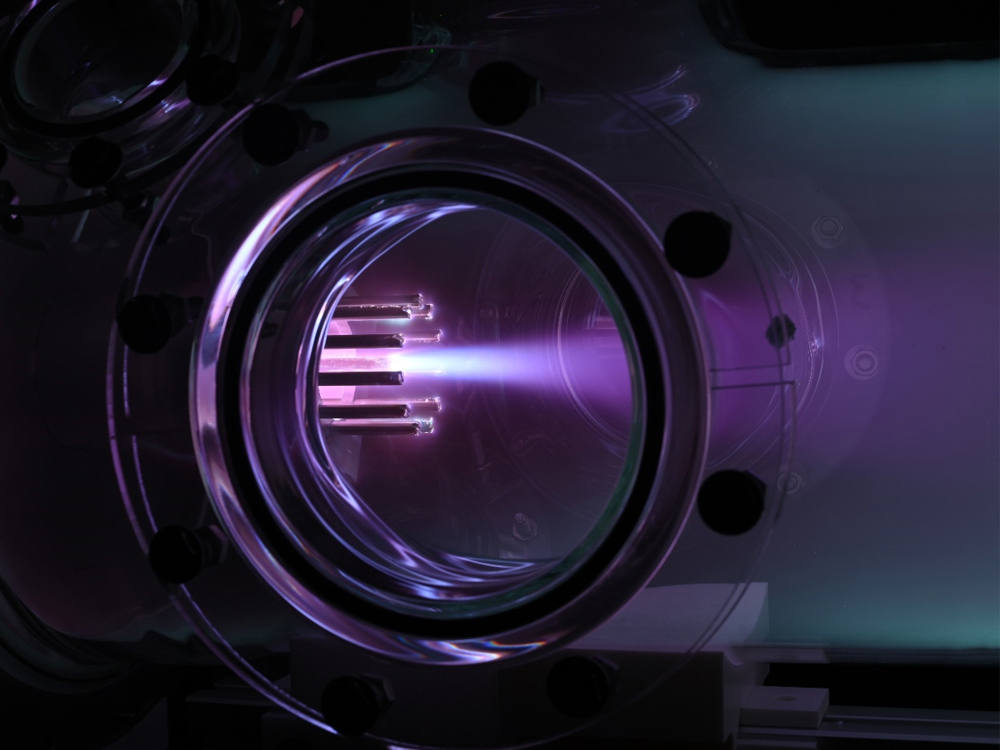
This area involves research in hypersonics, aerodynamics, turbulence, plasma science and engineering, mixing combustion and gas dynamics in space science.
Estimation, Decision-Making, Control for Aerospace and Robotic Systems
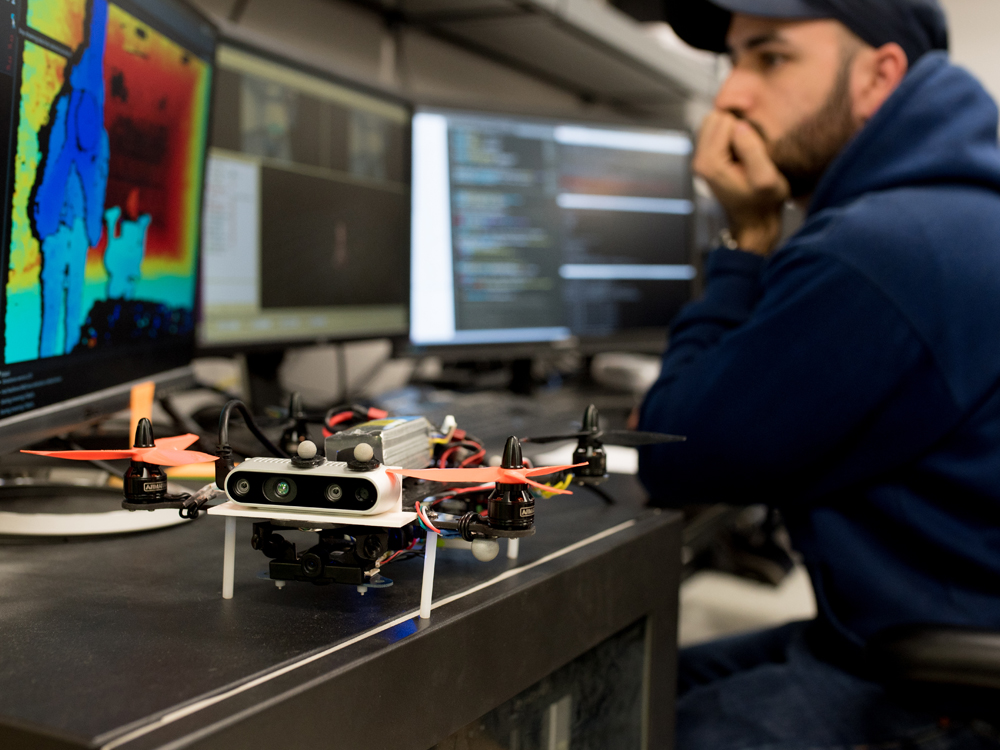
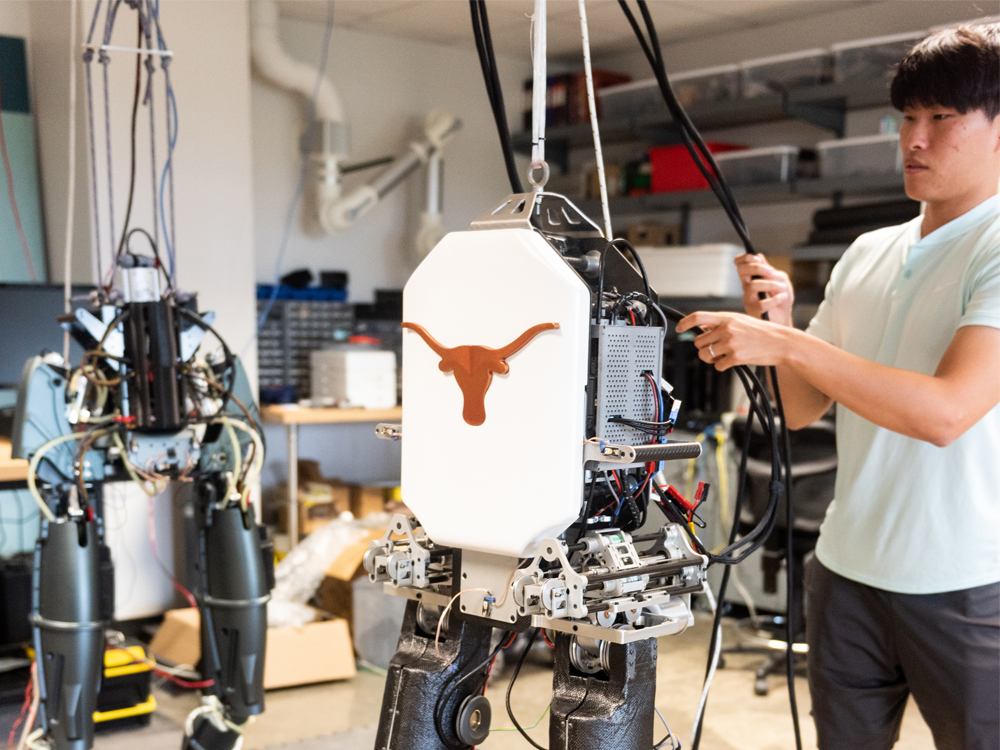
This area involves research in system theory, controls, networks, autonomy, and robotics with applications to the navigation, guidance, control, and flight mechanics of space, air, sea, and land based vehicles.
Solids, Structures and Materials
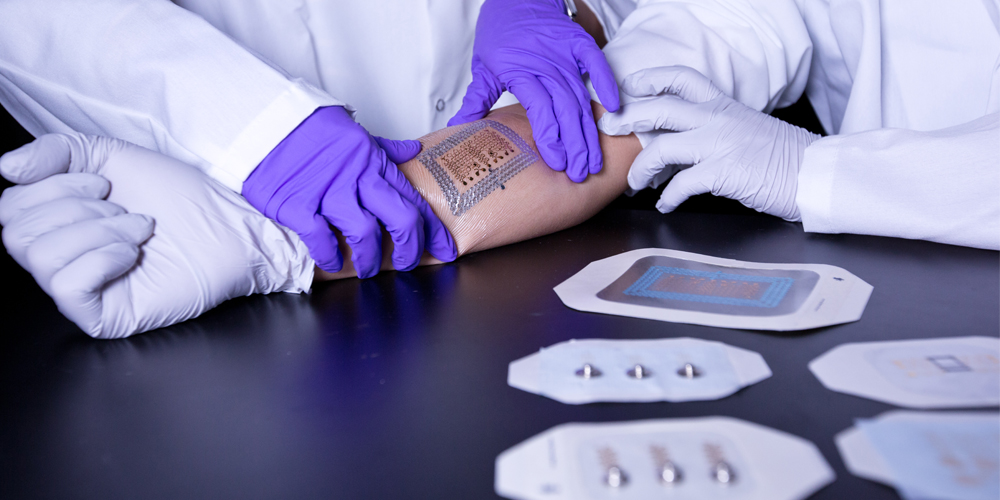
This area involves study and research in mechanics of composite materials, fracture mechanics, nano and micromechanics of materials, biomaterials, soft materials, constitutive equations, mechanical behavior at high strain rates, structural analysis, and structural stability.
Space Systems and Astrodynamics
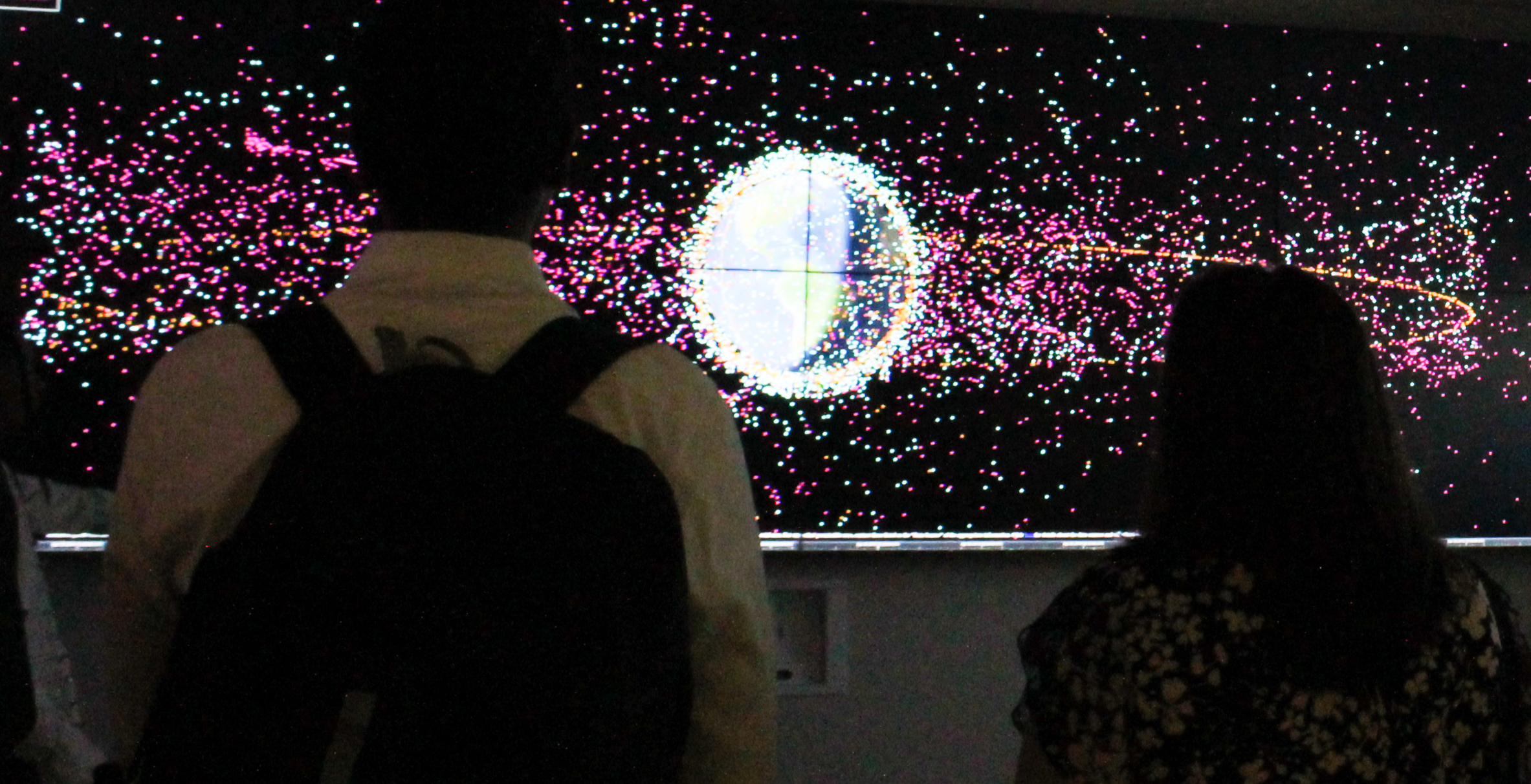
This area involves study and research in orbital mechanics, space geodesy, and remote sensing in the context of spacecraft and celestial bodies. Research in this area is motivated and sponsored by customers including NASA, Department of Defense, other governmental agencies, and the rapidly growing commercial space industry.
Contact an Advisor