
2020 ASE/EM Academy of Distinguished Alumni
Ten alumni and one honorary faculty member of the Department of Aerospace Engineering and Engineering Mechanics at The University of Texas at Austin have been elected to the 2020 class of the ASE/EM Academy of Distinguished Alumni.
The ASE/EM Academy of Distinguished Alumni was established in 2019 with the vision to foster excellence within the aerospace engineering, engineering mechanics and computational engineering programs in the UT Austin ASE/EM Department through recognition, participation, encouragement and support of the department.
Members are recognized and honored by the Academy for leading distinguished careers that include outstanding technical contributions, excellence in leadership and dedication to improving communities. These distinguished alumni include professors, entrepreneurs, government and industry leaders, astronauts, pilots, researchers and more.
The members elected to the ASE/EM Academy of Distinguished Alumni for 2020 are:
Richard Cook
Associate Director for Flight Projects and Mission Success, NASA Jet Propulsion Laboratory
B.S., Engr. Physics, University of Colorado Boulder (1987)
M.S., Aerospace Engineering, The University of Texas at Austin (1989)
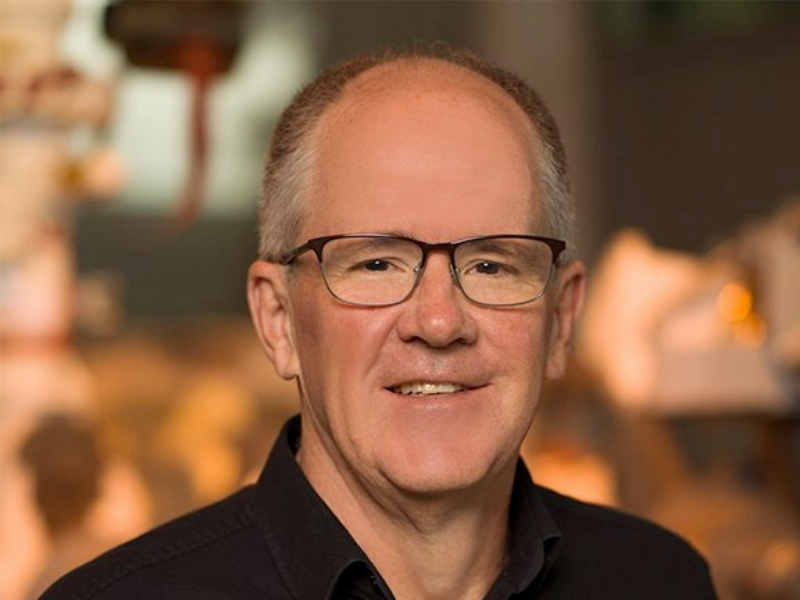
Richard Cook is Associate Director for Flight Projects and Mission Success at NASA’s Jet Propulsion Laboratory. In this capacity, he is responsible for overseeing all ongoing and planned flight mission design, development and flight operations activities.
Cook received a B.S. degree in engineering physics from the University of Colorado and an M.S. degree in aerospace engineering from The University of Texas at Austin.
In 2013, Cook was appointed Deputy Director for Solar System Exploration, after having previously served as Manager and Deputy Manager for the Mars Science Laboratory Project during development and operations. In those capacities, he was responsible for the design, development, launch and operations of the “Curiosity” rover that successfully landed on Mars in August 2012.
Prior to that, Cook was the Flight System Manager for the Mars Exploration Rover Project during development and served as Project Manager during the primary science operations phase. He served as the Mars Surveyor Operations Project Manager during the MGS & Mars ’98 missions. His Mars Program involvement started with the Mars Pathfinder mission, for which he served as Project System Engineer and Mission Manager. Cook began his JPL career in 1989, working on navigation and mission design.
George W. Davis
CEO, Emergent Space Technologies, Inc.
B.S., Aerospace Engineering, The University of Texas at Austin (1987)
M.S., Aerospace Engineering, The University of Texas at Austin (1990)
Ph.D., Aerospace Engineering, The University of Texas at Austin (1996)

George W. Davis is the Founder and CEO of Emergent Space Technologies, Inc., an aerospace engineering and software development firm headquartered in Laurel, Maryland. His research interests include spacecraft autonomy for distributed space missions and GPS-based positioning, navigation and timing.
Davis received his B.S., M.S. and Ph.D. in aerospace engineering from The University of Texas at Austin.
He began his career in 1996 at the Colorado Center for Astrodynamics Research at the University of Colorado as a post-doctoral research scientist. In 1997, he moved his family to Maryland to join the Orbital Sciences Corporation and support the NASA Goddard Space Flight Center in the development and testing of spaceborne GPS navigation technology. In 2000, he took a brief hiatus from the aerospace industry and joined Appnet, an information technology company that built websites for commercial and government clients. In 2001, he returned to the aerospace industry to found Emergent to provide technical services and technology development support to NASA and the Department of Defense. For example, Emergent delivered flight software to DARPA in 2014 called the Cluster Flight Application Suite that will be used to support autonomous clusters, constellations and swarms of small satellites for a number of civilian, military and intelligence community space missions and programs over the coming years.
Davis has regularly served on the ASE/EM External Advisory Committee since 2005, including a stint as the committee chair. In this capacity, he advised the ASE/EM department on technology, business and hiring trends in the aerospace industry from a small business perspective. In addition, Emergent actively recruits UT aerospace engineering students as interns and employees, making UT the most represented university in the company. Davis is a member of the AIAA and the ION.
He lives with his wife, Elizabeth, also a University of Texas graduate, in Ellicott City, Maryland. Their three children, Tristan, Graham and Kieran, have left home and are in various stages of their college and professional lives. When he is not working, Davis enjoys exercise, reading and playing golf and softball in NASA GSFC leagues, and he recently returned to coaching youth basketball.
Noboru Kikuchi
President, Toyota Central R&D Laboratories, Inc.
B.S., Civil Engineering, Tokyo Institute of Technology (1974)
M.S., Engineering Mechanics, The University of Texas at Austin (1975)
Ph.D., Engineering Mechanics, The University of Texas at Austin (1977)
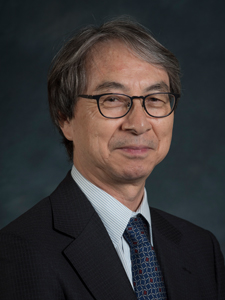
Noboru Kikuchi is the president of Toyota Central R&D Laboratories, Inc., the advanced research institution of the 16 Toyota Group Companies, including Toyota, Denso, Aisin, Shoki and others, located outside of Toyota and Nagoya in Japan.
Noboru received his B.S. in civil engineering from Tokyo Institute of Technology, Japan in 1974. Moving to the United States from Japan to further his studies, he earned his M.S. and Ph.D. degrees in engineering mechanics from The University of Texas at Austin.
Noboru remained at UT Austin as a post-doctoral researcher for Professor J. Tinsley Oden and became an assistant professor of the Department of Aerospace Engineering and Engineering Mechanics in 1979. In 1980, he moved to the University of Michigan at Ann Arbor as an assistant professor of the Department of Mechanical Engineering and Applied Mechanics. He was promoted to an associate professor in 1984 and to a professor in 1986. He was then appointed as the Roger L. McCarthy Professor of Mechanical Engineering in 2004. Noboru retired from the University of Michigan in 2015 and is now the Roger L. McCarthy Professor Emeritus of Mechanical Engineering at the University of Michigan.
While serving as a professor at the University of Michigan, Noboru became a visiting researcher at TCRDL, Toyota Central R&D Laboratories, Inc. in Japan and was appointed as a senior fellow in 2001. He became a board member of TCRDL in 2003 and was promoted to an executive vice president in 2009. Noboru was appointed as the president in 2014.
After his retirement from the University of Michigan, Noboru was appointed as a board member of TRI, Toyota Research Institute in Palo Alto, CA, a newly established advanced research and development company with applications in AI technology for autonomous driving and advanced robotics (2016 – 2018). Noboru also directs TRINA, Toyota Research Institute of North America, and Toyota Engineering and Manufacturing America, located in Ann Arbor, MI.
He was appointed as a senior technical executive in Toyota Japan to direct Toyota’s Frontier Research Center located in Japan as the president and chairman from 2017.
Noboru was elected as a foreign member of the National Academy of Engineering in 2017 for his work on computer-aided engineering in the automotive industry. He also serves on several national committees of the Ministry of Education and Science in the Japanese government to advise on science and technology policy and its implementation.
Noboru lives in Nagoya, Japan, while his wife, Nanae, lives in Ann Arbor, MI. Their eldest daughter, Ayako, lives in Chicago, IL, and their youngest daughter, Reina, lives in Tokyo, Japan.
David J. Korsmeyer
Associate Center Director for Research and Technology, NASA Ames Research Center – Silicon Valley, CA
B.S., Aerospace Engineering, Pennsylvania State University (1986)
M.S., Aerospace Engineering, The University of Texas at Austin (1988)
Ph.D., Aerospace Engineering, The University of Texas at Austin (1991)
M.S., Management and Sloan Fellow, Stanford University Graduate School of Business (2002)

David Korsmeyer is the deputy center director at NASA’s Ames Research Center in California’s Silicon Valley.
He is responsible for the overall scope and direction of the center’s operations, facilities, NASA research and development projects, and the external research collaborations with industry and academia.
Korsmeyer leads the Center’s overall efforts in research, science, and engineering developments that support NASA’s missions in aeronautics, science, exploration, and technology. A key achievement is the successful development of NASA’s next lunar rover – the VIPER or Volatiles Investigating Polar Exploration Rover. He was the director of engineering for six years and led a broad range of spacecraft projects, proposals, and core engineering support of technology demos, wind tunnels, and science experiments. Notably, he led the center’s expansion into small satellites and nanosats, including NASA’s numerous space biology instrumentation missions on the International Space Station (ISS).
Korsmeyer started his senior management service as the chief of Ames’ Intelligent Systems Division, NASA’s premier research and development organization for artificial intelligence, robotics, and adaptive software supporting aeronautics and space missions. Autonomy and advanced mission software were developed for the ISS, and for the Mars Exploration Rovers (Spirit and Opportunity) and every following Mars rover mission. At Ames since 1991, Korsmeyer has been instrumental in the formation and management of many projects and NASA-wide technology programs in his career. After receiving his Senior Executive Service certification in 2006, he supported key government initiatives, including the 2009 Presidential Review of Human Spaceflight and the 2020 Artemis Program Status Assessment. Korsmeyer regularly supports agency-level technology and engineering teams across NASA’s portfolio. He received a Meritorious Presidential Rank Award in 2011 and a Distinguished Presidential Rank Award in 2021.
Korsmeyer earned his bachelor’s degree in aerospace engineering from Pennsylvania State University in State College, Pennsylvania, and both his master’s and doctorate in aerospace engineering from The University of Texas at Austin. He is a Sloan Fellow with a master’s degree in management from Stanford University’s Graduate School of Business and is active in the International Astronautical Federation, the American Institute of Aeronautics and Astronautics, and the Institute of Electrical and Electronics Engineers.
Patrick Le Tallec
Professor, Institut Polytechnique de Paris, France
Ingénieur, Ecole Polytechnique, France (1976)
M.S., Civil Engineering, Ecole Nationale des Ponts et Chaussées, France (1978)
Ph.D., Engineering Mechanics, The University of Texas at Austin (1980)
Doctorat d’Etat, Université Pierre et Marie Curie, Paris
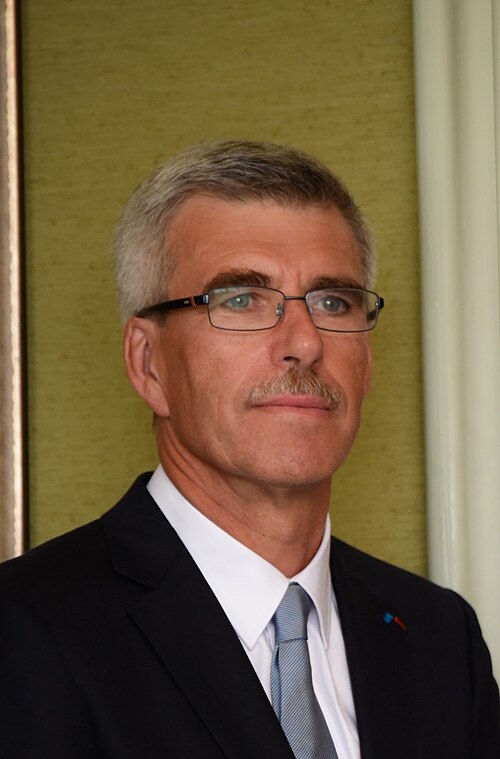
Patrick Le Tallec is a professor of mechanics at Institut Polytechnique de Paris. His field of research is concerned with applied mathematics and computational mechanics with applications to industry, transport and biomedical engineering. His current interests focus on the simulation of complex contact problems, of nonlinear multiscale structures, of architectured materials and on the multiscale modelling and analysis of soft materials.
A graduate from Ecole Polytechnique, Le Tallec holds a Ph.D. in engineering mechanics from The University of Texas at Austin (1980), and a thèse d’Etat in applied mathematics from Université Pierre et Marie Curie in Paris (1981). His full career has been in academics. He has served as a professor of applied mathematics at Université de Paris Dauphine, Research Director and Group Leader at INRIA (French National Institute for Research in Digital Science and Technology), a professor of mechanics at Ecole Polytechnique in Paris, Vice President for Education, holder of the chair André Citroën and head of the Laboratory of Solid Mechanics.
Le Tallec has been a visiting professor in various international universities, including the University of Wisconsin at Madison, the University of Minnesota, the University of Colorado at Boulder, Stanford University, Shanghai Jiao Tong University and the University of Wuhan in China. He has directed more than 40 Ph.D. students and authored seven books, together with more than eighty refereed papers in international journals. He has been a longtime collaborator with industrial companies such as Michelin, PSA Group and Dassault Aviation and is a scientific advisor at French Alternative Energies and Atomic Energy Commission.
Le Tallec has also served as president of the French Society of Applied and Industrial Mathematics. He was editor of the International Journal of Numerical Methods in Engineering and is member of the editorial board of Computer and Structures and of Computer Methods in Applied Mechanics and Engineering and AMSES.
He received a CISI award in Scientific Computing and the Prize Blaise Pascal of the French Academy of Sciences. Le Tallec is Chevalier des Palmes Académiques, Chevalier de la Légion d’Honneur and Officier de l’Ordre National du Mérite.
Le Tallec has five children, including one born in Austin.
Paul Lockhart
Director of Engineering, PEMDAS Technologies and Innovations
B.A., Mathematics, Texas Tech University (1978)
M.S., Aerospace Engineering, The University of Texas at Austin (1981)
Test Pilot School, United States Air Force (1991)
Royal College of Defence Studies, Ministry of Defence, United Kingdom (2004)
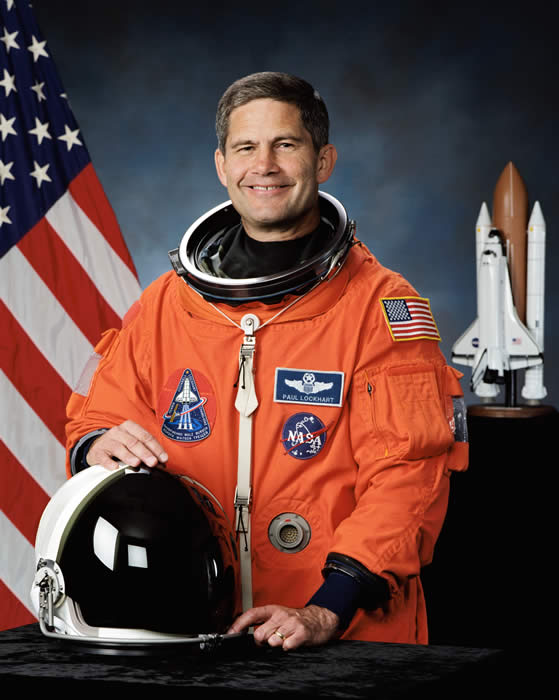
Paul Lockhart is the Director of Engineering for PEMDAS Technologies and Innovations, a Service Disabled, veteran-owned, Small Business founded by his wife, Mary Lockhart. He oversees the development lines for PEMDAS to include aircraft mounted atmospheric sensors, drone satellite antennas and data analytics for real-time weather predictions for the commercial and government aviation community.
Lockhart received his B.A. in mathematics from Texas Tech University and his M.S. in aerospace engineering from The University of Texas at Austin. He is also a graduate of the United States Air Force Test Pilot School and the Royal College of Defence Studies, London, England.
Commissioned in the Air Force in 1981, Lockhart served 26 years on active duty. During his service, he served as a fighter pilot in Europe and as an F-16 test pilot in the US. He was selected by NASA to become an astronaut in 1996. After the Shuttle Columbia disaster, Lockhart returned to the Air Force by attending the Royal College of Defence Studies in London, the United Kingdom’s military’s premier institution for grooming senior leadership. After graduation, he was assigned to the Air Staff, Headquarters USAF, Pentagon.
Retiring from the Air Force in 2006, Lockhart then spent two years at NASA headquarters as special assistant to the Associate Administrator and as NASA’s liaison to the Department of Defense and the National Reconnaissance Office. As an Air Force test pilot in the 1990s, Paul performed testing for the Air Force’s most current weapons technology. He was the first pilot to test a GPS weapon from an F-16 fighter aircraft, laying the foundation for much of America’s current precision weapons. As a NASA Astronaut, Lockhart twice piloted the Space Shuttle Endeavor to the International Space Station, directing six spacewalks in the repair and construction of the ISS. He accumulated over 26 days in space in support of these missions.
Later, in private industry as a senior executive for a NASA and DoD contractor, Lockhart directed the capture and execution of the $1.9 Billion Kennedy Space Center Engineering Services Contract. Since 2015, he has directed the design, development and testing for PEMDAS of a new class of atmospheric sensors for unmanned aerial systems for use by the Army Special Operations Command.
Lockhart currently serves on the Board of the Military Bowl, benefiting the USO and members of the Armed Forces, the Museum of the American Revolution in Philadelphia, PA, and the Aero-Club of Washington, DC. He is also a past chair and member of the ASE/EM External Advisory Committee at UT Austin. With over 5,000 hours in more than 30 different aircraft and the Space Shuttle, Lockhart is the recipient of the Defense Superior Service Medal, Defense Meritorious Service Medal, Air Force Aerial Achievement Medal, Commendation Medal, Outstanding Unit Award with Valor, National Defense Service Medal, Achievement Medal and numerous other service recognitions and ribbons. He is also the recipient of two NASA Space Flight Medals and one NASA Exceptional Service Medal. He is a distinguished graduate of both ROTC and the Air Force Squadron Officer School.
Lockhart lives outside Washington DC, with his wife, Mary. They have two daughters, Jenna and Mary. He and Mary are new grandparents. He is still seeking a good name for his new role and is accepting recommendations. Lockhart is an avid hunter and horseman.
Jerry L. McDowell
Deputy Laboratory Director/Executive Vice-President for National Security Programs, Sandia National Laboratories (Retired)
B.S., Aerospace Engineering, The University of Texas at Austin (1974)
M.S., Aerospace Engineering, The University of Texas at Austin (1975)
Ph.D., Aerospace Engineering, The University of Texas at Austin (1979)
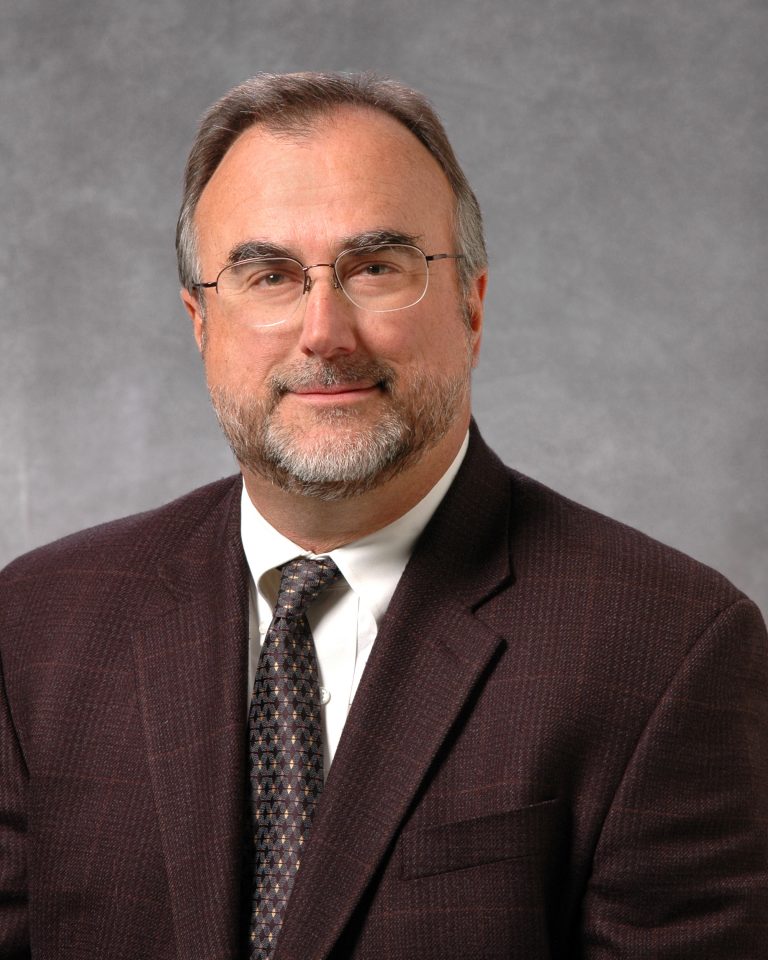
Jerry McDowell retired in 2015 from Sandia National Laboratories after a 34.5-year career that culminated in the position of Deputy Lab Director and Executive Vice-President. At Sandia, he had executive responsibility for over 5,000 employees and a budget in excess of $1.5B.
He received his B.S., M.S. and Ph.D. degrees in aerospace engineering from The University of Texas at Austin.
McDowell’s professional career began in 1972 at the NASA Johnson Space Center as a COOP/Graduate Intern in the Engineering Analysis Directorate supporting Space Shuttle design/development. He spent a year at Vought Missiles and Space Division, supporting classified space programs and then 34.5 years at Sandia National Laboratories. In the first decade of his career at Sandia, he provided engineering analysis support to a wide range of hypersonic rocket, missile and reentry vehicle programs. For the last two decades, McDowell worked in management, which included executive responsibility for the Nuclear Weapons program and support to the DoD, NASA, and various intelligence agencies in areas of conventional strike (kinetic and non-kinetic); missile defense; information/cyber operations; ISR; counter- and non-proliferation; and intelligence support.
His primary technical work was in the design, development and flight testing of hypersonic weapons (offensive and defensive). In his management roles, McDowell was able to formulate strategic plans and commit resources to a deeper understanding of the evolution in warfare from nuclear to precision conventional strike, information warfare, space-based operations, and real-time intelligence/surveillance.
McDowell has served on the UT Austin ASE/EM External Advisory Committee, the USAF Scientific Advisory Board, and supported the DoD Defense Science Board. He is an Associate Fellow of AIAA. He is the recipient of the National Nuclear Security Administration Silver Medal, the USAF Order of the Nucleus, and the US Navy Fleet Ballistic Missile Achievement Award. The UK Atomic Weapons Establishment recognized his contributions to the US/UK Mutual Defense Treaty.
He lives in Albuquerque, New Mexico, with his wife, Tara. They are blessed with three grown children and seven grandchildren. In retirement, McDowell enjoys time with family, traveling and reading. He served on the University of New Mexico Hospital Board of Trustees from 2013 to 2019.
Brendan M. O’Connor
Vice President of Advanced Programs, Emergent Space Technologies
B.A., Chemistry, New College of Florida (1981)
M.A., Chemistry, The University of Texas at Austin (1989)
M.S., Aerospace Engineering, The University of Texas at Austin (1993)
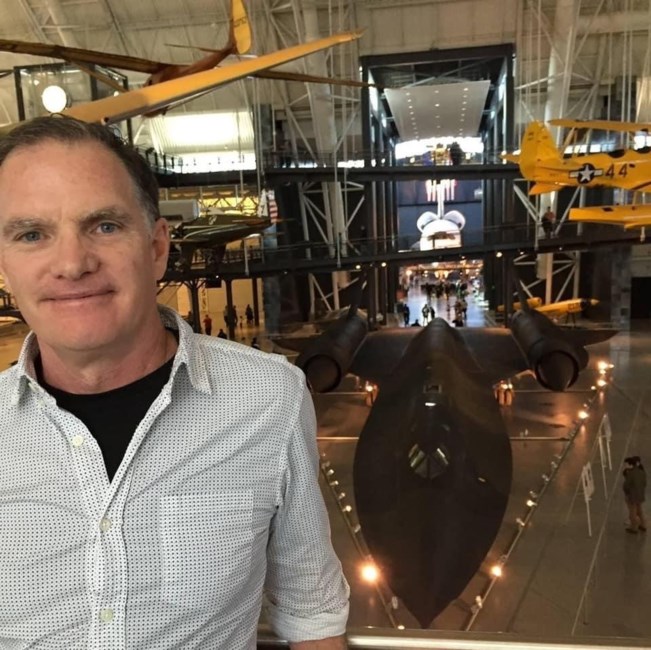
Brendan O’Connor served as Vice President for Advanced Programs at Emergent Space Technologies, where he led a group of 21 engineers responsible for the development of unique software and engineering products for a variety of aerospace industry customers. His research interests included assured autonomy for spacecraft systems.
O’Connor received his B.A. degree in chemistry from New College of Florida and an M.A. in chemistry from The University of Texas at Austin before finding his true calling by earning an M.S. in aerospace engineering from The University of Texas at Austin.
His professional career began at the McDonnell-Douglas Corporation in June of 1995 as a developer for the orbit determination software for the Iridium project. He went on to become the co-technical lead for Iridium’s mission planning software and stayed with the project through its initial operations. McDonnell-Douglas was soon purchased by Boeing, and he worked on a number of satellite missions at the Boeing Corporation before he joined Emergent Space Technologies in 2008. O’Connor’s primary focus was on developing flight software for spacecraft, and he worked on missions for the DoD, DARPA and NASA. He was the Software Architect for the DARPA System F6 Cluster Flight software and developed and promoted autonomy for multi-satellite missions in follow-on programs, including DARPA’s Blackjack program and on classified programs.
O’Connor was involved in developing innovative techniques for producing reliable flight software and flight software for mission autonomy. He produced Emergent’s processes for developing flight software, which were appraised at CMMI Maturity Level 3. He was the PI or technical lead on a range of technology development efforts, mainly focused on spacecraft autonomy, and was involved in NASA GSFC’s Common Operations Facility planning and on NASA’s Starling mission.
O’Connor served as an adjunct lecturer in the Department of Aerospace Engineering and Engineering Mechanics at UT Austin. He was awarded 16 U.S. patents.
He was an instrument-rated pilot who enjoyed flying the skies of central Texas.
J. Tinsley Oden
(Honorary Member)
Cockrell Family Regents Chair in Engineering #2; Professor, Aerospace Engineering, Engineering Mechanics, Mathematics, Computer Science, The University of Texas at Austin
B.S., Civil Engineering, Louisiana State University (1959)
M.S., Civil Engineering, Oklahoma State University (1960)
Ph.D., Engineering Mechanics, Oklahoma State University (1962)

Tinsley Oden was the founding director of the Oden Institute for Computational Engineering and Sciences. His research interests included multiscale modeling, error estimation, control and predictive computational sciences. Most recently, he worked on selection and validation of models of complex molecular systems, uncertainty quantification, adaptive control and on stochastic phase-field models of tumor growth.
Oden earned a B.S. in civil engineering from Louisiana State University, an M.S. in civil engineering from Oklahoma State University and a Ph.D. in engineering mechanics from Oklahoma State University. He received six honorary doctorates, honoris causa, from the Technical University of Lisbon (Spain), the Faculte de Mons in Belgium, the Technical University of Cracow (Poland), Ecole Normale Supérieure Cachan, Ohio State University and the University of Texas at Austin (in the form of the Presidential Citation).
Oden was a member of the U.S. National Academy of Engineering and the American Academy of Arts and Sciences. He was Emeritus Editor-In-Chief of Computer Methods in Applied Mechanics and Engineering after serving as Editor-in-Chief for over 40 years, and served on the editorial boards of 32 scientific journals. He was a founding member of the International Association for Computational Mechanics and of the U.S. Association of Computational Mechanics. He authored or edited over 600 scientific works, including 58 books and 80 book chapters and has supervised 34 Master’s students and 45 Ph.D. students. Awards recognizing his research include the Title of Chevalier dans l’ordre des Palmes Academiques from the French government, the USACM John von Neumann Medal, the IACM Newton-Gauss Congress Medal, and the SIAM Prize in Computational Science. The Honda Foundation awarded him their 2013 Prize Laureate for his role in establishing the field of computational mechanics.
In 1973, Oden started the Texas Institute for Computational Mechanics, a research group for faculty members and students. Under his leadership, the Institute for Computational Engineering and Sciences has expanded to draw faculty from 23 departments and five schools and colleges at UT. In 2017, it was ranked No. 1 worldwide in the field of interdisciplinary mathematics. In 2019, the UT System Board of Regents voted unanimously to recognize Oden’s “leadership and generous support” by renaming the Institute in his honor.
Susan Ouzts
Vice President, F-16, Japan F-2 & India F-21 Programs, Lockheed Martin Aeronautics Company, Lockheed Martin
B.S., Aerospace Engineering, The University of Texas at Austin (1987)
MBA, Marketing, Dallas Baptist University in Dallas, Texas (2000)

Susan B. Ouzts served as Vice President, F-16, F-2 Japan, and F-21 India Programs for Lockheed Martin Aeronautics, where she was responsible for Lockheed Martin’s worldwide F-16, F-2, and F-21 aircraft portfolios, including financial and contractual commitments throughout each platform’s life cycle. She served as the primary customer interface for all domestic and international programs.
Ouzts received her B.S in aerospace engineering from The University of Texas at Austin and her M.B.A. in marketing from Dallas Baptist University. She is also a graduate of the Defense Systems Management College – Advanced Program Management Course in Fort Belvoir, Virginia.
Her professional career began at LTV (now Lockheed Martin) in July of 1987 as an aerodynamics and flight dynamics engineer. Since then, she has held leadership positions on several key Lockheed Martin programs, including F-35 International, F-35 Japan, Patriot Advanced Capability-3 (PAC-3) International, Sea-Based Missile Segment Enhancement, Strategic Planning for Air and Missile Defense, PAC-3 Production, PAC-3 Evolutionary (next generation) Development, Missile Hardware Development, and Missile Test and Evaluation programs. She has also held a variety of technical roles and technical leadership positions throughout her 32-year career.
Ouzts has served on the UT Austin ASE/EM External Advisory Committee, is a senior member of the American Institute of Aeronautics and Astronautics (AIAA) and is a member of the Japan-America Society of Dallas Fort Worth (JASDFW). She is also involved in several organizations sponsoring development of STEM and women in engineering. She has received numerous individual and team awards for engineering and leadership achievements.
Richard “Dick” Perkins
Co-founder, Cox & Perkins Exploration, Inc. (Retired)
B.S., Aerospace Engineering, The University of Texas at Austin (1964)
M.S., Aerospace Engineering, The University of Texas at Austin (1966)
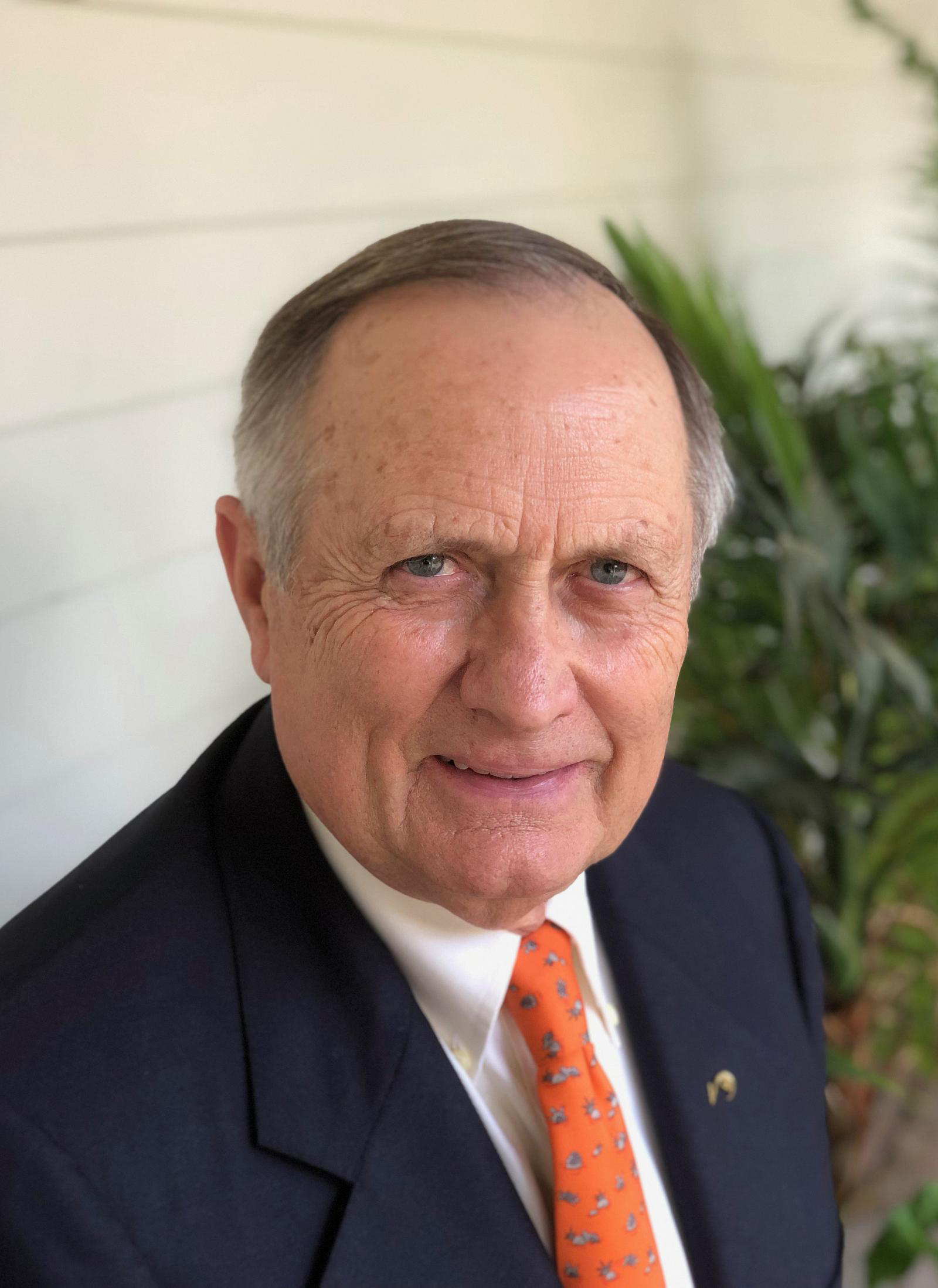
Dick Perkins was a co-founder of Cox & Perkins Exploration, Inc., an independent oil and gas exploration and production company in Houston, Texas. From 1977-2013, C&P primarily operated on the Texas Gulf Coast with some additional operations in Louisiana.
Perkins received his B.S. and M.S. degrees in aerospace engineering from The University of Texas at Austin.
Perkins’ professional career began in 1966 with General Motors Defense Research Laboratories’ Material and Structures Group in Santa Barbara, California. In early 1967, the entire group was moved to the General Motors Technical Center in Warren, Michigan. Leaving GM in late 1969, Perkins joined Humble Oil & Refining Company (now Exxon-Mobil Company) as a reservoir engineer first in Kingsville and later in Corpus Christi, Texas, resigning in 1974. From 1974 to 1977, he was an independent petroleum engineer. Perkins joined with Jerry Cox to explore for oil and gas starting in mid-1977 until ceasing active operations in 2013 as Cox & Perkins Exploration, Inc.
At General Motors, Perkins conducted high-rate uniaxial and biaxial stress deformation of material research on polymers, composites and rocks. As Vice President of Cox & Perkins Exploration, he was responsible for the drilling and production of a few hundred wells that encompassed vertical, directional and horizontal profiles, ranged in depth from shallow to deep and encountered reservoir pressures from normal to highly geopressured.
Perkins has served as a member of the UT Austin Engineering Advisory Board since 2003 and the UT Austin Development Council since 2007. He was honored as a Cockrell School Distinguished Engineering Graduate in 2019.
Perkins has proudly supported ASE/EM student projects as well as volunteering with the UT College of Liberal Arts’ Shakespeare at Winedale program. He was granted an Honorary Lone Star FFA Degree from the Texas FFA Association in 2012 and continues to support the Spring Branch ISD FFA program. Perkins is an inactive Registered Petroleum Engineer.
Perkins and his wife Judy, who have been married since 1966, live in Houston, Texas. He enjoys spending time with his son, Keith, daughter-in-law, Joanna, their two children, Claire and Paul, and loves reading his daughter, Stephanie’s (S. C. Perkins) cozy mystery novels. Occasionally, he gets to fly his Piper Seneca to experience practical aerodynamics.
These 2020 Academy of Distinguished Alumni members will be recognized and inducted into the Academy at a ceremonial banquet in their honor at a later date.