
2021 ASE/EM Academy of Distinguished Alumni
Eight Texas Engineering alumni of the Department of Aerospace Engineering and Engineering Mechanics have been elected to the 2021 class of the ASE/EM Academy of Distinguished Alumni.
The ASE/EM Academy of Distinguished Alumni was established in 2019 with the vision to foster excellence within the aerospace engineering, engineering mechanics and computational engineering programs in the UT Austin ASE/EM Department through recognition, participation, encouragement and support of the department.
Members are recognized and honored by the Academy for leading distinguished careers that include outstanding technical contributions, excellence in leadership and dedication to improving communities. These distinguished alumni include professors, entrepreneurs, government and industry leaders, astronauts, pilots, researchers and more.
The members elected to the ASE/EM Academy of Distinguished Alumni for 2021 are:
Manley C. Butler
President, Butler Parachute Systems, Inc.
B.S., Aerospace Engineering, The University of Texas at Austin (1980)

Manley Butler founded Butler Parachute Systems, Inc. (BPS) in 1979 while attending UT Austin as an undergraduate student, where he graduated with a B.S. in aerospace engineering. What began as a one-man, back-bedroom company now has 50+ employees operating in 47,000+SF, with sales approaching $10 million per year. Butler provides top-level corporate leadership at the company.
Butler’s career in aviation began in the U.S. Navy (1973-76) when he was an acoustic sensor analyst on the S-3A Viking. Although he did not make his first jump until 1973, he was “hooked” and thus pursued a career in the parachute industry.
On April 6, 1999, Butler was awarded the U.S. Patent 5,890,678 for a Device to Control Inflation Characteristics of Parachutes. The Sombrero SliderTM is one of the most significant devices ever developed for use with round parachutes.
Following graduation from UT with a degree in aerospace engineering in December 1980, Butler worked for Para-Flite Inc. in New Jersey for one year, then returned to Austin. From 1983-86, he worked in parachute engineering for the Naval Weapons Center (NWC), China Lake, CA, as project manager for projects including the Aircrew Gliding Escape System (AGES) Program, which concluded with a successful in-flight ejection seat test at 500+ knots.
While at NWC, Butler operated BPS part-time. After leaving NWC, he moved BPS to California City, CA, near Edwards AFB and the Mojave Air & Spaceport, providing ready access to some of the most exciting aerospace ventures in the world. After exposure to that customer base, BPS now basically “owns” the market for test pilots flying high-performance, non-ejection-seat aircraft, and BPS parachutes are used by many large aircraft companies (Bombardier, Scaled, Virgin, Learjet, etc.). Well-known BPS users include Dick Rutan (1986, Voyager World Flight); Mike Melville (2004, first civilian astronaut, SpaceShipOne), and, of special note, Pete Seibold, who in 2014, survived the in-flight transonic break-up of SpaceShip Two.
BPS also provides spin/deep stall recovery parachute systems for flight test operations. BPS has produced recovery systems for many significant UAV projects, including the General Atomics Predator and the AAI Shadow.
In 1995, Bulter moved BPS to Roanoke, Virginia. The primary BPS production products are emergency parachute systems manufactured under FAA TSO-C23 and Part 21 QC. During CY2015 BPS was selected to replace the aircrew parachutes on all USAF AC-130 gunships (~1,600 systems) and now has a $40.8M contract (FY2018, 5-year IDIQ) to replace the aircrew parachutes in all USAF C-130’s (~4,440 systems).
Stephen P. “Pat” Condon
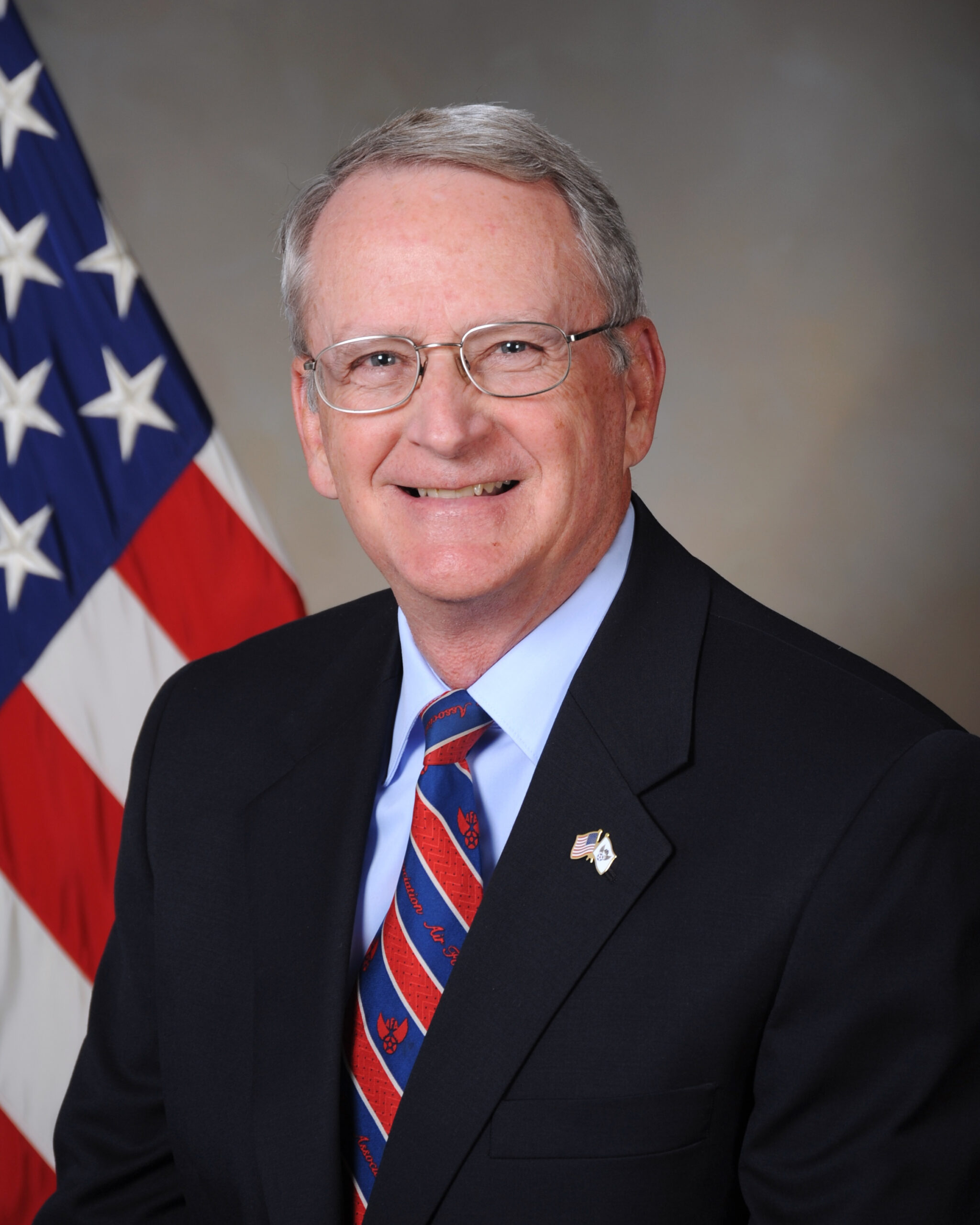
Major General, USAF (Retired)
B.S., Mechanical Engineering, The University of Oklahoma (1964)
M.S., Aerospace-Mechanical Engineering, Air Force Institute of Technology (1966)
Ph.D., Aerospace Engineering, The University of Texas at Austin (1974)
Pat Condon is now fully retired from military and consulting duties and spends his time volunteering in a number of local community and national endeavors.
Condon received his B.S. degree in mechanical engineering from the University of Oklahoma, his M.S. degree in aerospace-mechanical engineering from the Air Force Institute of Technology at Wright-Patterson AFB, OH, and his Ph.D. in aerospace engineering from The University of Texas at Austin.
Condon served on active duty in the United States Air Force for 33 years, retiring as a Major General, and is a former Commander of the Ogden Air Logistics Center, Hill AFB, UT. He served as a rendezvous analyst at NASA’s Manned Spacecraft Center in Houston during the Apollo and Skylab programs. Condon also commanded the Arnold Engineering Development Center, Arnold AFB, TN, and the Air Force Armament Laboratory, Eglin AFB, FL. He served in the office of the Assistant Secretary of the Air Force for Acquisition in the Pentagon as the Director of Management Policy and Program Integration and as Acting Director of Air Force Science and Technology. He also served as the Director of Plans and Programs, Headquarters Air Force Materiel Command, Wright-Patterson AFB, OH.
Following retirement from the USAF, Condon served as an aerospace consultant, primarily for companies interested in doing business with the Department of Defense and with Air Force systems program offices. He also served for six years as a senior policy advisor on the staff of Senator Mike Lee (UT). He currently serves on a number of boards of academic and business organizations, and is a member of the Human Exploration and Operations Committee of the NASA Advisory Council, an emeritus member of the Board of Visitors of the College of Engineering at the University of Oklahoma and an emeritus member of the Board of Visitors of the Air University, Maxwell AFB, AL. He is a member of the Advisory Council of the College of Science at Weber State University, Ogden, UT, a member of the Board of Directors of the Utah Defense Alliance and a member of the Board of Directors of the Hill AFB Aerospace Museum. Condon also served as the National President and Chairman of the Board of the Air Force Association.
In addition to many military awards and decorations, Condon is the recipient of NASA’s Exceptional Public Service Medal and the Air Force Exceptional Civilian Service Award. He was also privileged to be a relay torch-bearer for the 2002 Winter Olympics.
Condon lives in Ogden, UT, with his wife, Judy, to whom he has been married since 1965. They have two children, Susan Adams in Bloomfield Hills, MI and Michael Condon in Midvale, UT. Condon ran 25 marathons, including Boston, between 1996 and 2003. Now, he enjoys spending time golfing with friends and family, skiing and volunteering locally and nationally to support a number of U.S. military, NASA and academic causes.
Estevan “Steve” DeLeon
Co-Founder, Senior Partner & VP of Engineering, Pecos Country Energy and Exploration Co.; Aeronautical Engineer Senior Staff, Mass Properties Group, F-22, Lockheed Martin (Retired)
AAS, Aerospace Engineering, Saint Phillips College, San Antonio, TX (1971)
B.S., Aerospace Engineering, The University of Texas at Austin (1975)
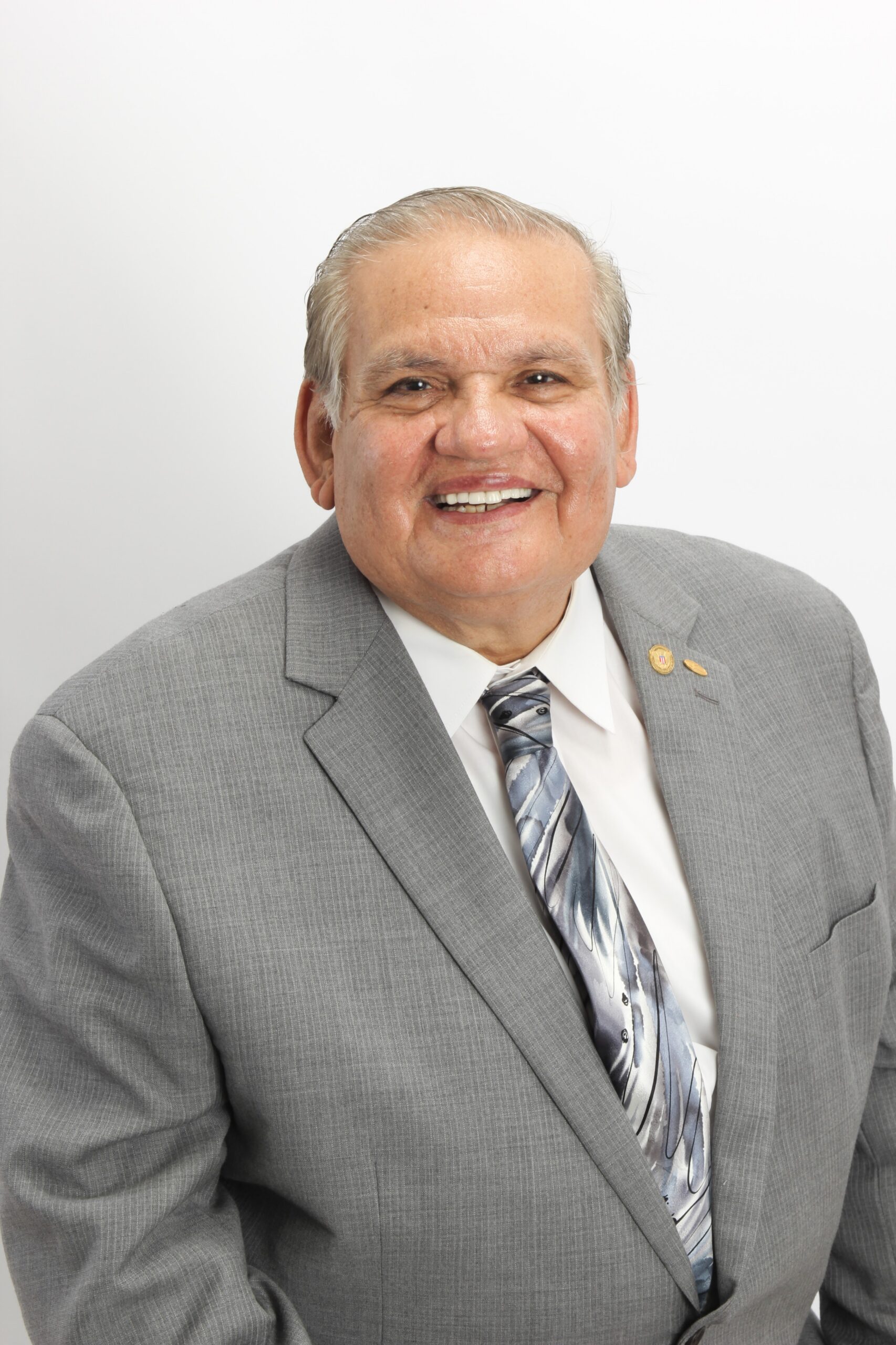
Steve DeLeon was a senior staff engineer manager with General Dynamics/Lockheed Martin Aeronautics Co. for 38 years until his retirement in 2012. He started Pecos Country Energy in 2013 as an oil investment firm, and it has grown to a full-fledged exploration and drilling company with the acquisition of Shappell Oil & Exploration Company.
While attending UT and under the mentorship of Dr. Phil Schmidt, DeLeon, with a handful of students, founded Pi Sigma Pi, “People Serving People,” which increased the academic success of underrepresented students at the university.
In 1975, DeLeon graduated from UT with a B.S. in aerospace engineering and was recruited by General Dynamics in Fort Worth, Texas, due to his service work at UT. At General Dynamics, he continued to be an advocate for UT, recruiting and mentoring minorities and women into the F-16 fighter program. DeLeon advanced to lead engineer serving on the Vice President’s Engineering Council for both initial and production design approval changes. As a Tier 3 weight and cost control leader on the F-16 and F-22 programs, he drove high cost and weight reduction with a multi-disciplinary engineering group.
DeLeon was named assistant to the president, reporting to Charles Anderson directly on special assignments. Due to his skills in organization and innovation, he was loaned out on a three-year assignment to help Fort Worth ISD Superintendent Carl Candoli use industry resources to enhance technical education in the District. This led to the first Adopt-A-School program in Texas. He worked with the Presidio Rocketry Program to inspire low-income/language-barrier students to seek out STEM careers. He was the executive producer of a documentary about the program.
DeLeon co-founded the Texas Alliance of Minorities in Engineering (TAME) that focused on joining the efforts of the community, educators and technical professionals to encourage the participation of women and minorities in STEM careers. Both Pi Sigma Pi and TAME are still active and thriving organizations. He established endowments at UT, including the Women in Aerospace Engineering and the Equal Opportunity in Engineering scholarships. He helped form the first alternative high school in Texas and a machine shop training with a million-dollar education grant from the Speaker of the House, Jim Wright. He has received community service commendations from presidents George H. Bush, Bill Clinton and George W. Bush and a lifetime achievement award in community service from President Barack Obama. DeLeon also received lifetime achievement awards from the Ford Dealerships Foundation and the United Hispanic Council of Tarrant County.
DeLeon lives in Fort Worth with his wife, Mary DeLeon. He has four daughters, twenty-one grandchildren, and great-grandchildren. The DeLeon family has established a legacy of graduates within the UT system. He is a proud Vietnam veteran who served in the 42nd Aerospace and Recovery Group with the USAF. Community service has been Steve DeLeon’s passion for over four decades and continues.
Lisa Guerra
Senior Technical Advisor, Office of the Administrator, NASA
B.S., Aerospace Engineering, The University of Notre Dame (1985)
B.A., English, The University of Notre Dame (1985)
M.S., Aerospace Engineering, The University of Texas at Austin (1987)
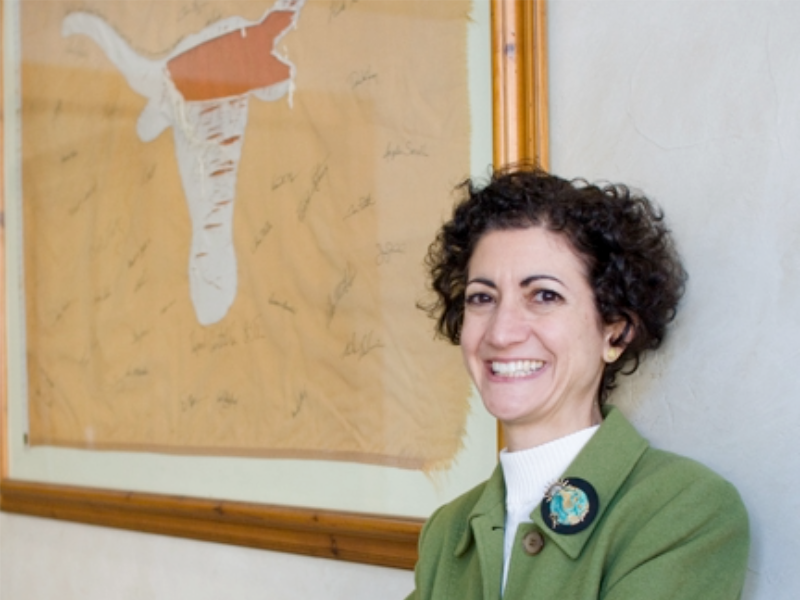
Lisa Guerra currently works at NASA Headquarters as part of the senior leadership team in the Office of the Administrator. In this capacity since 2014, Guerra addresses a wide range of Agency issues, particularly around program management and evaluation, acquisition strategy and NASA’s operating model.
Guerra received dual degrees, a B.S. in aerospace engineering and a B.A. in English, as part of a special five-year program, from The University of Notre Dame. Guerra also received an M.S. in aerospace engineering at The University of Texas at Austin.
Guerra’s professional career began in 1987 with Eagle Engineering in Houston, TX, developing conceptual designs of spacecraft for human missions to the Moon and Mars. She began supporting the NASA Johnson Space Center as an employee of SAIC in 1990, continuing efforts on exploration missions and systems design. Guerra joined NASA Headquarters in Washington, DC, as a civil servant in 1994. In this position, she performed annual evaluations of flagship robotic missions and the International Space Station (ISS), as well as proposal assessments for Discovery and Explorer missions. In the late nineties, Guerra moved to Goddard as the program integration manager for high-energy astrophysics missions, particularly the James Webb Space Telescope. Accomplishments included mission trade studies, acquisition strategy development, international partner negotiations and establishment of a review board.
Guerra returned to NASA Headquarters to manage the Decadal Planning Team, responsible for developing innovative concepts that merged human and robotic space exploration. She continued in the Exploration Systems Mission Directorate as the director of integration. Her responsibilities involved strategic planning, international cooperation, architecture analysis and control boards. Accomplishments included the formulation of the Global Exploration Strategy and securing the RAD and MEDLI instruments on the Mars Science Laboratory mission.
Guerra returned to UT in 2007 as a NASA IPA to establish a space-systems engineering curriculum in the Department of Aerospace Engineering and Engineering Mechanics as a pilot for national dissemination through the Space Grant Consortia. Guerra also contributed to the NSF-sponsored UTeach Engineering program, developing a model high school engineering course. Guerra currently serves on the UT ASE/EM External Advisory Committee. She is the recipient of the 2018 Presidential Rank Award, NASA Outstanding Leadership Medal and NASA Exceptional Service Medal.
Guerra lives in Bethesda, Maryland, with her husband, Randall Barnette (UT ASE/EM ’86). She has one daughter, Zoe, a sophomore and Div-1 foil fencer at the University of Notre Dame. She frequently volunteers with NASA education programs to encourage STEM careers for girls.
G. T. Ju
General Manager of Deepwater Projects and Engineering, Shell International Exploration & Production, Inc. (Retired)
B.S., Civil Engineering, Tamkang University, Taipei, Taiwan (1982)
M.S., Aerospace Engineering, The University of Texas at Austin (1987)
Ph.D., Aerospace Engineering, The University of Texas at Austin (1991)
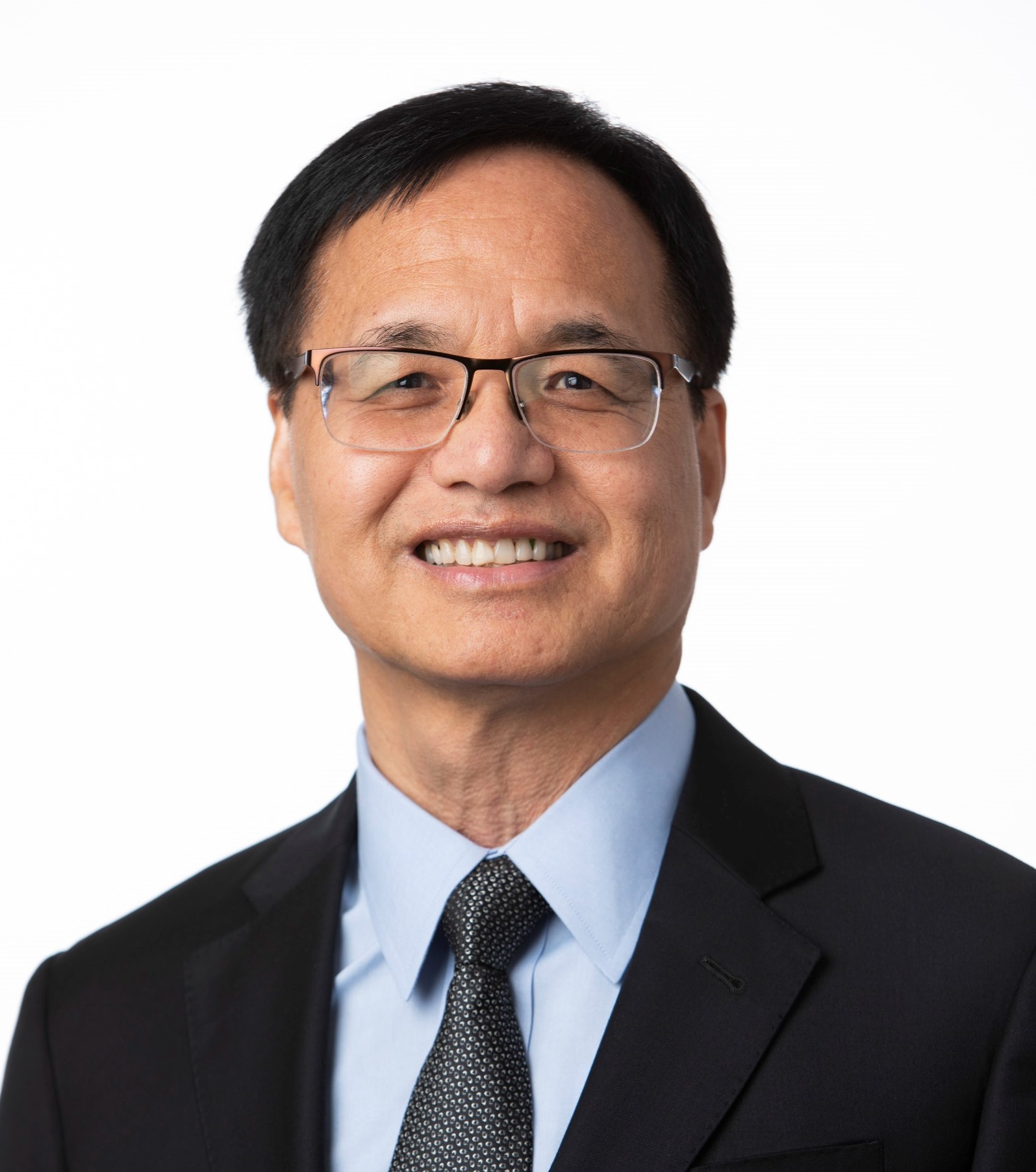
G. T. Ju recently retired from Shell International Exploration and Production Company. Prior to his retirement, he was the General Manager of Deepwater Projects and Engineering at Shell in Houston, Texas.
After graduating from the University of Texas, G.T. joined Shell as a research engineer. Early in his career, he developed and implemented enabling technologies for deep-water projects in the energy industry, which earned him three U.S. patents. Due to his special contributions in implementing oil and gas industry enabling technologies, he received ASME’s Mechanical Engineering Achievement Award and recognition as one of the Top 25 Engineering NewsMakers in the U.S.
After transitioning into a project/business leadership role in Shell’s Deepwater Project Execution and Technology Development Organization, he led the organization to deliver several offshore production projects in world-record water depth (up to 3,000 meters), achieving competitive cost and safety performance results. He followed by guiding the organization through a transformational journey as the industry shifted from delivering bespoke projects with a focus on technical first and innovation to delivering standardization/replication projects with emphasis on commercial and safety performance. Under his leadership, they reduced a multibillion-dollar project portfolio’s CAPEX cost by 50% in three years.
G. T. was an active sponsor for the UT Center of Research in Mechanics of Solids, Structures and Materials. Having built a distinguished reputation as an energy industry leader and subject matter expert, his alma mater, Tamkang University in Taiwan, recognized his career achievements with the Outstanding Alumni Achievement Award.
Jill Meyers
Owner and CEO, Meyers AeroConsulting, LLC
B.S., Aerospace Engineering, The University of Texas at Austin (1987)
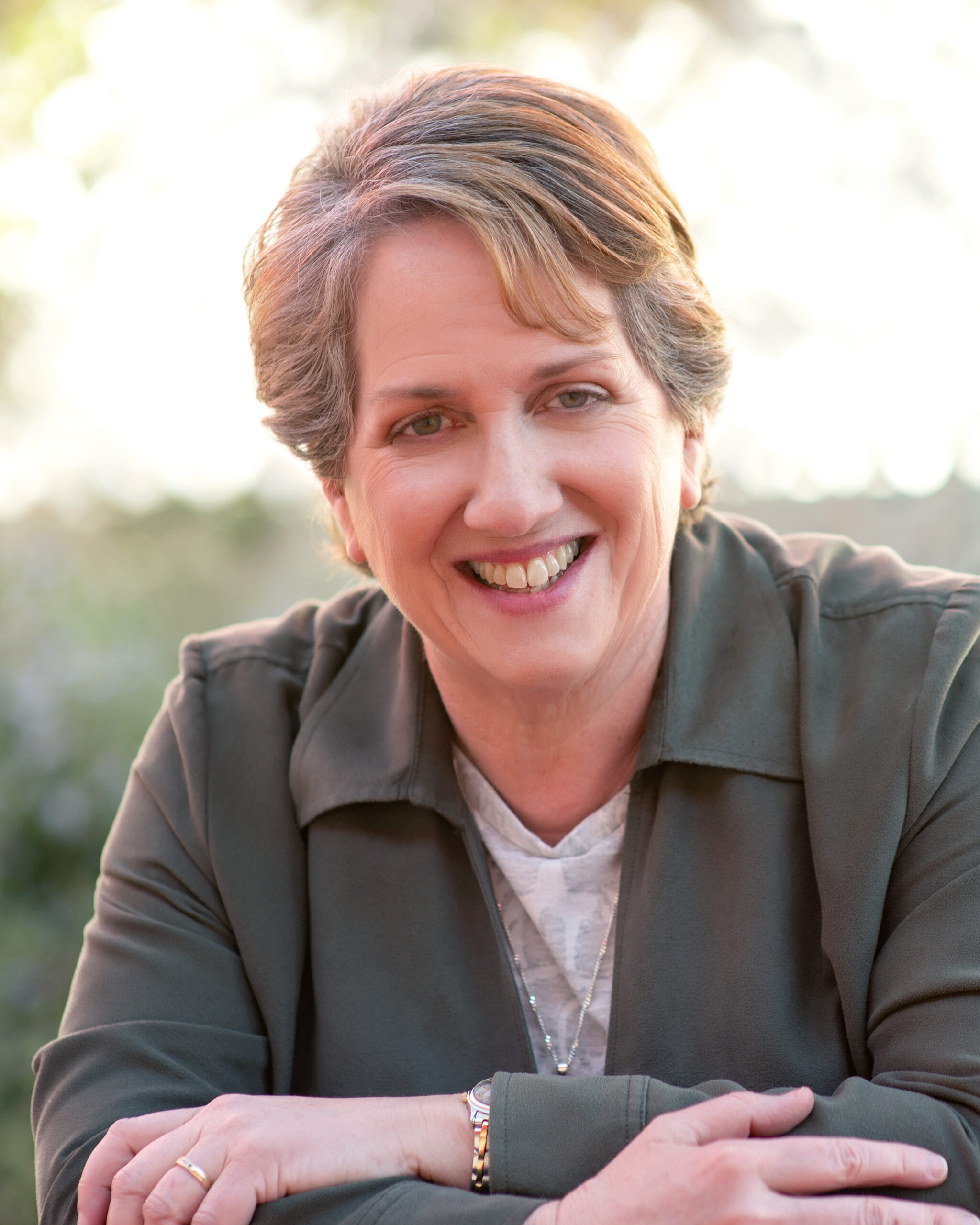
Jill Meyers has more than 40 years of experience in aviation and aerospace, including eight years of active duty in the U.S. Air Force supporting communications and ground radar systems. After transitioning out of the military, she spent the next 20 years working for companies including Boeing, Raytheon, Northrop Grumman and Eclipse Aviation, on programs including the US/UK/NATO Airborne Warning and Control System (AWACS), Global Hawk, the Eclipse 500 Very Light Jet and the F-35 Joint Strike Fighter. Meyers was an independent management consultant from 2017 to 2022, providing her expertise to companies and non-profit organizations around the world. In 2023, Meyers took on a senior leadership position at Genuen, a leading provider of end-to-end test solutions for mission-critical systems.
A private pilot since age 17, Meyers received her B.S. degree in aerospace engineering from The University of Texas at Austin. She also completed graduate courses at Embry-Riddle Aeronautical University and holds a certification in professional project management. Meyers has been doing outreach and mentoring for more than 20 years, including keynote and guest speeches to inspire girls and young women to consider Science, Technology, Engineering and Math (STEM) education and aviation/aerospace careers. To help inspire youth around the globe, she supported the non-profit organization Dreams Soar as an unpaid volunteer in 2017, supporting founder Shaesta Waiz’s solo flight around the world in a single-engine aircraft. Meyers managed logistics for the 145-day mission and led the planning of 32 outreach events in 14 countries, where Shaesta inspired more than 3,000 students to follow their dreams.
Meyers has received many awards during her career, including the San Diego Chamber of Commerce 2016 Women in Leadership Award and the American Institute of Aeronautics and Astronautics (AIAA) 2018 Outstanding Enhancement of the Image of the Aerospace Profession Award. In 2019, she received the high honor of being elected as a Fellow of the Royal Aeronautical Society in London, and in 2022, she received the AeroTime Aviation Achievement Award as part of the International Women’s Day celebration. Meyers is the recipient of the National Aeronautic Association’s 2022 Katharine Wright Trophy, acknowledging her “40 years of dedication to the aerospace industry and her tireless commitment as a volunteer and role model, working to educate and inspire young girls around the globe.”
John D. Schmisseur
H.H. Arnold Chair and Goethert Professor, The University of Tennessee Space Institute
B.S., Aerospace Engineering, The University of Texas at Austin (1990)
M.S., Aerospace Engineering, The University of Texas at Austin (1992)
Ph.D., AAE, Purdue University (1997)
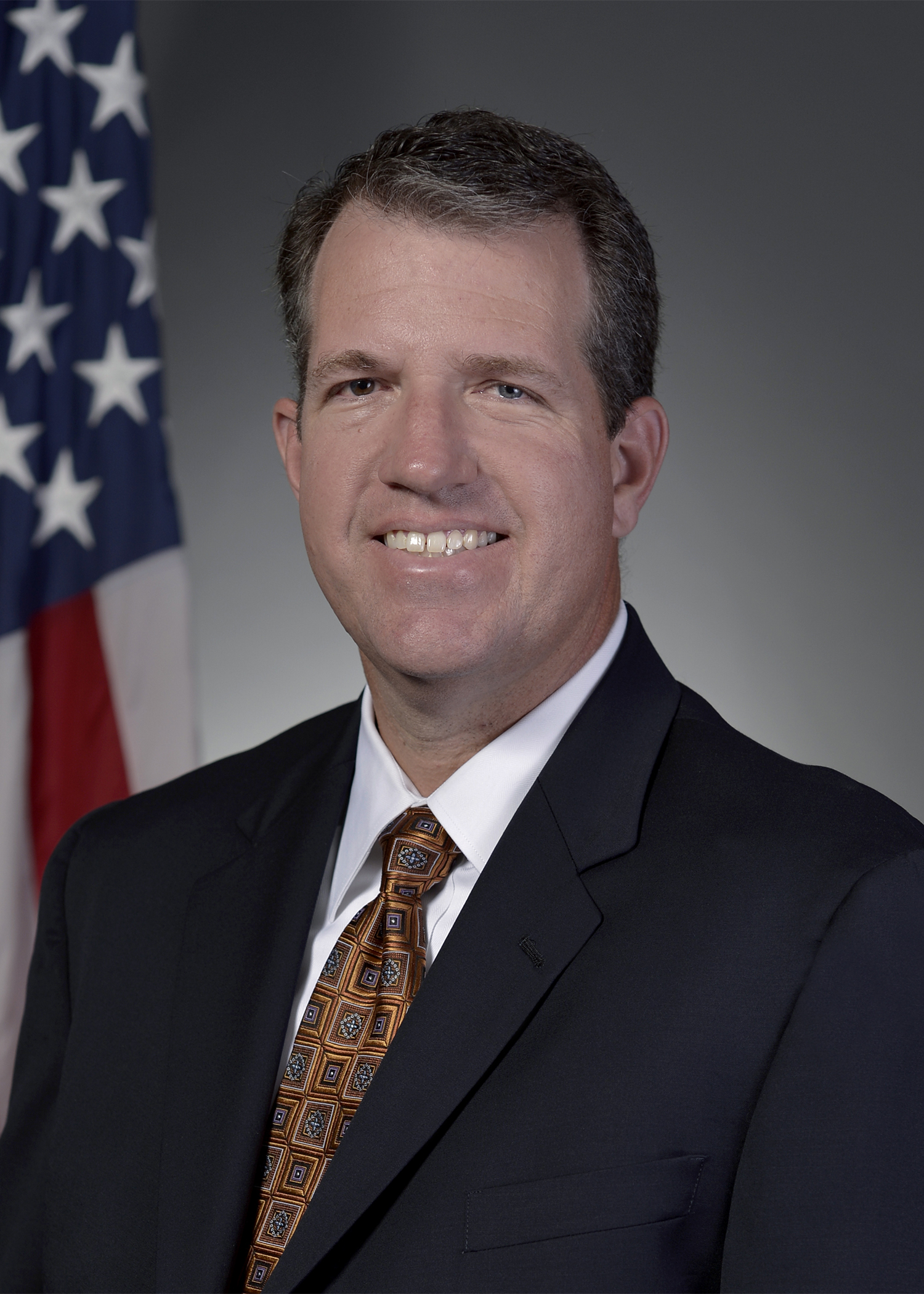
John D. Schmisseur joined the faculty of the University of Tennessee, Knoxville, in 2014 as the H.H. Arnold Chair and Goethert Professor.
Schmisseur earned his B.S. and M.S. degrees in aerospace engineering from The University of Texas at Austin and his Ph.D. in aeronautics and astronautics from Purdue University.
Prior to joining the faculty at the University of Tennessee, Schmisseur had a 23-year career with the Air Force Research Laboratory, where his final position was the Chief of the Energy, Power & Propulsion Sciences Division and Program Manager for Aerothermodynamics within the Air Force Office of Scientific Research (AFOSR). During his tenure at AFOSR, Schmisseur initiated and led the national foundational research plan for hypersonics that guided the investments of the DoD, NASA and national laboratories. He also championed the transition of basic research capabilities that have advanced flagship national hypersonics technology programs and transformed test and evaluation capabilities. In this role, he envisioned and initiated the HIFiRE program, which unified the efforts of AFRL, NASA and the Australian DSTO to advance fundamental hypersonic science and technology via flight research. His responsibilities with AFOSR included coordination with other federal agencies and partner countries, leading to his establishment of a partnership with NASA to support more than 20 universities through three National Hypersonic Science Centers, leadership of a NATO Research & Technology Organization study involving contributions from six countries, and service on a number of review boards for agencies including NASA, ONR, and the NNSA.
Since his arrival at UTSI, Schmisseur’s research group HORIZON has grown to include 15-17 faculty, staff and students, with total external research awards exceeding $15M since 2015. The group operates the Tennessee Aerothermodynamics Laboratory (TALon), which includes two of the largest supersonic wind tunnels in academia, 24”x24” Mach 4 and 15”x15” Mach 7 Ludwieg Tubes, cornerstones of the University of Tennessee’s strategy for applied research and the transition of emerging technologies to the nearby Air Force Arnold Engineering Development Center and the aerospace industry in Huntsville and the Tennessee Valley.
Schmisseur was honored in 2015 as the Outstanding Senior Professor in the Department of Mechanical, Aerospace and Biomedical Engineering, received the 2019 UTK Office of Research and Engagement Award for the Largest New Research Portfolio and the 2020 B. Ray Thompson Endowed Excellence in Research Award, given by his department.
He is a Fellow of the Air Force Research Laboratory and the American Institute of Aeronautics and Astronautics (AIAA) and received the honor of Outstanding Aerospace Engineer from the Purdue School of Aeronautics and Astronautics (2014).
Schmisseur lives in Tullahoma, Tennessee, with his wife, Brooke and son J.D. His faith and family come before his career, and he enjoys every moment he can get with his family, particularly mentoring J.D in his growth as a future engineer, baseball player and clay target shooter.
Kenneth “Ken” Alden Young
Aerospace Engineer, NASA/Contractors (Retired)
B.S., Aerospace Engineering, The University of Texas at Austin (1962)
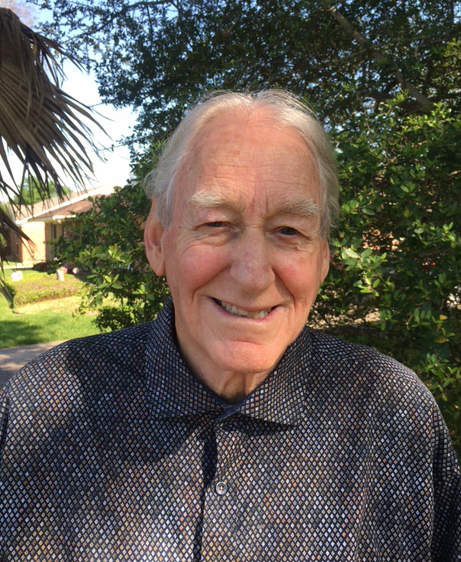
Ken Young was an aerospace engineer for 25 years (1962-1987) with the NASA Manned Spacecraft Center (now the Johnson Space Center), followed by 24 years as an independent space systems consultant/senior manager for several NASA/DoD contractors (Northrop-Grumman, Loral/Lockheed-Martin, SAIC, Booz-Allen-Hamilton). He retired in 2011.
Young received his B.S. degree in aerospace engineering from The University of Texas at Austin. He also completed the Management Development Program for NASA at the University of Houston-Clear Lake in 1975.
Young’s professional career began in June 1962 at the newly established Manned Spacecraft Center in Houston, Texas. He was assigned to the Rendezvous Analysis Branch of the Mission Analysis Division (later the Mission Planning & Analysis Division, MPAD), which was formed from the original Space Task Group at the new NASA, Langley, Virginia. Young was one of six engineers assigned to develop the entirely new space disciplines of rendezvous and orbital mechanics. His first ten years at MSC were spent applying these disciplines to the rendezvous and orbital trajectory analyses, computer software tool development and mission designs required for detailed Gemini and Apollo mission concepts, plans and flight operations support. He continued for another 15 years applying the same for the follow-on manned space programs of Skylab, Apollo-Soyuz, Space Shuttle and Space Station before leaving the Federal service in late 1987. This was followed by 24 years as an expert in rendezvous, flight dynamics and space systems integration as a consultant and/or a senior manager for various NASA/DoD contractors, finally retiring in 2011.
In his first eight years with NASA, Young became one of perhaps two dozen engineers in the world who were experts on the new disciplines of rendezvous and orbital mechanics as applied to complex space missions for Gemini and Apollo. That led to the highly successful “firsts” of the world’s first space rendezvous on Gemini 6A/7 in Dec. 1965 and the first moon landing on Apollo-11 in July, 1969. In the early to mid 1970s (with Apollo-Soyuz) and again in the 1980s (Space Shuttle and Space Station), Young became a NASA “technical spokesperson” for international cooperation in space with Russia and other nations. He was the U.S. trajectory leader for the joint flight (ASTP) with the Soviet Union in July 1975, which contributed to détente between the two countries.
In his retirement years, Young has given several manned space history talks to UT Austin undergraduate students and to retired “continuing education” UT alumni. He also maintained contact with several UT ASE/EM faculty members, such as Wally Fowler and Byron Tapley. During his 49 years in the space industry, Young also received numerous team and individual awards for sustained and superior performance on all the U.S. manned space programs from Gemini/Apollo to the International Space Station. He was one of 50 NASA Flight Operations personnel honored at the Seattle Air & Space Museum’s “Wings of Heroes” event for the 40th Apollo 11 celebration.
Young lives in El Lago, Texas, near the JSC, with his wife, Tricia. He enjoys traveling, telling NASA “war stories,” watching all sports (except ice hockey and soccer) and following the exploits and careers of their nine grandchildren. He has also written several published stories of his space experiences, travel adventures and childhood memories.
The Classes of 2020 and 2021 will receive virtual recognition on April 30, 2021, with an in-person induction ceremony and banquet to follow in the fall.