
2023 ASE/EM Academy of Distinguished Alumni
Ten Texas Engineering alumni of the Department of Aerospace Engineering and Engineering Mechanics at The University of Texas at Austin have been elected to the 2023 class of the ASE/EM Academy of Distinguished Alumni.
This year’s class of distinguished alumni includes a former astronaut, entrepreneurs, space tech leaders in government and industry, researchers, professors and more.
The members elected to the ASE/EM Academy of Distinguished Alumni for 2023 are:
Michael Baker
Former NASA Astronaut; Captain, United States Navy (retired); Advisor to Rhodium Scientific LLC.; Inspirational Speaker
B.S., Aerospace Engineering, The University of Texas at Austin (1975)
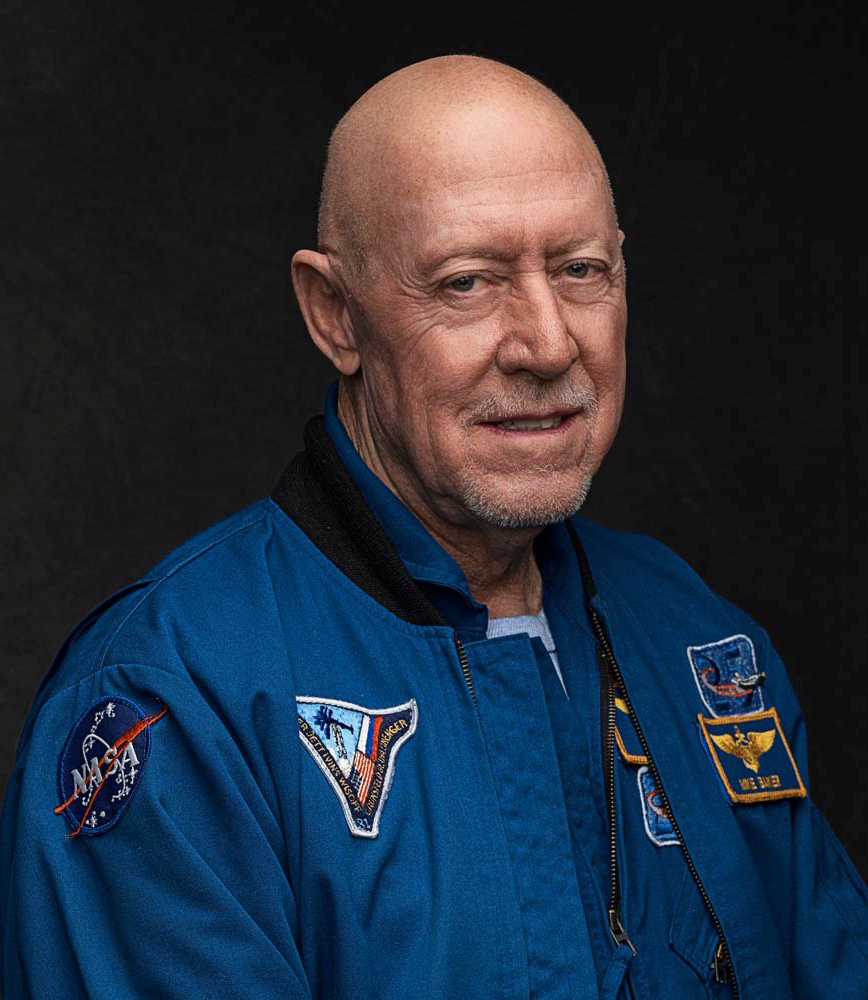
Michael Baker currently serves as an advisor to Rhodium Scientific, LLC, a small BioTech company that specializes in helping organizations and scientists get their payloads to orbit onboard the International Space Station.
Born in Memphis, TN, Baker considers Lemoore, CA, his hometown. After graduating from The University of Texas at Austin in 1975 with a B.S. degree in aerospace engineering, Baker was commissioned in the U.S. Navy and earned his Wings of Gold in 1977. He was assigned to Attack Squadron 56, on the USS Midway, homeported in Japan, and flew the A-7E Corsair. He attended the U.S. Naval Test Pilot School (USNTPS) in 1981 and was then assigned to the Carrier Suitability Branch of the Strike Aircraft Test Directorate. Baker has served as an instructor at both USNTPS and the Empire Test Pilots School in England. He has logged over 5,400 hours of flying time in 50 different types of airplanes and has over 300 carrier landings.
Baker was selected as an astronaut by NASA in 1985 and is a veteran of four Space Shuttle missions. He served as the pilot on STS-43 Atlantis (1991) and STS-52 Endeavor (1992). He then served as the commander on STS-68 Endeavor (1994) and STS-81 Atlantis (1997). He held numerous positions at NASA between space missions, including CAPCOM on eleven space shuttle missions, the assistant director of NASA Johnson Space Center (JSC) for Human Space Flight Programs, Russia, and as the International Space Station program manager for International Operations.
Baker left NASA in 2017 and served as the president and CEO of RD AMROSS, a US/Russia joint venture between a Russian rocket engine manufacturer, Energomash, and a U.S. jet engine manufacturer, Pratt and Whitney, that sold the RD-180 rocket engine to United Launch Alliance for use on the first stage of the Atlas V rocket. He retired from that position in 2019.
Baker has received numerous awards including: the Defense Superior Service Medal, two Defense Meritorious Service Medals, the Distinguished Flying Cross, the Legion of Merit, the Navy Unit Commendation, three Meritorious Unit Commendations, the Battle “E” Award, the NASA Distinguished Service Medal, the NASA Outstanding Leadership Medal, the NASA Exceptional Service Medal, four NASA Space Flight Medals, three Navy Expeditionary Medals, the National Defense Medal, two Sea Service Awards, and the Overseas Service Award.
Baker has served on UT Austin’s Cockrell School of Engineering External Advisory Board and was named a 1993 Outstanding Young Texas Ex. He lives in Houston, TX, with his wife, Margarita.
Bruce Chesley
Senior Associate, Teaching Science and Technology Inc.
B.S., Aerospace Engineering, The University of Notre Dame (1986)
M.S., Aerospace Engineering, The University of Texas at Austin (1988)
Ph.D., Aerospace Engineering, University of Colorado Boulder (1995)
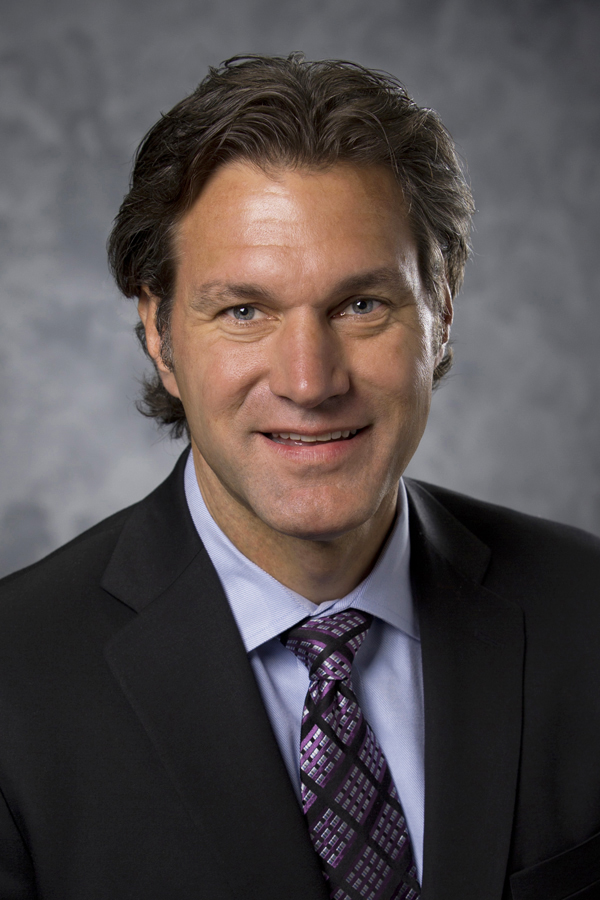
Bruce Chesley is a senior associate with Teaching Science and Technology, Inc (TSTI). He develops and delivers technical short courses and workshops to assist government agencies, start-ups and established companies in developing their workforce for the space domain. His current focus areas are satellite design, model-based systems engineering and cybersecurity for the space domain.
Chesley received his B.S. in aerospace engineering from the University of Notre Dame, his M.S. in aerospace engineering from The University of Texas at Austin and his Ph.D. in aerospace engineering from the University of Colorado.
His professional career began in the U.S. Air Force. He held assignments at Air Force Space Command, the National Reconnaissance Office and the Department of Astronautics at the USAF Academy. Chesley left the military in 2000 and spent the next 20 years in industry with Boeing Space and Launch. In addition to engineering and technology development roles, he held executive positions in program management, business development and strategy.
Chesley was responsible for next-generation satellites and advanced mission capabilities for Boeing Space and Intelligence Systems. He also led the market introduction of Boeing’s commercial small satellite product line and phased array communications payloads. He was also the Chief Architect for the X-37B experimental spaceplane. Chesley’s involvement with the X-37B began in the early phases of conceptual design and culminated in the Collier Trophy award in 2019 for achievement in aeronautics or astronautics in America for that year.
He was elected to the International Academy of Astronautics and served on the Bureau of the International Astronautical Federation, where he remains an active committee member. His doctoral research was recognized with a Best Technical Paper Award from AIAA.
Chesley lives in Georgetown, TX, with his wife, Julie. They have two grown daughters and they enjoy traveling as well as volunteering to support family members of those suffering from mental health difficulties.
Timothy Price Crain II
Chief Technology Officer, Intuitive Machines
B.S., Aerospace Engineering, The University of Texas at Austin (1995)
M.S., Aerospace Engineering, The University of Texas at Austin (1999)
Ph.D., Aerospace Engineering, The University of Texas at Austin (2000)

Tim Crain is the chief growth officer and a co-founder of Intuitive Machines in Houston, TX, where he leads technology development and shapes business strategy at IM in fields ranging from lunar landers to space nuclear power.
Crain received his B.S. in aerospace engineering at The University of Texas at Austin in 1995 and continued his studies there in graduate school under Dr. Robert Bishop to receive his M.S. and Ph.D. in 1999 and 2000, respectively. He was a National Science Foundation Graduate Fellow, JPL-funded graduate researcher, and assistant instructor during his tenure at UT.
Crain’s professional career began at the NASA Johnson Space Center (JSC) in September of 2000 as an engineer in the Advanced Mission Design branch of the Aeroscience and Flight Mechanics Division of the Engineering Directorate – and in his opinion, the best branch in the best division at the best center in the best agency of the best country on the planet. At JSC, Crain worked on Mars missions, robotic servicing missions for the Hubble Space Telescope, and served as the first Orion Orbit Guidance, Navigation and Control Mode team lead from 2006-2010. In 2009, he joined the Morpheus and ALHAT projects, developing flight systems for experimental lunar landers with precision landing and hazard avoidance.
Crain left NASA in 2013 to found Intuitive Machines (IM) with Steve Altemus and Kam Ghaffarian as a think-tank dedicated to applying technology and techniques developed for human spaceflight across the aerospace, energy and medical sectors. Inventions IM developed or built included ultra-long-range drones (some flew in Antarctica), automatic intravenous catheter devices, Gulf-floor oil spill seepage modeling, precision drilling simulation trainers, a financial strategy algorithm, a cryptocurrency credit card and a stroke-patient mobility assist device. In 2018, “IM” pivoted to focus exclusively on commercial lunar transportation and infrastructure services, winning three contracts in the NASA Commercial Lunar Payload Services program.
Crain became convinced of the power of small-team innovation with the successful demonstration flights of the Morpheus landers. Taking this spirit to IM, he has helped grow the company to over 250 employees and took the company public on the NASDAQ stock exchange with the ticker symbol LUNR in February 2023. IM has three lunar landing missions scheduled in the coming year, taking over 350 kilograms of payload to the lunar surface and deploying two commercial communications relay satellites in lunar orbit.
Crain was a National Science Foundation graduate fellow from 1996 to 2000. He received the Outstanding Young Texas Ex award (2008) and the Outstanding Young Engineering Graduate award (2008). He has served on the UT Austin ASE/EM External Advisory Committee, the American Astronautical Society Technical Committee and the Standing Review Board for the OSIRIS-REx mission. His honors include two NASA Exceptional Achievement Medals, 20 NASA Group Achievement Awards and a NASA Space Act Award.
Crain lives in Seabrook, TX, with his wife, Melissa. He has three children at The University of Texas: Jessica is finishing her social work master’s in preparation for counseling, Bella is finishing a biology degree in preparation for veterinary medicine in Scotland, and Connor has just begun his first year in ASE/EM. He is the world’s “okay-est” bass player.
Christopher D’Souza
Navigation Technical Lead for Human Spaceflight, GNC Autonomous Flight Systems Branch, NASA Johnson Space Center
B.S., Aerospace Engineering, The University of Illinois at Urbana-Champaign (1983)
M.S., Aerospace Engineering, The University of Illinois at Urbana-Champaign (1984)
Ph.D., Aerospace Engineering, The University of Texas at Austin (1991)
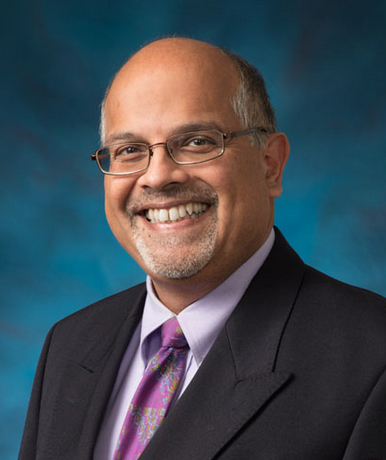
Christopher D’Souza is the technical discipline lead for Human Spaceflight at the Johnson Space Center, Houston. He is also the deputy branch chief of the GNC Autonomous Flight Systems Branch where he leads a group of 22 engineers responsible for the onboard Navigation, Guidance and Targeting of crewed vehicles. His research interests include autonomous spacecraft navigation, estimation theory, optimal guidance laws and numerical methods in optimization.
Chris received his B.S. and M.S. degrees in aerospace engineering from The University of Illinois at Urbana-Champaign and his Ph.D. in aerospace engineering from The University of Texas at Austin.
His professional career began at the Jet Propulsion Laboratory in January of 1985 as a maneuver analyst on the Magellan mission. From 1991 to 1996 he worked for the US Air Force developing trajectory optimization methods and advanced guidance laws and estimators for air-to-air and air-to-surface missiles. In 1996 he began working at the Draper Laboratory in Cambridge on guidance and navigation systems for autonomous rendezvous and docking. Since 2005, he has worked at the Johnson Space Center on focusing on targeting, guidance, navigation for crewed spacecraft.
He was the GNC lead on the first air-to-surface missile that used Differential GPS. He is the principal architect of the Orion onboard navigation system, which consists of 4 separate navigation filters. He is the developer of a linear covariance analysis toolset that has been used in the design of the Artemis mission, from pre-launch to post-landing as well as other crewed vehicles. He has developed guidance laws for both planetary landing and intercept. He has nearly 100 publications in refereed journals and conference proceedings.
He has served on the UT Austin ASE/EM External Advisory Board, the American Astronautical Society (AAS) Space Flight Mechanics Committee, the AIAA Guidance, Navigation and Control Technical Committee and is an Associate Editor of the AIAA Journal of Guidance, Control, and Dynamics. He is an AIAA Fellow (2023), an AAS Fellow (2020) and has received the 2020 AIAA Mechanics of Flight Award and the 2023 AAS Dirk Brouwer Award. His honors also include several NASA Achievement Medals, numerous NASA Group Achievement Awards, and a NASA Software of the Year Award for the Orion Exploration Mission 1.
He lives in Houston, Texas, with his wife, Connie, and their daughters, Olivia and Anna.
Larry A. French
Chief Executive Officer and Chief Technical Officer, Griffon Aerospace, Inc.
A.S., Mechanical Engineering, Penn State University (1972)
B.S., Aerospace Engineering, The University of Texas at Austin (1983)
Graduate Studies, Aerospace Engineering, The University of Texas at Austin
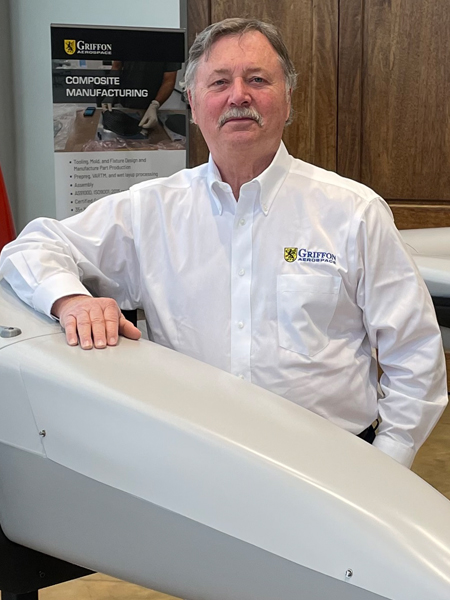
Larry French is the founder of Griffon Aerospace (Griffon). He has over 50 years of experience in system design, mechanical engineering, aerospace engineering, aircraft design, flight testing, system engineering, program management and corporate executive leadership. He is responsible for Griffon’s business and strategic technical leadership, product vision and business development. His proposal leadership has resulted in winning multiple large government prime contracts. Prior to Griffon, French worked in key technical and management leadership positions and successfully executed many large projects for major aerospace corporations.
French received an A.S. in mechanical engineering technology from Penn State and a B.S. in aerospace engineering from The University of Texas at Austin, where he also studied graduate-level orbital mechanics.
He serves as Griffon’s chief aircraft designer and visionary for new aircraft designs and corporate products. French is the chief designer of the Lionheart 6-place manned composite Experimental Category aircraft, Outlaw G1 (MQM-170A, B) UAV, Outlaw Boomer UAV, Outlaw ER UAV, Outlaw G2 (MQM-170C, D), Outlaw G2E UAS, Marinized Outlaw G2, Outlaw G3 (MQM-170G), BroadSword (MQM-171) UAV, BroadSword XL UAV, SeaHunter UAV, RedWing (MQM-186), RedWing VTOL UAV, and Valiant, a next generational vertical take-off and landing (VTOL) Tactical UAV.
In 1993, while working on the Shuttle Spacelab program, French recognized a market void in the experimental aviation industry for a fast, six-passenger aircraft and began designing Lionheart. The positive market survey resulted in the decision to form Griffon Aerospace and produce Lionheart aircraft. The Lionheart prototype’s first flight was in 1997, four years for design, tooling, prototype production and flight. Lionheart production ceased in 2002. Griffon diversified and experienced steady growth in the design, development, production and operations of Unmanned Aerial Systems (UAS), advanced composites design/production and UAS flight operations worldwide. By January 2023, Griffon delivered over 9,000 Outlaw and other Griffon unmanned aircraft to the U.S. and allied militaries. Griffon pilots have supported over 10,000 UAS operational missions worldwide. French leads Griffon’s over 140 employees who execute government and commercial contracts worldwide.
French and his wife, Cheryl, live on a farm in Coldwater, TN. They have four children: Leah, Lindsey, Lauren, Jordan, and twelve grandchildren.
Hiroshi Inaba
Professor Emeritus, Tokyo Denki University
B.S., Mathematics, Tokyo Denki University (1966)
Ph.D., Aerospace Engineering, The University of Texas at Austin (1972)
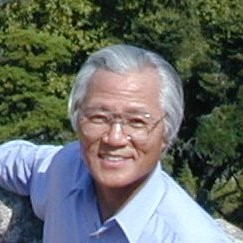
Hiroshi Inaba graduated from Tokyo Denki University (TDU) in 1966, and then he went to the U.S. to pursue further study, where he received his Ph.D. in aerospace engineering from The University of Texas at Austin in 1972. After returning to Japan, he was appointed as an assistant professor of Tokyo Denki University (TDU), and then two years later, he was invited to UT Austin as an assistant professor of the Department of Aerospace Engineering and Engineering Mechanics (1974-1976).
After his service in Texas, Inaba was appointed as a professor of the School of Science and Engineering at TDU and served there for more than thirty years. During this period, he served as chair of both the Department of Mathematical Sciences (1981-1985) and the Department of Information Sciences (1986-1990). Further, he served as the dean of the Graduate School of Science and Engineering (1993-1997), the director of the Research Institute for Science and Technology (2000-2004) and leader of the Control Group of the 21st Century Center of Excellence (COE) Project on Human Adaptive Mechatronics (2004–2007). Inaba retired from TDU in 2007 and is now a professor emeritus of the university.
Inaba also served as the president of IEEE Systems, Man and Cybernetics Tokyo Section (1990-1992), as a member of organizing committees for various international conferences and as an editor and guest editor of international journals.
He was awarded an International Short Visit Fellowship from the Royal Society of the United Kingdom and visited the University of the West of England as a guest professor for three months from February to April 2009. He received “The Order of the Sacred Treasure, Gold and Neck Ribbon” award for his enormous contribution to education and research from the Emperor of Japan in 2015.
James Royce Lummus, Jr.
Director, Lockheed Martin Aerospace (retired); Adjunct Professor, UT Arlington; President, Consulting Services International
B.S., Aerospace Engineering, The University of Texas at Austin (1967)
M.S., Aerospace Engineering, The University of Texas at Arlington (1972)
Ph.D., Aerospace Engineering, The University of Texas at Arlington (1980)
Diploma, Fluid Mechanics, Von Karman Institute (1971)
M.S., EE Biomedical Engineering, Southern Methodist University (1975)
MBA, The University of Dallas (1986)
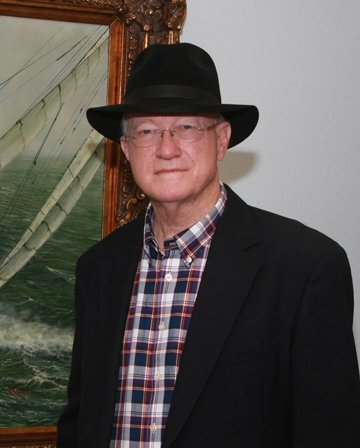
Royce Lummus is currently serving his sixteenth year as an adjunct professor of Program Management at the University of Texas at Arlington and as the president of Consulting Services International, where he continues to provide management consulting for a wide range of companies from small to Fortune 500.
Lummus holds six university degrees from schools in the U.S. and Europe including a B.S. in aerospace engineering from The University of Texas at Austin and M.S. and Ph.D. degrees in aerospace engineering from the University of Texas at Arlington, an M.S. electrical engineering from Southern Methodist University, a diploma in fluid mechanics from the Von Karman Institute, Brussels, Belgium, and an M.B.A.in management and finance from the University of Dallas. He teaches graduate courses as an adjunct professor at the University of Dallas Graduate School of Management, and also teaches graduate courses in Program Management and Systems Engineering at the University of Texas at Arlington, where he successfully supervised numerous Ph.D. students.
Lummus held numerous positions of responsibility during his career at Lockheed Martin, General Dynamics and the Vought Corporation. He directed Lockheed Marting Aeronautics’ Integrated Warfare Development at the famous Advanced Development Programs (Skunk Works) where he managed development of the FB-22 Fighter Bomber Program and the breakthrough Mission & Operational Battle Management Systems that is transforming the future of tactical air warfare. In 2003, he was charged with the business restructuring of a major European company for LM while leading the development of new aircraft programs. He has worked as the director of New Aircraft Programs and the program director and creator of the $2 Billion T-50 Advanced Trainer Program with the Republic of Korea and the $7 Billion Indigenous Defensive Fighter Program with Taiwan.
In addition to his management roles in the aerospace industry, Lummus is also the president and co-owner of the successful fifteen-year-old Consulting Services International Company, which has assisted over one hundred companies and professionals with program and business management, financial planning and marketing services. He is extremely experienced at assisting companies in establishing goals and developing the strategic and tactical business solutions to reach their goals, and coaching company management toward personal and corporate success. These companies include all types of businesses from retail, manufacturing, medical practices and Fortune 500 corporations like Textron and Beechcraft.
Lummus has published technical and management papers in numerous professional publications. He was honored with a Von Karman Fellowship from the U.S. Air Force. He was named a 2001 Distinguished Engineering Alumnus by the University of Texas at Arlington in 1999, as well as a Distinguished University Alumnus there in 2001. He is a registered Professional Engineer and holds a Top Secret Security Clearance.
Lummus lives in Fort Worth, TX, with his wife Linda, who is a partner in their consulting firm and their three German shepherd dogs, Schatzi, Krieger and Rolfe. He is active in scale radio control modeling, sailing and painting.
G. Edward Powell, Jr.
Chief Executive Officer, TensorX, Inc.
B.S., Aerospace Engineering, Auburn University (1985)
M.S., Aerospace Engineering, The University of Texas at Austin (1987)
Ph.D., Aerospace Engineering, The University of Texas at Austin (1992)

Edward Powell is the CEO of TensorX and chairman of IPX. TensorX leverages the cloud, the crowd, and AI to optimize performance. Its customers include Amazon, GE and KBR, as well as NASA, AFRL and the U.S. Space Force. The essence of Tensor’s offering is to combine simulation with model-based AI to optimize decisions from system design to strategic planning to real-time deployment. IPX models the global patent system as a technology prediction market. IPX manages IP portfolios for leading universities and companies.
Powell received his B.S. in aerospace engineering from Auburn University and his M.S. and Ph.D. in aerospace engineering from The University of Texas at Austin.
Between August 1987 and July 1995, Powell held various positions at the Massachusetts Institute of Technology. He began as a research scientist at Haystack Observatory, then became a member of the technical staff at Lincoln Laboratory, where he served on the Midcourse Space Experiment (MSX) Surveillance team. He was a member of the Cassini Swing-by Review Panel, where he led the navigation risk analysis. Powell also participated in the inaugural Planetary Defense Workshop and in the preliminary design of the Lincoln Near-Earth Asteroid Research (LINEAR) program. He led several studies for the United States Air Force (USAF) Scientific Advisory Board, from rearchitecting the U.S. Space Surveillance Network to assessing applications of AI to space systems.
From 1995 to present, Powell has created enterprises leveraging model-based AI to optimize supply chains, services, intellectual property, insurance and healthcare. He has co-founded five companies and raised over $100M of venture financing. Highlights include saving 2,000,000 miles per month (40%) at Terminix, quantifying the financial, casualty and environmental costs of breaking up Amazon, valuing every patent in the USPTO and optimizing sensor tasking for the USSF National Space Defense Center.
In 2000, Pointserve was named a top innovation of BMDO-developed technology. In 2021, CareGauge was named Fierce Health care innovative clinical product of the year.
Powell has served as a member of the Auburn University Research Council and the American Astronautical Society Technical Committee. He was the general editor of Advances in the Astronautical Sciences (Vol. 93). He also received the Cassini Recognition Award.
Powell was the founding chairman of City School in Austin, and he serves on the Board of Trustees of Montgomery Bell Academy and Cumberland University.
He lives in Nashville, TN, with his wife, Molly. They have four adult sons and enjoy spending time with family, especially their three grandsons.
Kevin Sagis
Chief Engineer and Senior Vice President, Reliable Robotics
B.S., Aerospace Engineering, The University of Texas at Austin
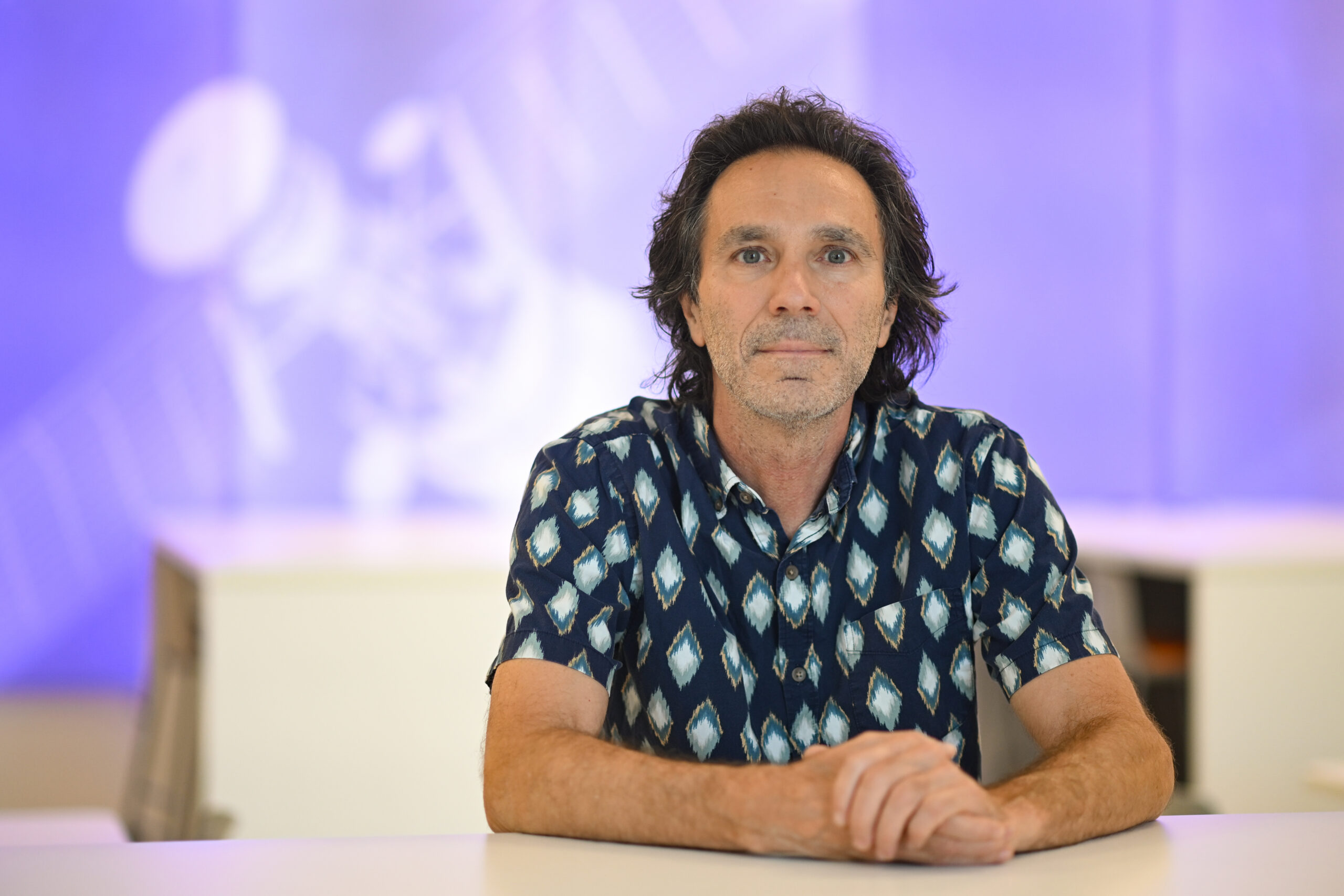
Kevin D. Sagis is a professor of practice and the program director of the Texas Rocket Engineering Lab at The University of Texas at Austin. He received his Bachelor of Science degree in aerospace engineering from UT Austin.
He began his multi-faceted career in 1988 with the Space Transportation Systems Operation Contract (STSOC), where he supported NASA’s Johnson Space Center in the first Space Shuttle return-to-flight campaign. In 1990, he joined Lockheed Martin to support Advanced Programs for NASA’s Johnson Space Center and Marshall Space Flight Center, making contributions to the design of the National Launch System (NLS), which subsequently formed the basis of the Space Launch System (SLS) for the Artemis program and NASA’s historic return to the moon. After his early career experience supporting NASA, Sagis changed his focus to the commercial sector, where he and a skunk-works team rapidly created multiple versions of the Athena launch vehicle that repurposed existing technologies to provide cost-effective launch opportunities for the very early emerging small-satellite market. In 2000, Sagis pivoted into the high-tech industry and founded a start-up that architected and deployed wireless internet capability for Ticketmaster Online-Citysearch; later, he joined American Express Business Finance to create mission-critical, small-business end-to-end multi-tier applications. In 2007, he returned to aerospace with Lockheed Martin and was the Chief Engineer of the Extended Medium Range Ballistic Missile that was designed with a unique air-launching capability to enable testing of critical scenarios for the Missile Defense Agency.
In 2012, as one of the original visionaries of Virgin Orbit, Sagis partnered with Richard Branson to reimagine how a Boeing 747 carrier aircraft could be used to launch liquid-engine orbital rockets. As Chief Engineer at Virgin Orbit, he was directly responsible for numerous new technologies that significantly advanced the field of aerospace engineering and set the foundation for taking the company public. In addition to his extensive portfolio in aerospace and software, he has driven transformational change in the aviation sector, developing and deploying remotely operated aircraft systems at Reliable Robotics.
Sagis has been awarded the Lockheed Martin Mission Success Award and has received recognition and awards from NASA for innovations in trajectory simulation. His achievements have been featured numerous times in Aviation Week and Space Technology, and he holds multiple patents from the US Patent and Trademark Office.
Outside of work, Sagis is the founder of Paragon Labs and has led various NewSpace (Space 2.0) efforts, such as building a Vertical Takeoff, Vertical Lander (VTVL) and competing in the Xprize Lunar Lander Challenge. Kevin mentors the UT Texas Rocket Engineering Lab (TREL) and also created / funded a scholarship for students in TREL with demonstrated financial need. In addition to his active involvement with TREL, he has provided highly specialized ground support equipment to numerous universities’ space launch efforts and also founded a 501(c)(3) non-profit to provide hands-on aerospace learning opportunities to students of all ages.
Paul “Rusty” Thomas
Senior Vice President/General Manager, Space Applications and Chief Technology Officer, Sierra Space
B.S., Aeronautics and Astronautics Engineering, Purdue University (1991)
M.S., Aerospace Engineering, The University of Texas at Austin (1993)

Paul “Rusty” Thomas’ career includes commercial and government space systems with more than 120 launched missions spanning low Earth orbit, geostationary and interplanetary spacecraft. He is currently the senior vice president and general manager of the Space Applications Sector and the chief technology officer at Sierra Space. He recently moved into this position after departing Amazon, where he was the director of the Kuiper Government Solutions team. Amazon’s Kuiper Systems is a planned constellation of 3,236 satellites that provides global broadband internet connectivity.
Thomas holds a B.S. in aeronautical and astronautical engineering from Purdue University and an M.S. in engineering mechanics from The University of Texas at Austin. His military background includes twenty years of service in the U.S. Navy Reserve. Thomas is an Iraq veteran and Navy Intelligence Officer trained to deploy with Naval Special Warfare teams.
Prior to Amazon, Thomas worked with DARPA’s Tactical Technology Office, leading Project Blackjack, a proliferated LEO satellite system with autonomous operations and direct tactical communication links from space to mobile ground users. He served at SpaceX before that, as Senior Director for Dragon Production, where he led the team that built the first commercial spacecraft to resupply the International Space Station. Thomas streamlined production, driving a build rate of six spacecraft per year, refurbished the first reusable Dragons, and established Crew Dragon production systems. His team also manufactured the Falcon9 landing legs and actuators that enabled the reusable first stage rockets that are now in operational use.
Thomas also held positions at Motorola, working on the original Iridium satellite integration and launch team, as well as performing Space Shuttle and SpaceLab structural analysis. At Northrop Grumman Innovations Systems (previously ATK), he held multiple program management positions, including leading the DARPA Microsatellite Technology Experiment (MiTEx) satellite mechanical design team.
He has been awarded two prestigious DARPA Director’s coins, one for MiTEX and the second for Project Blackjack, plus a DARPA Meritorious Public Service Medal. His other honors include SpaceX “Kick-Ass” awards and a SpaceX Exemplary Leadership Award, two NASA Group Achievement Awards, and three Navy and Marine Corps Commendation Medals.
Thomas lives in Falls Church, Virginia, with his wife, Jenny, and their daughters, Josephine and Jacqueline. He enjoys traveling with his family, and specifically going places in his Piper Saratoga 6-person airplane.
About the Academy
The ASE/EM Academy of Distinguished Alumni was established in 2019 with the vision to foster excellence within the aerospace engineering, engineering mechanics and computational engineering programs in the Texas ASE/EM through recognition, participation, encouragement and support of the department.
Members are recognized and honored by the academy for leading distinguished careers that include outstanding technical contributions, excellence in leadership and dedication to improving communities.
An in-person banquet and ceremony will take place in Austin on April 14 to recognize these alumni for their achievements and to induct them into the academy.