
Class of 2024 ASE/EM Academy of Distinguished Alumni
Ten Texas Engineering alumni of the Department of Aerospace Engineering and Engineering Mechanics at The University of Texas at Austin have been elected to the 2024 class of the ASE/EM Academy of Distinguished Alumni.
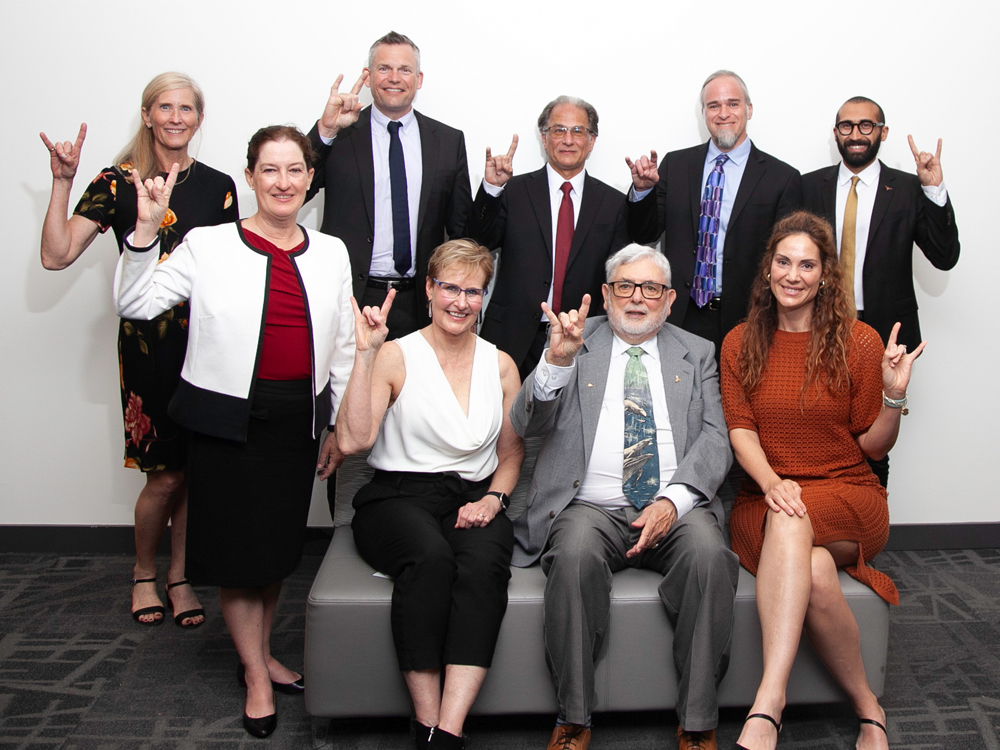
Ten Texas Engineering alumni of the Department of Aerospace Engineering and Engineering Mechanics (ASE/EM) at The University of Texas at Austin have been elected to the 2024 class of the ASE/EM Academy of Distinguished Alumni.
The ASE/EM Academy of Distinguished Alumni was established in 2019 with the vision to foster excellence within the aerospace engineering, engineering mechanics and computational engineering programs in the ASE/EM department through recognition, participation, encouragement and support of the department.
Members are recognized and honored by the academy for leading distinguished careers that include outstanding technical contributions, excellence in leadership and dedication to improving communities.
This year’s class of distinguished alumni includes space tech leaders in government and industry, an astronaut, a professor, pilots, entrepreneurs and more. A new category for electing young alumni to the academy was introduced this year as well, with Payam Banazadeh as the inaugural recipient.
The members elected to the ASE/EM Academy of Distinguished Alumni for 2024 are:
Peter G. Antreasian
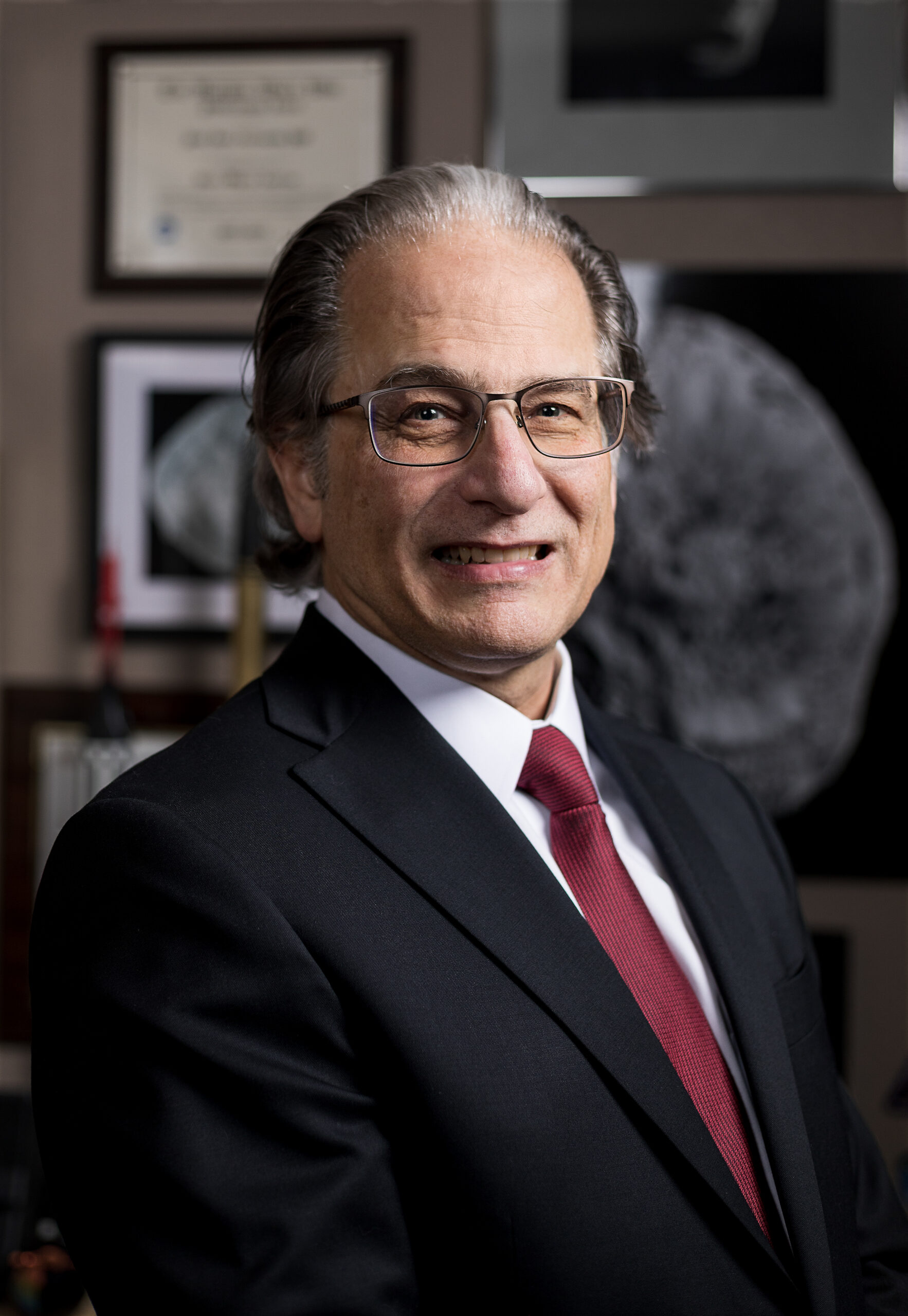
Flight Director, KinetX Aerospace
B.S. ASE 1984, Purdue University
M.S. ASE 1987, The University of Texas at Austin
Ph.D. ASE 1992, University of Colorado Boulder
Peter Antreasian is the flight director of Space Navigation and Flight Dynamics (SNAFD) for KinetX Aerospace, the first privately held company to supply critical navigation support for NASA deep space missions. He oversees the KinetX navigation teams supporting both civil and commercial deep space flight projects. He has also served as the navigation team chief for the NASA OSIRIS-OREx mission which recently returned a sample of the near-Earth asteroid, Bennu, to Earth and continues this role for the extended OSIRIS-APEX mission to the asteroid Apophis in 2029.
Antreasian earned his B.S., M.S. and Ph.D. degrees in aerospace engineering, respectively, from Purdue University, The University of Texas at Austin and the University of Colorado.
Antreasian began his career as an orbit determination (OD) analyst for the Galileo navigation team at the Jet Propulsion Laboratory in 1992. After the Galileo prime mission at Jupiter ended, he became the OD team manager for the Near Earth Asteroid Rendezvous mission to asteroid 433-Eros from 1997 to 2001. He then led the Mars Odyssey OD team in 2001. In 2002, Antreasian joined the Mars Exploration Rover (MER) navigation team as an OD analyst. Peter led the OD team on the Cassini-Huygens mission to Saturn from 2003 to 2008.
In 2008, Antreasian became the GRAIL navigation team chief. After the end of this mission, in 2013, he joined the SNAFD group at KinetX to become the Navigation Team Chief for NASA OSIRIS-REx mission.
To prepare for the Galileo and Cassini spacecraft encounters with Jupiter and Saturn, respectively, Antreasian was instrumental in the improvement of the OD operational processes and procedures at JPL. His efforts eliminated delivery errors within the large teams making frequent project deliveries. As the NEAR mission at 433-Eros was ending in 2001, Antreasian designed, and directed the end-of-mission operations with close flyovers of the asteroid, ending with the first-ever landing of a spacecraft on an asteroid. On MER, he developed an innovative OD filter-loop tool used by the navigation team throughout cruise to Mars which provided valuable insight to how different tracking data or filter parameters affected the solutions. His GRAIL navigation team succeeded in separately delivering two spacecraft via low-energy trajectories to the moon then synchronizing them into low lunar orbits to collect high-resolution-gravity measurements.
The small asteroid size relative to the navigation errors made OSIRIS-REx an even more challenging mission, as his navigation team had to achieve higher orders of navigation accuracy than required for other deep space missions. His CU PhD dissertation on “Precision Radiation Force Modeling for the TOPEX/Poseidon Mission” was seminal to the force modeling on the OSIRIS-REx trajectory.
Antreasian has served as a navigation advisor for several NASA, and international deep space missions. His honors include two NASA Medals, the Exceptional Achievement Medal for leading GRAIL Navigation Team and the NASA Exceptional Public Service medal for contributions to NASA’s Deep-Space-Navigation Enterprises. In 2016, the asteroid 128022 Peterantreasian was named in his honor. Peter has authored or co-authored over 120 publications in journals and conference proceedings
Antreasian lives in Littleton, Colorado, with his wife, Kathy, and their four children, Ryan, Julia, Bridget, and Dylan. Peter enjoys activities in the mountains, astrophotography, art and star gazing.
Payam Banazadeh
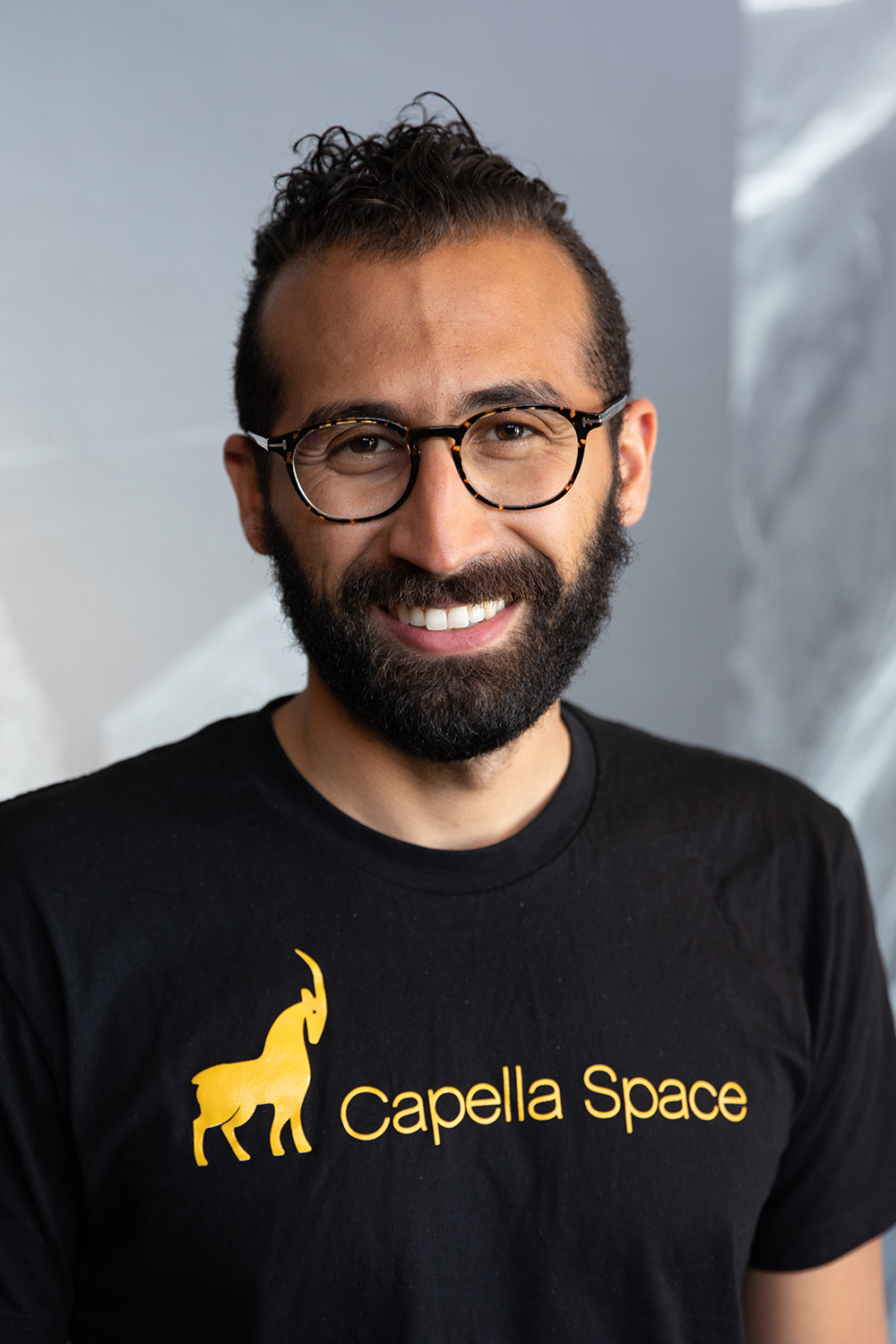
(Outstanding Young Alumnus), Founder, Capella Space
B.S. ASE 2012, The University of Texas at Austin
M.S. Management, Science & Engineering 2016, Stanford University
Payam Banazadeh is an American entrepreneur and technology executive with expertise in deep technologies. He specializes in businesses that require developing solutions that overcome significant scientific or engineering challenges, with a keen interest at the intersection of hardware and software technologies.
Banazadeh earned a business/management master’s degree from Stanford University and a B.S. degree in aerospace engineering from The University of Texas at Austin.
In 2016, Banazadeh founded Capella Space, the first American company to launch commercial Synthetic Aperture Radar (SAR) satellites. Under his leadership, Capella raised over $250 million in venture capital and emerged as a world leader in a new category of data and information intelligence from space. Capella Space provides critical and life-saving geospatial data to the U.S. government, international governments and some of the largest commercial enterprises in the world.
Before founding Capella Space, Banazadeh was an engineer at NASA’s Jet Propulsion Laboratory (JPL), where he received the NASA Mariner Award, NASA Discovery Award and NASA Formulation Award for his significant contributions to NASA missions.
Banazadeh is an advisor to CEOs, founders and investors in deep technology and frequently speaks on panels and industry conferences on a variety of topics spanning from space, big data, cloud computation, defense technology, government innovation and startups. He is currently serving on the UT Austin ASE/EM External Advisory Committee, the National Security Space Association (NSSA) board and NOAA’s Advisory Committee on Commercial Remote Sensing (ACCRES).
Steven J. Beresh
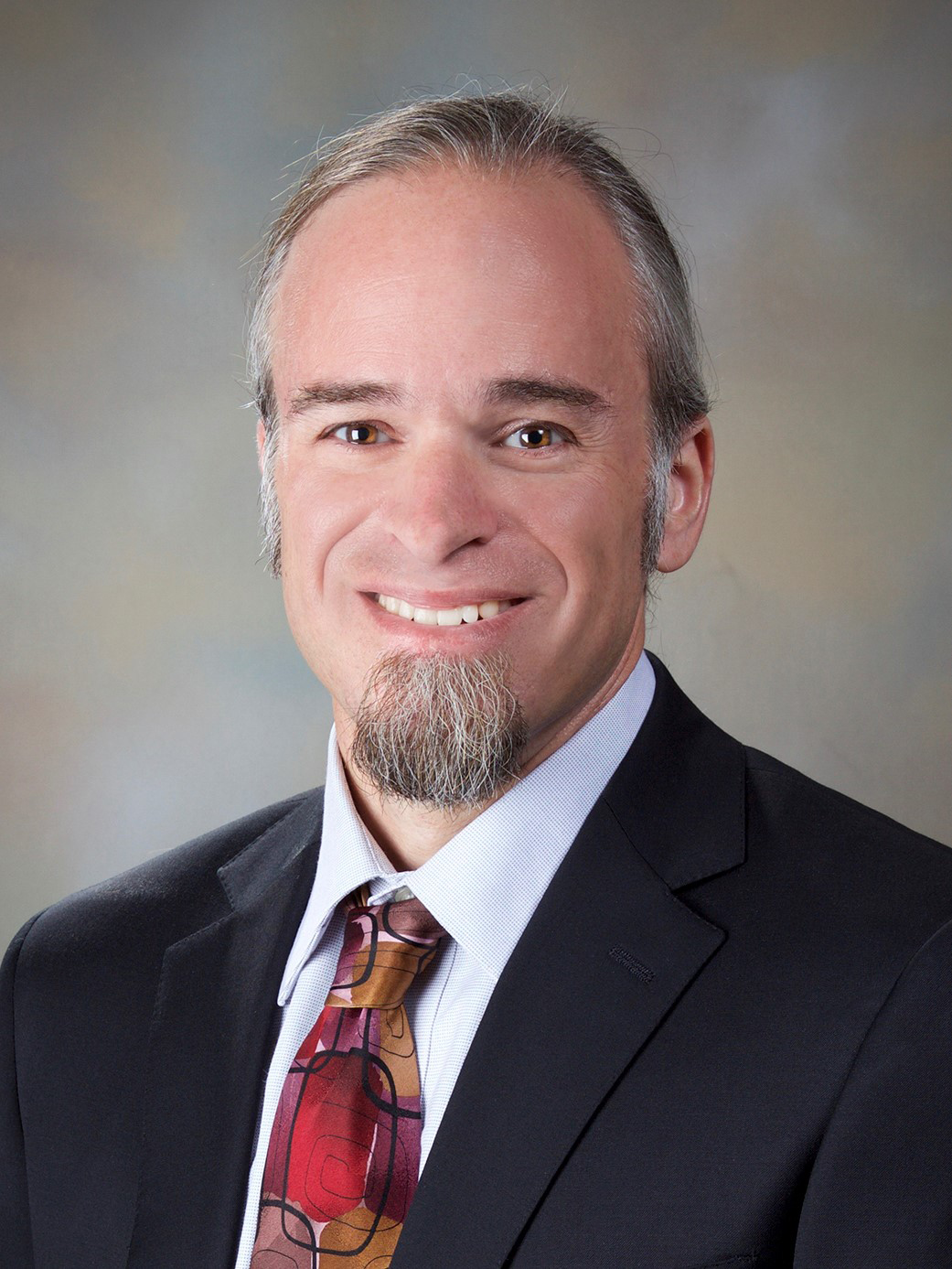
Distinguished Member of the Technical Staff, Sandia National Laboratories
B.S. ME 1994, Michigan State University
Ph.D. ASE 1999, The University of Texas at Austin
Steven J. Beresh is a distinguished member of the technical staff at Sandia National Laboratories in Albuquerque, New Mexico, U.S.A. where he has worked since 1999 and leads the Experimental Aerosciences Facility.
Beresh received his B.S. in mechanical engineering from Michigan State University in 1994 and his Ph.D. in aerospace engineering from The University of Texas at Austin in 1999.
Beresh’s research interests emphasize the use of laser-based diagnostics for high-speed wind tunnel experimentation, particularly particle image velocimetry, but he is now focused on maturing instrumentation techniques for hypersonics. He also is responsible for a wide range of wind tunnel testing and facility operation. While at Sandia National Laboratories, he has taken a wind tunnel program devoted to conventional aerodynamic testing and transformed it into a science-based research program providing data for physical discovery, code validation, and development of reduced-order models. These contributions have impacted a variety of national security applications and scientific advancements.
Beresh is a Fellow of the American Institute for Aeronautics and Astronautics, has served as chair for the AIAA Aerodynamic Measurement Technology Technical Committee, is now a deputy director of the Aerospace Sciences group for AIAA, and is a past president of the Supersonic Tunnel Association International. He has published nearly 60 peer-reviewed journal articles and over 200 conference papers.
A native of Detroit, Michigan, Beresh has found a home in the Mountain West with his longtime girlfriend Lee, but still makes frequent trips to Michigan and Texas.
Andrea Chavez

Bell Engineering Talent Management Team, University and STEM Collaborations, Bell Flight
B.S. ASE 2004, The University of Texas at Austin
Business Foundations Certificate, 2004
Andrea Chavez received her B.S. in aerospace engineering from The University of Texas at Austin in 2004. With nearly 20 years working at Bell Textron, Inc., most of her experience has been working on research and development projects with a background in helicopter propulsion and drive systems. With the discoveries from her past research projects, Chavez authored Vertical Flight Society (VFS) technical papers, briefing the findings at VFS propulsion specialists’ meetings and technical forums. She holds three U.S. patents/co-patents for inventions that advanced from the research and development projects.
In 2016, Chavez stood proudly on the Longhorn field as one of the recipients to the Outstanding Young Texas Ex award. Shortly after, she moved into management within the Bell Innovation team overseeing the capture of contracted research of new advanced technology projects related to manned/unmanned Vertical Take-off and Landing (VTOL) aircraft.
Most recently, Chavez took on a new role within Bell’s engineering talent team where she manages University and STEM student collaborative opportunities to stay engaged with engineering talent pipeline.
When she is not working, Chavez and her husband enjoy watching her two sons play youth baseball.
John E. Cochran, Jr.
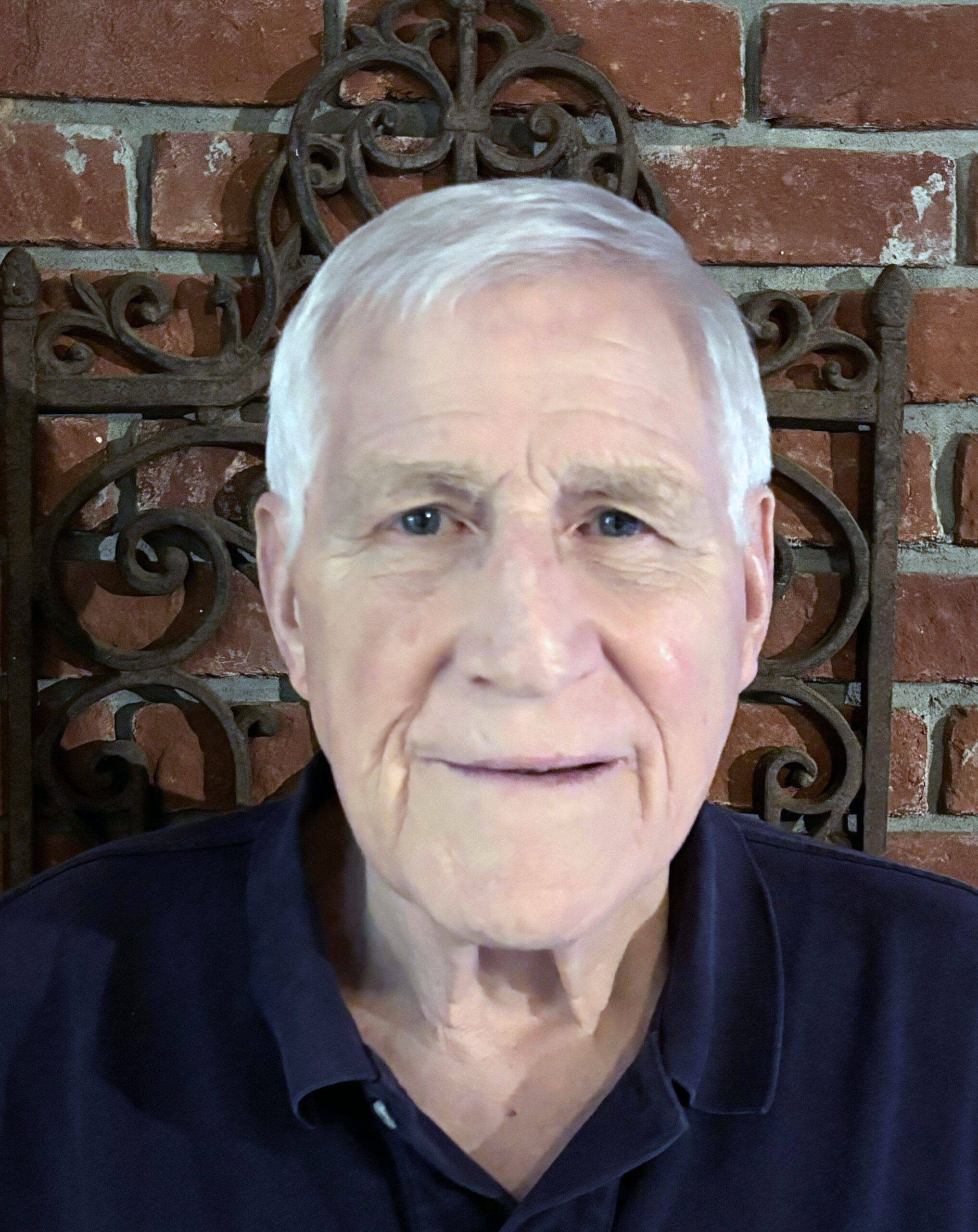
Professor Emeritus, Auburn University
B.A.E. 1966, Auburn University
M.S. AE 1967, Auburn University
Ph.D. ASE 1970, The University of Texas at Austin
J.D. 1976, Jones Law School
John Cochran is professor emeritus of the Department of Aerospace Engineering, Samuel Ginn College of Engineering, Auburn University. After retiring as head of the department in 2013, he has continued to teach graduate courses in dynamics and control of aircraft and spacecraft as a visiting professor to students on campus and through Engineering Online.
Cochran received his B.S. and M.S. degrees in aerospace engineering from Auburn University and a Ph.D. in aerospace engineering from The University of Texas at Austin. He also received a J.D. degree from Jones Law School.
His professional career in higher education has been spent almost exclusively at Auburn University as an instructor in aerospace engineering in 1967 and 1969 to assistant, associate and professor in 1970, 1975 and 1980, respectively, and served as the department head from 1993 to 2013. From 1981 to 1984 he was also the associate director of athletics. Cochran also spent a semester at the University of Virginia in 1975 as a visiting associate professor. After receiving his Ph.D., he directed graduate students in research in astrodynamics and flight dynamics. After receiving his J.D. and passing the State of Alabama bar exam (1977), he taught engineering law and ethics courses. Cochran obtained research funds from NASA, the U. S. Army, the U. S. Air Force Office for Scientific Research, the U. S. Department of Transportation and private industry. Since 1977, Cochran has been an expert witness in litigation involving engineering and intellectual property and has been president and CEO of Eaglemark, Inc. since 1984.
Cochran was the Auburn associate director of athletics for three years during which Bo Jackson and Charles Barkley were Auburn athletes. He has been involved in developing proposals and conducting and directing research in spacecraft attitude dynamics and control for NASA, developing simulations of missile launcher dynamics for the Army in the1970s and guidance laws for space-based interceptors for the Air Force during the “Star Wars” period of the 1980s. As department head, he established the Aerospace Engineering Advisory Council that supported the department continuously and especially during critical periods and obtained funding for several laboratory facilities. Cochran is very proud of the graduate students he directed, of which at least four are professors. He has more than 100 publications in refereed journals and conference proceedings.
A Fellow of the American Institute of Aeronautics and Astronautics (AIAA) (2005) and the American Astronautical Society (AAS) (1992), Cochran is a recipient of the Hermann Oberth Award from the Greater Huntsville Section of the AIAA (2017), an Outstanding Alumnus of the Auburn aerospace department (2014), and received a Walter Gilbert Award (for Auburn athletes’ career achievements after graduation) (2012). He has been a contributor to the ASE/EM department for many years.
Cochran lives in Auburn, Alabama, with his wife, Carol. They have five grandchildren: two thanks to their son Chris (deceased) and his wife Caroline and three thanks to their son Jonathan and his wife Sara. They enjoy attending City of Auburn recreation basketball and soccer games.
Barbara Craig

Vice President and Director of Research & Development, Ticom Geomatics, Inc. (retired)
B.S. ASE 1988, Texas A&M University
M.S. ASE 1992, The University of Texas at Austin
Ph.D. ASE 1995, The University of Texas at Austin
Barbara Craig received her B.S. in aerospace engineering from Texas A&M University and then subsequently received her M.S. and Ph.D. degrees in aerospace engineering from The University of Texas at Austin. She studied at the UT Center for Space Research under Byron Tapley and completed her dissertation in novel methods for precise orbit determination of low earth orbiting, remote sensing satellites. As part of her graduate studies, Craig worked at the NASA Johnson Space Center on the space shuttle’s GPS attitude verification flight experiment. She later accepted a position at UT Applied Research Laboratory where she worked on positioning techniques and applications using GPS technology.
In 1998 Craig left UT ARL to co-founded Ticom Geomatics, Inc. (TGI). Her roles were multiple and included board member, vice president, and director of research and development. Her technical efforts focused on the development of algorithms to utilize GPS precise timing along with time and frequency of arrival measurements to geolocate RF signals of interest. Under the leadership of Craig and her business partners, TGI thrived, growing to 200+ employees and known for building and deploying systems of sensors supporting the Department of Defense and the Intelligence Community during the Global War on Terrorism and other overseas engagements. Craig continued her work at TGI until its acquisition by Six3 Systems and then CACI in 2012 and 2013, respectively.
Craig now works part-time for the Center for Space Research where she leverages her entrepreneurial expertise to advise on new research opportunities. She was a member of the Texas A&M University Aerospace Engineering External Advisory Board and served as chair from 2019-2021. Craig splits her time between Austin and Bozeman, Montana. She is married to Mark Craig and they have two children, Nicholas and Zachary.
John W. Hicks
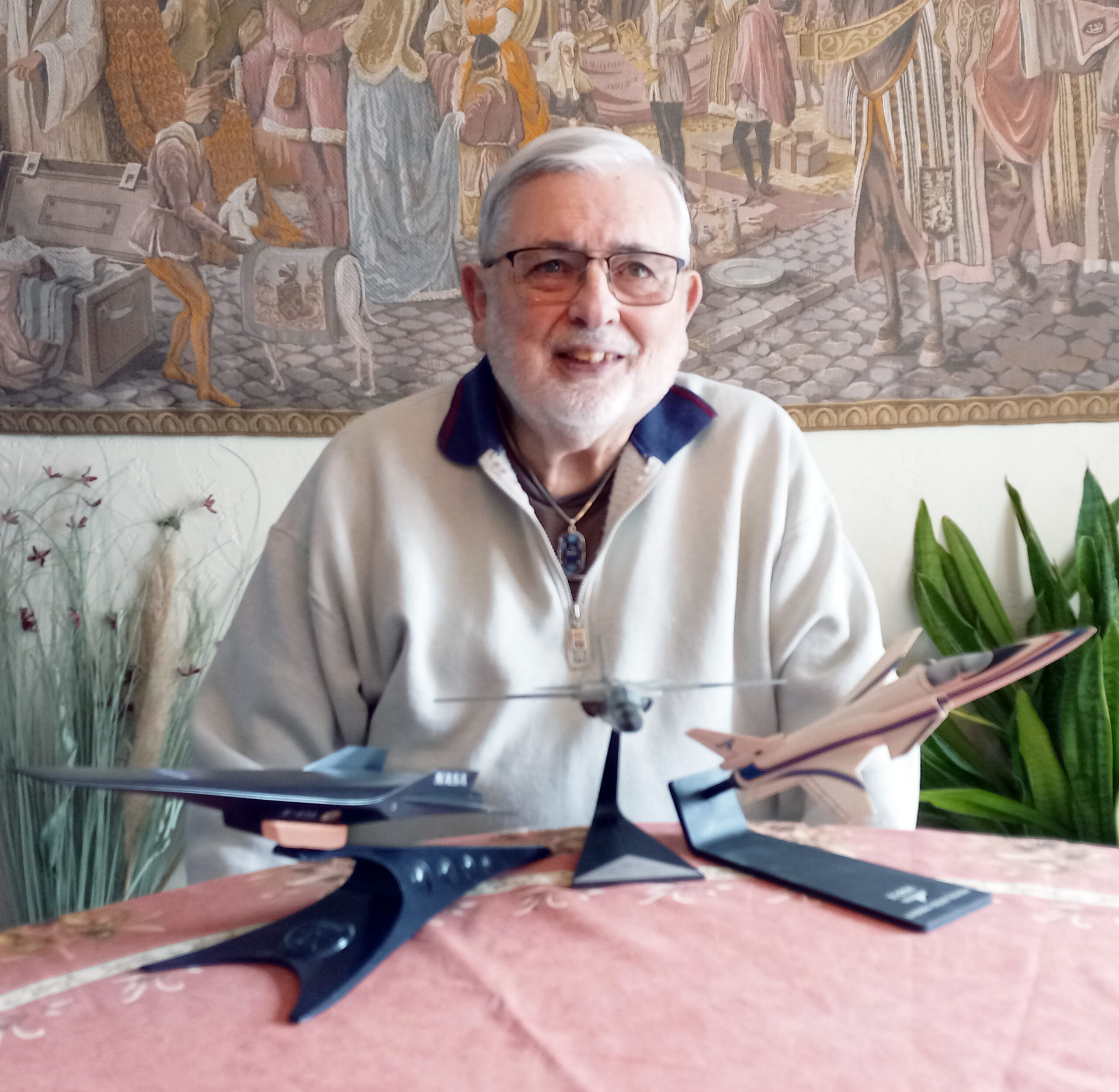
Hypersonics Expert, NASA (retired)
B.S. ASE 1969, The University of Texas at Austin
United States Air Force Test Pilot School, Edwards Air Force Base
M.S. Aeronautics, 1976, California Institute of Technology
Defense Language Institute (German and Russian), Monterey California
John Hicks, a long-time Texan from Abilene, attended The University of Texas at Austin from 1965 -1969 where he earned his B.S. degree in aerospace engineering in June 1969, before heading to Edwards Air Force Base (AFB) in the Mojave Desert of California. There he began his work as a performance flight test engineer at the Air Force Flight Test Center (AFFTC) for the first half of his 33-year career before moving to work for NASA Dryden Flight Research Center in the latter half of his total time at Edwards.
Additional education for Hicks included graduating from the USAF Test Pilot School at Edwards, an M.S. in aeronautics from the California Institute of Technology (GALCIT CalTech) in 1976 and finally graduating from the Defense Language Institute in Monterey, California in German and Russian as part of his technical work.
In his 33 years at Edwards AFB, Hicks worked on twelve major military and flight research projects including the C-5A, FB-111A, YF-16, ALCM cruise missile, X-29 forward-swept wing research aircraft, X-30 National Aerospace Plane, and a joint NASA-Russian (CIAM) scramjet flight project in Russia and Kazakhstan. He was selected for the German Scientist / Engineering Exchange Program in 1979 to work with the German’s DFVLR in Munich for two years, flight-testing the Tornado aircraft. Hicks created the X-43A project and configuration concept in 1995 which set a world’s speed record for the airbreathing engines with its scramjet propulsion system at Mach 9.8. Other major programs he managed included the General Atomics Predator B UAV and the AeroVironment Helios solar-electric aircraft, which set a world record 97,000 ft. for propeller-driven aircraft off the coast of Hawaii’s Kauai Island.
As an associate fellow of the AIAA and a NASA international hypersonics expert and the AFFTC flight test engineering, Hicks wrote and presented over 50 technical reports and papers at national and international conferences. In the hypersonic technology area, he worked and consulted with companies and government laboratories from numerous countries such as Germany, France, Russia, Japan and Australia, often presenting lectures and participating in hypersonics workshops worldwide. Hicks’ other honors include being selected as a Golden Eagle of the Air Force Flight Test Historical Society Hall of Fame for his work on the YF-16 program, which included participating in the YF-16 / YF-17 Source Evaluation Board selection of the F-16 aircraft for the Air Force.
Hicks retired from NASA in 2002 after successfully flying the Helios solar-electric aircraft to its world altitude record in August 2001. Since then, he has spent his retirement as a successful watercolor artist and traveled the world with his wife, Sandy, of 53 years.
Susan Kelly
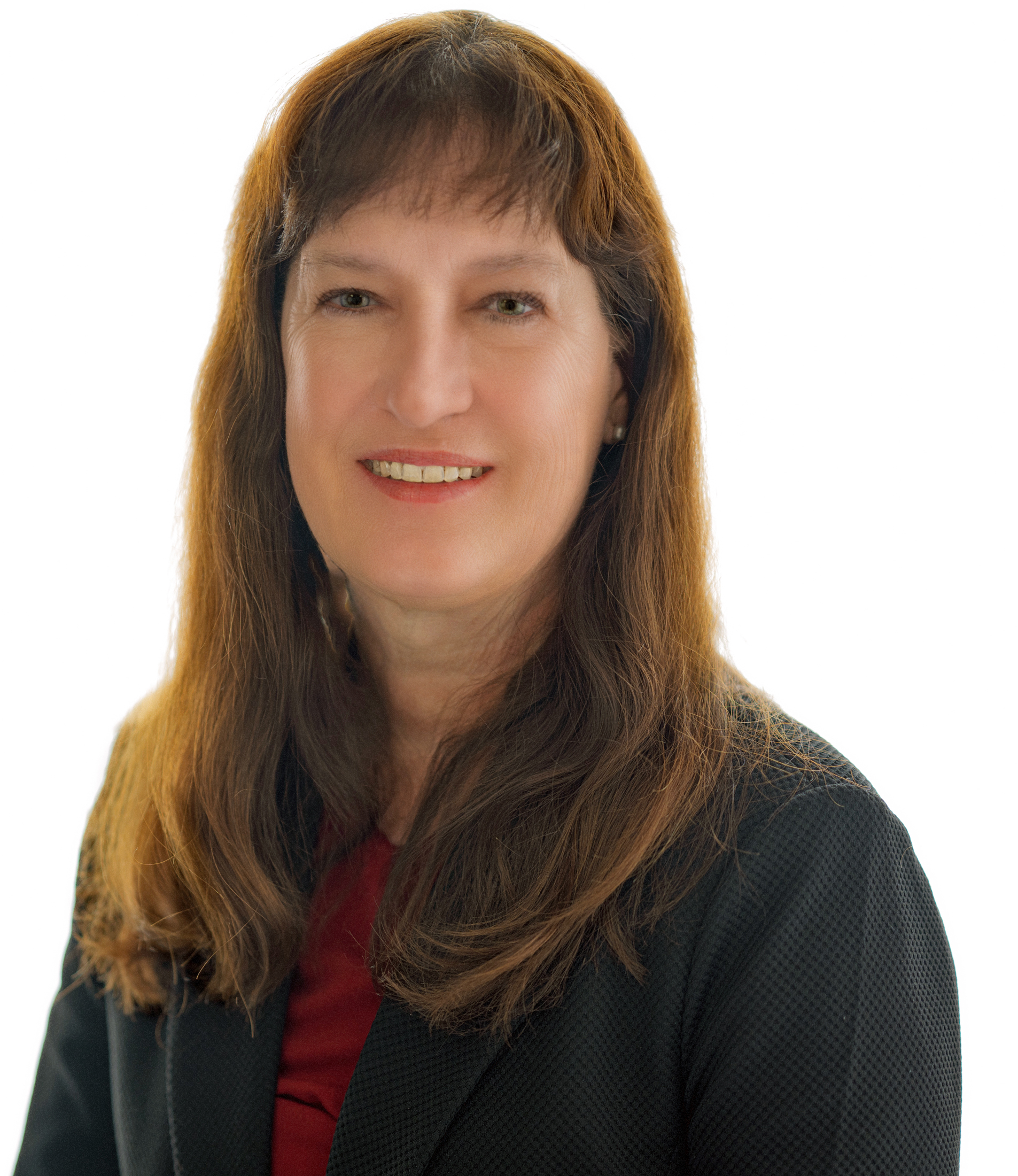
Director of Software Engineering, Raytheon (retired)
B.S. ASE 1989, The University of Texas at Austin
MBA General Business 1994, The University of Nebraska Lincoln
Susan Kelly retired from Raytheon (now RTX) in 2022 after a 26-year career as a missile systems engineer and program manager, reaching the role of director of software engineering responsible for over 650 software engineers. Not capable of sitting still, she is now a licensed real estate agent in Arizona.
Kelly received her B.S. in aerospace engineering from The University of Texas at Austin while enrolled in the Air Force Reserve Officer Training (AFROTC) and her MBA from the University of Nebraska Lincoln, while on active duty at Offutt AFB, Nebraska.
Her professional career began at Offutt AFB in the United States Air Force specifying nuclear mission planning systems and also installing a duplicate command post. She also was an engineer in Air Combat Command (ACC) and US Strategic Command (USSTRATCOM) doing modeling and simulation of foreign threat fighters and missiles in support of operational missions for Desert Storm and the Single Integrated Opera,onal Plan (SIOP).
In 1996, Kelly left the Air Force and joined Texas Instruments, later Raytheon, working various missile, unmanned aircraft and other systems. She worked in systems engineering, program management, functional management and business development over 26 years. Her career spanned every phase of system development from early prototyping, development, production and depot support.
Kelly’s career highlights include debriefing three defectors from the USSR and other countries. As a young 1LT, she advised the USAF Fighter Weapons School F-15E pilots on tactics and doctrine. At Raytheon, she helped develop a new algorithm, implement it in hardware, flight test it and field it. She was responsible for understanding performance of the Evolved Seasparrow Missile for the NATO Seasparrow Missile Consortium, assisting with ship integration.
She earned Raytheon Capture Manager Certification in six areas and Raytheon program manager certification. Kelly was also awarded the Raytheon Missile Systems Excellence in Technology Award for 2003, was elected to Raytheon Technical Honors, and received the Raytheon Engineering Excellence in Leadership Award. She was named the July 2011 Air Force Reserve Officer Training Corps (AFROTC) Distinguished Graduate for 1989. In addition, Kelly has served on the UT Austin ASE/EM External Advisory Committee,
Kelly lives in Marana, Arizona with her husband, Clive Haas. They have two sons, Austin and Kevin, and two daughters, Taylor and Meghan, a son-in-law Chris, three granddaughters, and three dachshunds – Oscar, Oliver, and Chip. Her hobbies include hiking, skiing, astronomy/ astrophotography, cycling, running and quilting.
Andreas Mogensen
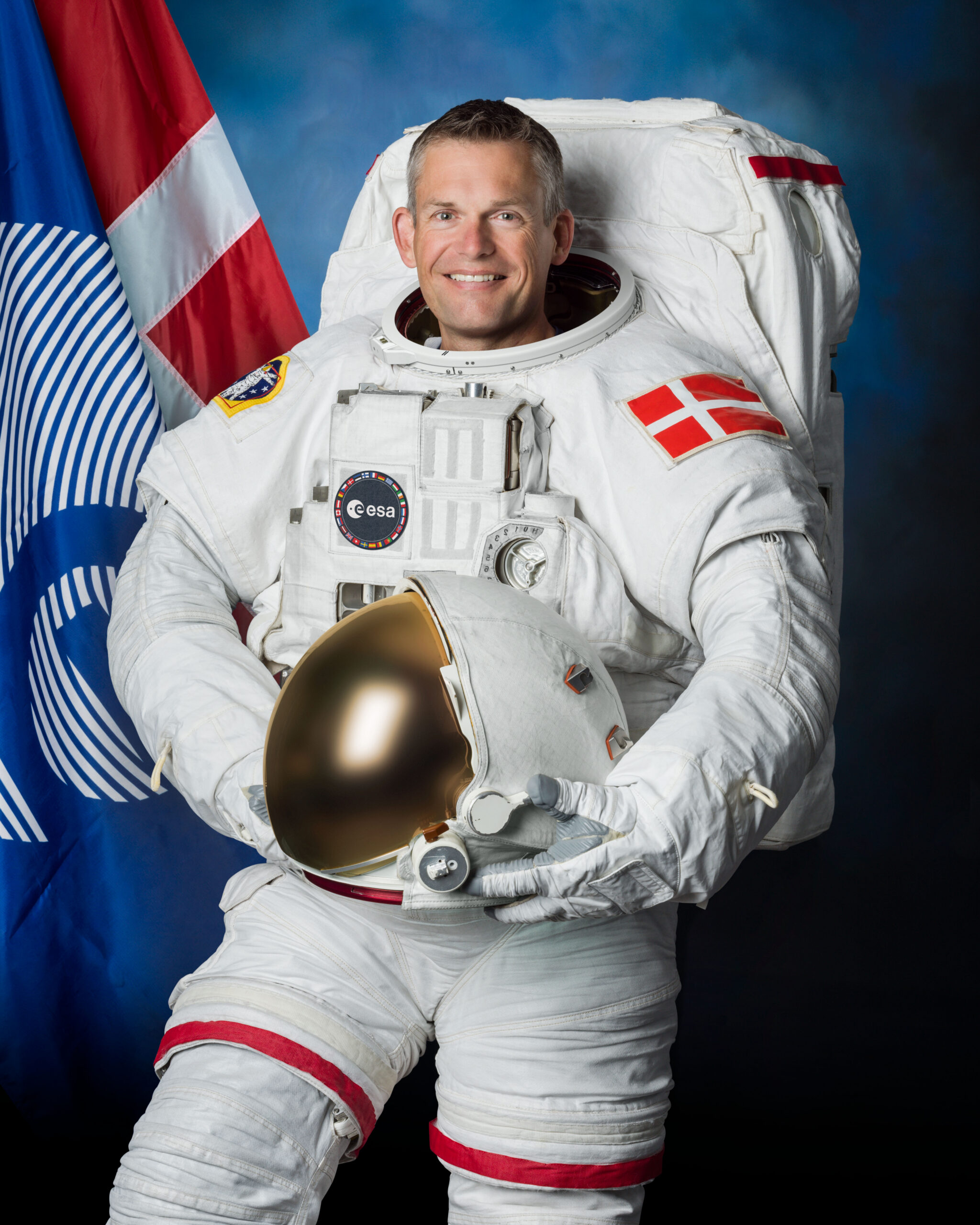
Astronaut, European Space Agency
International Baccalaureate, 1995, Copenhagen International School
M.Engr Aeronautical Engineering, 1999, Imperial College London
Ph.D., ASE 2007, The University of Texas at Austin
Andreas Mogensen was selected as a European Space Agency (ESA) astronaut in May 2009 and completed the astronaut basic training programme at the European Astronaut Centre in Cologne, Germany in November 2010.
Mogensen began his professional career as an engineer at Schlumberger Oilfield Services, where he worked as a drilling services engineer from 2000 to 2001. From 2001 to 2003, he worked at Vestas Wind Systems in Ringkøbing, Denmark, as a control systems engineer in the research and development department, where he designed control systems for wind turbines. While working towards his doctorate, Mogensen was a research assistant at the Center for Space Research and a teaching assistant in the Department of Aerospace Engineering at The University of Texas at Austin.
From 2007 to 2008, Mogensen worked as an attitude and orbit control systems engineer for HE Space Operations. He was subcontracted to Airbus in Friedrichshafen, Germany, for the duration of his employment, where he worked on ESA’s Swarm mission.
Before being selected as an astronaut, Mogensen was a research fellow at the Surrey Space Centre at the University of Surrey in the UK. His research focused on spacecraft guidance, navigation and control during entry, descent and landing for lunar missions. Alongside his astronaut duties, Mogensen is also an adjunct professor at both the Technical University of Denmark (DTU Space) and an adjunct lecturer at the University of Aalborg.
Mogensen became the first Danish citizen in space during the 10-day ‘iriss’ mission to the International Space Station on Sept. 2, 2015. While on the Space Station, Andreas worked as a flight engineer, performing experiments in a variety of areas. He also served as a flight engineer on Soyuz TMA-18M during launch and on Soyuz TMA-16M during his return flight.
On 26 August 26, 2023, Mogensen launched on his second mission, Huginn where he served as the first non-US pilot on SpaceX’s Crew Dragon, and as commander of the International Space Station, a role which he held for more than five months. During the Huginn mission, Mogensen carried out experiments ranging from climate and materials science to human physiology and fundamental science. On 12 March 2024, after more than six months on the Space Station, Andreas and Crew-7 returned to Earth, splashing down near the coast of Florida.
In his free time Mogensen enjoys rugby, basketball and squash. He is also active in several adventure sports, including scuba diving, skydiving, kite surfing, kayaking and mountaineering. Other interests include science, in particular astrophysics, exobiology, and evolution.
Carolyn Overmyer

Director, Orion Chief Engineer, Lockheed Martin Space
B.S. ASE 1988, The University of Texas at Austin
MBA, The University of Houston – Clear Lake
Carolyn Overmyer is the chief engineer of the Orion Program for Lockheed Martin Space. The Orion spacecraft is built to take humans farther than they’ve ever gone before. On Artemis missions, Orion will carry the crew to space, provide emergency abort capability, sustain the crew during the space travel, and provide safe re-entry from deep space return velocities. She is responsible for the technical integrity and certification of the spacecraft through design, development, test, assembly and throughout the on-orbit mission.
She received her B.S. degree in aerospace engineering from The University of Texas at Austin and her MBA from the University of Houston – Clear Lake. Overmyer’s professional career began at the McDonnell Douglas in Houston, Texas as part of the Extra Vehicular Activity (EVA) subsystem design team on Space Station Freedom which evolved into a close working relationship with the Russian EVA team when the program became the International Space Station. Through negotiation and diligence, she ensured a safe environment for both the Russians in Orion Space suits and the US crew in EMUs to perform difficult assembly operations on all areas of the Space Station.
Overmyer has over 30 years of experience in program management, business development, systems engineering, spacecraft design and hardware development for human-rated space-based systems. She has led multiple international projects including the Orion Service Module, Russian module integration on the International Space Station and the development of the SPACEHAB Universal Communication System. She has also worked on GPS IIF, commercial space payloads, inflatable systems, STS Operations and Intelligence systems.
She is an associate fellow of the American Institute of Aeronautics and Astronautics (AIAA) and received the AIAA Rocky Mountain Section Engineer of the Year Award in 2017. She is currently the Rocky Mountain Section Honors and Awards chair. Overmyer was awarded the Rotary National Award for Space Achievement (RNASA) Stellar Mid-Career Award and a Silver Snoopy Award for the Orion European Service Module Integration Leadership. She has a passion for mentoring and coaching the next generation of engineers and is involved in may STEM outreach activities.
Overmyer currently resides in Parker, Colorado with her husband of 30 years and their dog Rocket. She has two grown sons both working in the aerospace and computing industry. She enjoys downhill skiing, hiking, tennis and pickleball in her spare time.
A banquet and ceremony was held on April 19 to recognize these alumni for their achievements and to officially induct them into the academy.
Several of the new inductees also participated in an inaugural alumni panel in the ASE Building that same afternoon, where they shared their experiences about teamwork, communication and collaboration in the aerospace industry with our students.
View photos from the Academy of Distinguished Alumni celebration.