
Class of 2025 ASE/EM Academy of Distinguished Alumni
Ten Texas Engineering alumni of the Department of Aerospace Engineering and Engineering Mechanics at The University of Texas at Austin have been elected to the Class of 2025 ASE/EM Academy of Distinguished Alumni.
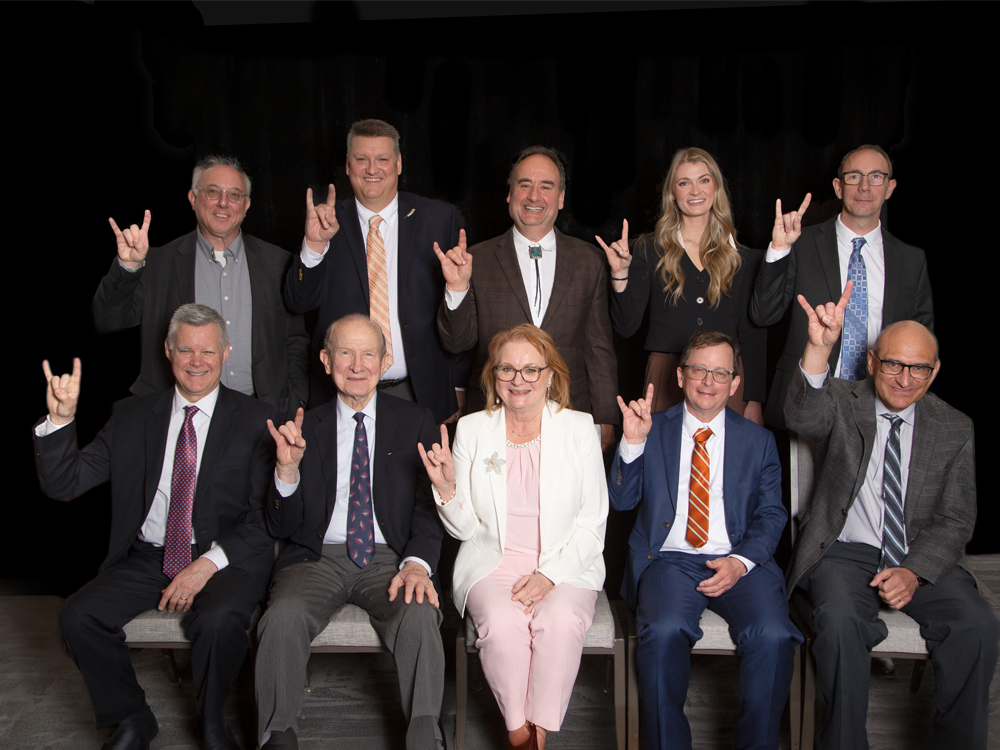
The ASE/EM Academy of Distinguished Alumni was established in 2019 with the vision to foster excellence within the aerospace engineering, engineering mechanics and computational engineering programs in the department through recognition, participation, encouragement and support of the department.
Members are recognized and honored by the academy for leading distinguished careers that include outstanding technical contributions, excellence in leadership and dedication to improving communities.
The members elected to the ASE/EM Academy of Distinguished Alumni for 2025 are:
Tobin C. Anthony

CEO, Space Systems Integration, LLC
B.S. ASE 1984, The University of Virginia
M.S. ASE 1988, The University of Texas at Austin
Ph.D. ASE 1995, The University of Texas at Austin
Tobin Anthony is the chief executive officer of Space Systems Integration (SSI), LLC an aerospace engineering consulting company headquartered in Chantilly, VA. SSI’s customers vary from commercial, civilian and classified entities within the space industry. Anthony is a nationally recognized expert in spacecraft attitude and control and has recently specialized in inter-spacecraft laser communication.
Anthony received his B.S. in aerospace engineering from The University of Virginia. He earned both his M.S. and his Ph.D. degrees in aerospace engineering from The University of Texas at Austin.
Anthony’s professional career began at NASA Goddard Space Flight Center in 1984 as an orbit determination specialist in the Flight Dynamics Division. He spent 13 years at Goddard and focused on spacecraft guidance, navigation and control (GNC). During this time, received a competitive award that funded his graduate work at UT Austin. He began work at Orbital Sciences Corporation in 1997 and began supporting classified U.S. Department of Defense (DoD) programs in 2001. He joined SSI in 2009.
Anthony was heavily involved in GNC technology development as the transition began in the 1990s to flying embedded spacecraft flight software. He pioneered a simulation-based software development methodology at NASA Goddard that has been used on spacecraft programs since the late 1990s. At Orbital, he developed an attitude Kalman filter that derives spacecraft attitude rate from star tracker measurements. He supported several classified development programs at the National Reconnaissance Office (NRO). While supporting DARPA, he led the successful Mandrake-2 demonstration of spacecraft-to-spacecraft laser communications.
He has served on numerous review boards at NASA and the NRO. His honors include multiple NASA Group Achievement Awards and NRO Group Achievement Awards. Anthony has co-authored several professional conference and journal articles. He is the author of Building and Maintaining an Intranet with the Macintosh.
Anthony lives in Great Falls, VA with his wife Sharon (MBA 1989 UT Austin). They have three adult children and two grandchildren, with hopefully more on the way. He enjoys bicycling as well as hiking around the Washington D.C. area and the Blue Ridge Mountains with his Black Labrador mix, Remy.
Russell Carpenter

Deputy Project Manager/Technical, Space Science Mission Operations, NASA GSFC
B.S. ASE 1989, The University of Texas at Austin
M.S. ASE 1991, The University of Texas at Austin
Ph.D. ASE 1996, The University of Texas at Austin
Russell Carpenter has been with NASA since 1987, spending most of his career focused on development of onboard navigation systems as a navigator at the Johnson Space Center (JSC) and the Goddard Space Flight Center. He currently serves as the deputy project manager/technical for Space Science Mission Operations (SSMO) at Goddard. SSMO is responsible for 19 missions and 26 spacecraft operating throughout the solar system.
Carpenter earned his B.S. in aerospace engineering in 1989 with highest honors and was a member of Tau Beta Pi and Sigma Gamma Tau. During 1991-1993, he returned to UT on a NASA fellowship, where he received an M.S. in aerospace engineering in 1992, followed by the completion of a Ph.D. in aerospace engineering in 1996.
He has been with NASA since 1987, spending most of his career focused on development of onboard navigation systems, as a navigator at JSC and Goddard. Since 2016, Carpenter has been providing technical management oversight of space science missions across NASA’s planetary, heliophysics and astrophysics enterprises.
Carpenter is a fellow of the of both the American Institute of Aeronautics and Astronautics (AIAA) and the American Astronautical Society (AAS). NASA has honored his achievements with the Exceptional Service and Exceptional Achievement medals along with many other awards, and he was the AIAA National Capital Section’s Young Scientist/Engineer of the Year in 2000. Carpenter has over 100 publications, including papers that received the best paper award at the 2011 AIAA/AAS Astrodynamics Specialists Conference, and the Institute of Navigation’s Burka award for best paper in the journal NAVIGATION in 2017. Main belt asteroid 12248 Russellcarpenter (formerly 1988 RX12) is named in his honor, for contributions to the Lucy and OSIRIS-REx missions.
He currently serves on the board of directors of the AAS, and has served on the AIAA GNC Technical Committee and the AAS Space Flight Mechanics Technical Committee. He is a past associate editor of the AAS Journal of the Astronautical Sciences and has served as guest editor for the AIAA Journal of Guidance, Control, and Dynamics and the IEEE Control Systems Magazine.
Carpenter lives in Alexandria, VA with his wife, Carol Moore. They met in graduate school at UT, where she was getting a Ph.D. in economics. His hobbies include building and flying experimental aircraft and sailing on Chesapeake Bay.
Edmundo Corona
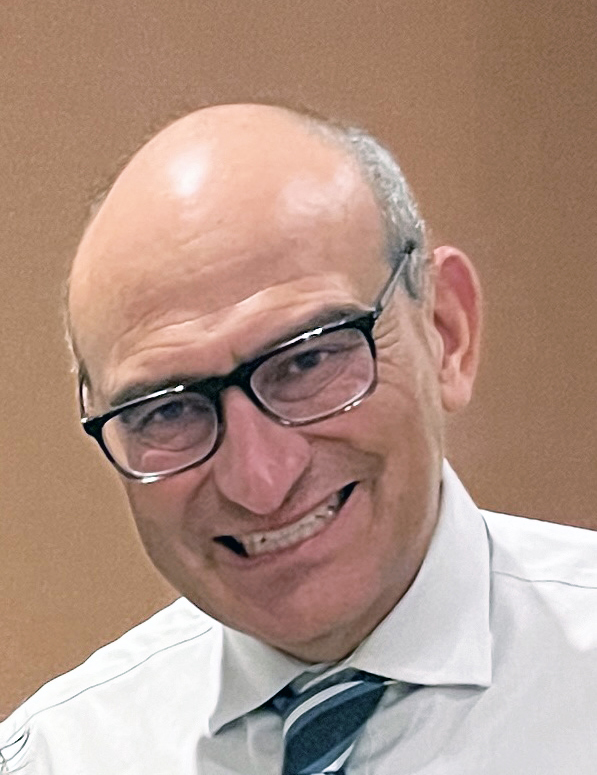
Principal Member of the Technical Staff, Sandia National Laboratories
B.S. ASE 1983, The University of Texas at Austin
M.S. EM 1986, The University of Texas at Austin
Ph.D. EM 1991, The University of Texas at Austin
Edmundo Corona has been an R&D mechanical engineer in the Engineering Sciences Center at Sandia National Laboratories since 2008. He has worked on a variety of national security projects in solid mechanics ranging from thin-film buckling and fracture to the response and failure of large structures under blast loads. He has mentored several young staff members and student interns and co-founded a solid mechanics community of practice, the Constitutive Cabal, that has been active for over seven years.
Prior to joining Sandia, Corona taught in the Department of Aerospace and Mechanical Engineering at the University of Notre Dame from 1991 to 2008 where he advised six M.S. and four Ph.D. students. His research focused on experimental and numerical work on structural response and on metal-forming operations. During that time, Corona consulted for the steel and pipeline industries. He is co-author of a book on the mechanics of offshore pipelines.
Corona has three degrees from The University of Texas at Austin: a B.S. in aerospace engineering in 1983 and M.S. and Ph.D. degrees in engineering mechanics in 1986 and 1991. His excellence in teaching as a graduate student was recognized by the Cockrell School of Engineering at UT Austin. He also received the Ruth and Joel Spira Award for Excellence in Teaching while at Notre Dame. At Sandia, he was part of a team that received an Employee Recognition Award for excellence in technical work. He is a fellow of the American Society of Mechanical Engineers.
Corona lives in Albuquerque with his wife, Mary Ann, an accomplished pianist who has a doctorate in musical arts from UT Austin. They have two adult children, Benjamin and Gabrielle, and a newly arrived granddaughter, Gemma. In his free time, Corona likes to exercise and recently ran the Boston Marathon.
Randal Robert Craft, Jr.

Retired Partner, Head, National Aviation Industry Team and the New York Litigation Group, Holland & Knight LLP Law Firm
B.S. ASE 1964, The University of Texas at Austin
J.D. 1968, Georgetown University Law Center
Bob Craft’s 52-year legal career was devoted primarily to aviation, product liability, mass disaster and insurance matters. He additionally served as general counsel (on a pro-bono basis) to AIAA, The Wings Club and New York City Ballet. He was also a board member of The Wings Club and New York City Ballet.
At UT Austin, Craft was on the Student Engineering Council and was one of two Cockrell School of Engineering School representatives in the Student Assembly. His other activities included the Faculty-Student Cabinet, the varsity debate team, the Presidency of the Oratorical Association, and the Student Leader exchange with the University of Chile. Following graduation, Craft worked at General Dynamics and then attended Georgetown, where he was named the law school’s Outstanding Advocate. He then joined the New York City aviation/maritime law firm Haight, Gardner, Poor & Havens, which merged with Holland & Knight in 1997.
Craft was the lead U.S. lawyer for airlines and manufacturers in many major air-crash litigations and investigations, including the TWA Flight 800 B747 explosion near Long Island, the American DC-10 crash in Chicago, the United DC-1 O crash at Sioux City, the Turkish Airlines B737 crash in Amsterdam, the UPS B747 crash in Dubai, the Air France Concorde crash in Paris, and (as co-lead) the collision of Pan American and KLM B747s at Tenerife,. He also handled many cases involving military, corporate and general-aviation crashes. His appellate cases included representation of the International Air Transport Association as an amicus in two U.S. Supreme Court cases.
Craft’s speeches and publications on aviation and other topics amount to over a hundred. His articles have appeared in the Journal of Air Law and Commerce, the Journal of Space Law, the National Law Journal, The New York Times and various bar-association and foreign publications. Notably, because of his extensive experience, the NTSB invited him to make presentations and to participate in NTSB programs. In 2015, Craft was given the rare privilege of presenting the Spring Lecture at New York State’s highest court.
He is particularly proud of having been one of the four founders and the second Chairman of The Lawyers Alliance for New York, the nation’s leading pro-bono provider of business and transactional legal advice for nonprofit organizations.
Craft’s hometown was Garland, Texas. He now lives in Brooklyn, NY, with his wife Irene Tichenor, a printing historian.
Will Girard
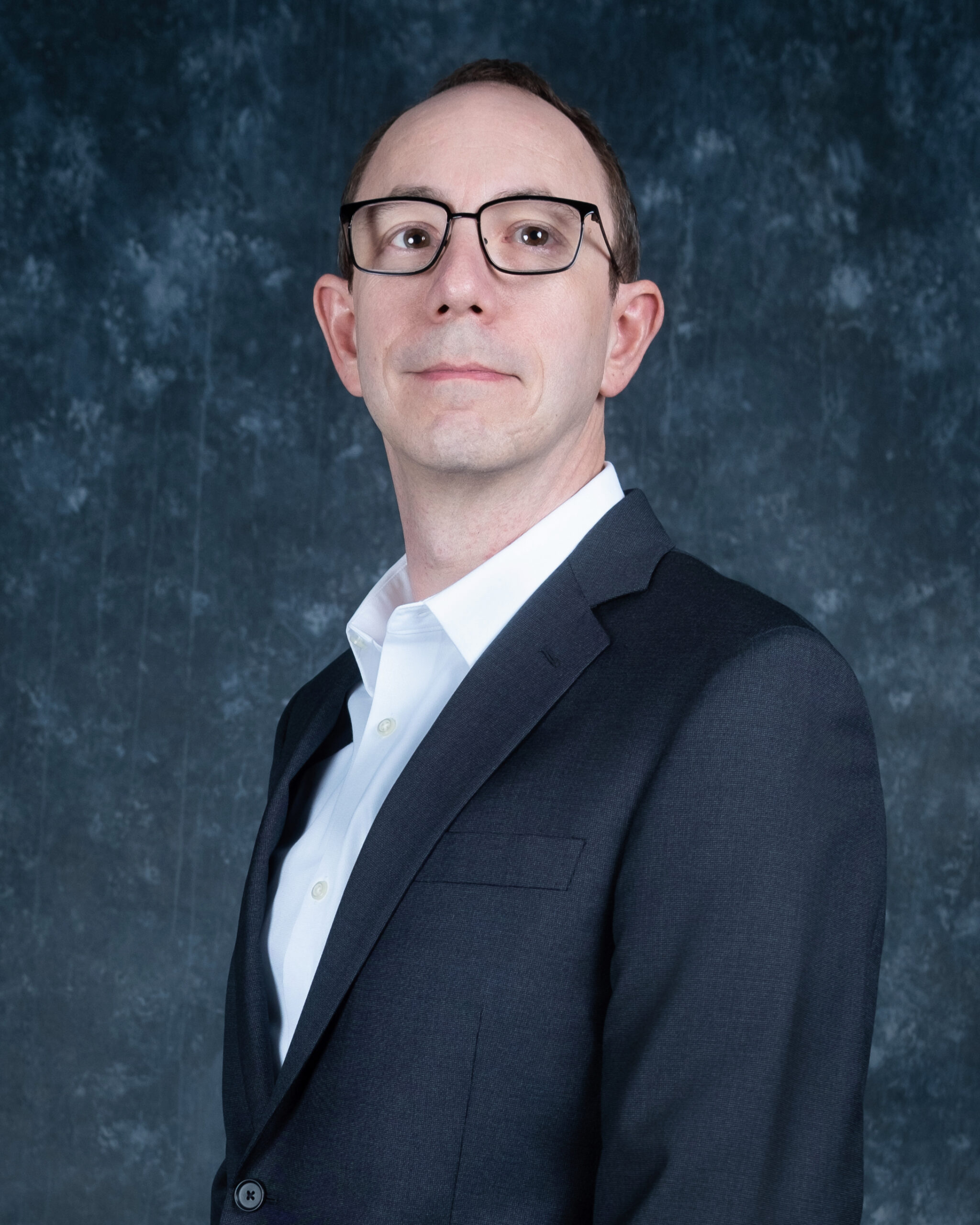
Director of Engineering Talent, Bell Textron Inc.
B.S. ASE 2001, The University of Texas at Austin
Will Girard serves as the director of engineering talent at Bell Textron, previously known as Bell Helicopter. He is tasked with formulating and executing strategies for managing engineering resources across the organization. This role encompasses the acquisition, allocation, retention and development of 2,300 engineers situated globally within various commercial and military rotorcraft programs and core engineering functions. In his current capacity, Girard also supports university recruiting initiatives, allowing him to engage with fellow Longhorn engineers, resulting in internships and entry-level job placements for many.
Girard earned his B.S. degree in aerospace engineering from The University of Texas at Austin in 2001, becoming the first college graduate in his family.
His professional journey commenced at Bell Helicopter in 2001 as a structural test lab engineer. Throughout the initial half of his career, he gained technical and organizational expertise by undertaking roles in engineering, research, supply chain, flight test and operations support. In 2014, Will transitioned into leadership, focusing on developing and managing technical teams for military aircraft development programs. His previous position was chief engineer of the Bell 360 Invictus program, where he led the technical team from project inception, proposal development and award, through aircraft assembly completion.
Girard has been involved in all aspects of Bell’s recent history in continuing a long legacy of developing, maintaining and supporting the global rotorcraft industry by providing innovative and reliable products. His efforts span supporting V-280 flight testing and establishing a robust aerospace supplier network in Mexico. He possesses a profound passion for rotorcraft and the unique capabilities they provide to the global population, which include humanitarian aid delivery, helicopter emergency medical services, public safety through police and fire departments and supporting military operations. Today, he takes immense satisfaction in sharing his enthusiasm for rotorcraft and their missions with prospective employees, both university graduates and seasoned professionals.
Girard has been honored with the Textron Chairman’s Award for Innovation twice for advancements in ballistic testing and armor systems development and is a co-inventor on three U.S. patents.
Residing in Colleyville, TX with his wife Megan, Girard enjoys outdoor activities, traveling to new places and tinkering in his garage.
Steven Hirshorn
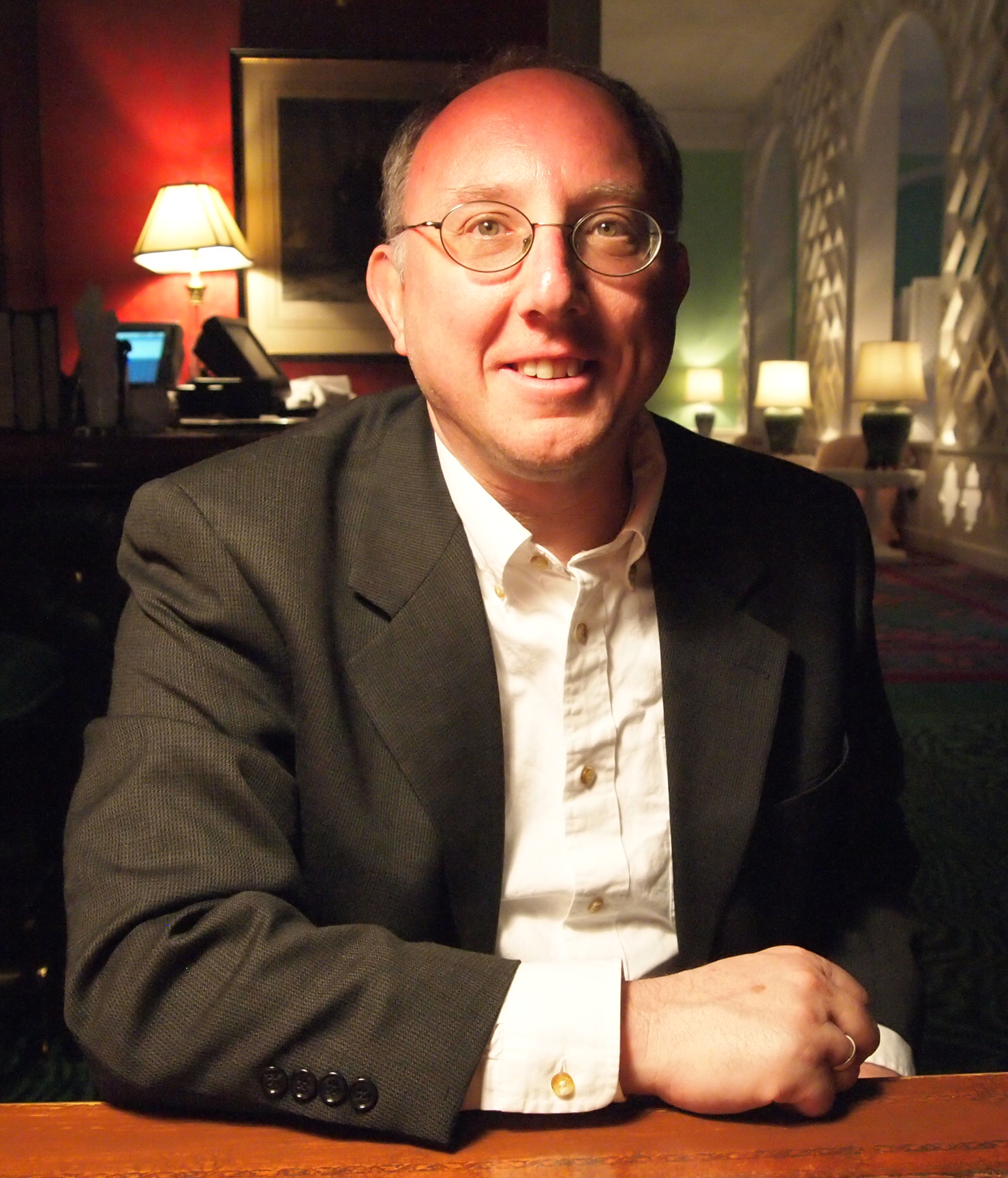
Chief Engineer for Aeronautics, NASA Headquarters, National Aeronautics and Space Administration
B.S. AE 1986, Embry-Riddle Aeronautical University
M.S. ASE 1989, The University of Texas at Austin
Graduate Certificate in Systems Engineering 2009, Stevens Institute
Graduate Certificate in Legislative Affairs 2010, Georgetown University
Steven Hirshorn serves as the chief engineer of aeronautics at NASA Headquarters. In that role, he oversees all development, research and missions that compose NASA’s aeronautics research portfolio (the first A of NASA). Hirshorn works closely with engineering technical authorities of NASA’s four research centers and with programs and projects, ensuring safety and mission success of all aeronautics research endeavors.
Hirshorn received his B.S. in aeronautical engineering from Embry-Riddle Aeronautical University and an B.S. in aerospace engineering from The University of Texas at Austin. He also received graduate certificates in systems engineering from Stevens Institute and in legislative affairs from Georgetown University.
His professional career began at the NASA Johnson Space Center where Hirshorn served as a space shuttle flight controller in mission control, supporting over fifty shuttle flights on console on some of the program’s most historic missions. He then served as the mission operations representative to the Orbiter Project Office at the time of the Space Shuttle Columbia tragedy. Hirshorn then served as mission operations lead engineer for the Constellation Program before moving to NASA Headquarters as a systems engineering and integration manager in one of NASA’s aeronautics research programs. Three years later he transferred to the Office of Chief Engineer and has been chief engineer for aeronautics since 2016.
Working side-by-side with many of the mission control veterans of the Apollo Moon landing missions who were approaching retirement, Hirshorn was able to gain from the experience and wisdom of these space-age greats. He then lived his own moment in history as he was deeply immersed in the Space Shuttle Columbia accident, recovery operations, investigation and return-to-flight activities that led to the launch of STS-114 two and a half years later. Hirshorn’s role during the Constellation program helped lay the foundation for today’s Artemis Program (Orion, SLS, etc.). As chief engineer for aeronautics, Hirshorn helped develop the X-57, X-59 and X-66 experimental aircraft.
He also managed NASA’s systems engineering policies for approximately ten years.
Hirshorn resides in Mt. Airy, MD with his wife Robin, their two cats, two koi ponds and an acre of forested bliss. He has also published two science fiction novels and two non-fiction books on NASA and engineering. Hirshorn enjoys mountaineering, international travel and shares a passion for all things Star Trek (which offers so many life lessons).
Justin Hamilton Kerr

Chief Engineer, Mark 1 Lunar Lander, Blue Origin
B.S. ASE 1993, The University of Texas at Austin
M.S. ME 1995, The University of Texas at Austin
Ph.D. ME 2006, Rice University
Justin Kerr is the chief engineer of the Mark 1 Lunar Lander at Blue Origin. He is accountable for the technical baseline of the single-launch, cryogenic, lunar cargo lander system. He and his team are scheduled to land the first of many vehicles on the Moon later this year.
Kerr received his B.S. and M.S. degrees in aerospace engineering and mechanical Engineering respectively from The University of Texas at Austin and his Ph.D. in mechanical engineering from Rice University.
His professional career began at NASA’s Johnson Space Center (JSC) in May of 1993 as an applied researcher, developing lightweight shielding to protect crew and spacecraft from the effects of micrometeoroids and orbital debris (MMOD). Since then, Kerr led efforts as a senior project manager in the Shuttle Orbiter Project Office to improve flight safety following the Columbia accident. He later led the Commercial Crew Program Spacecraft Office. He finished his NASA career serving as the NASA Engineering and Safety Center chief engineer at JSC. He has three years of experience with Blue Origin, serving as the senior chief engineer for the Orbital Reef and Lunar Permanence programs.
Kerr has contributed to human space flight in many ways. He was responsible for qualification of all U.S. module MMOD shielding on the International Space Station. He collaborated with international partners including Russia, Japan and ESA to establish best practices for lightweight MMOD shielding design and testing. Kerr tested Shuttle Orbiter thermal protection system components and reduced crew exposure to MMOD risk through operational and hardware mitigations. In addition, his work reduced MMOD risk on the Stardust and Genesis sample return missions.
He invented a novel deployment method for lightweight, conformal MMOD shielding resulting in a U.S Patent. In the wake of the STS-107 tragedy, Kerr served as the test director for the Columbia Accident Investigation Board which determined foam impact damage was the root cause. From Mission Control Houston, he led the Damage Assessment Team during 22 missions from STS-114 (the first mission after the Columbia disaster) through STS-135 (the last mission of the program). He and his team used robotic imagery collected on-orbit and models developed pre-flight to assess the Orbiter heat shield as “safe for entry” each mission. Kerr led the Commercial Crew Program Spacecraft Office from program inception which certified the SpaceX Dragon for safe crew flight and returned the U.S. to crew launches after the retirement of the Space Shuttle. He has more than 20 publications in refereed journals and conference proceedings.
Kerr serves on the UT Austin ASE/EM External Advisory Board and leads the Standing Review Board for the Blue Origin Human Lander System. His honors include the Silver Snoopy Award, the NASA Exceptional Engineering Achievement Medal, the NASA Outstanding Leadership Medal, the NASA Exceptional Achievement Medal, two Center Director Commendations, and six NASA Group Achievement Awards.
Kerr lives in Seattle, WA with his wife, Brittany, their daughters, Hayley and Mallory and their son Logan. He enjoys skiing with his family, watching their kids play sports and rooting for his Houston Astros and Texas Longhorns.
Hailey Nichols

Chief Executive Officer and Founder, Locus Lock
B.S. Aerospace Engineering 2019, Massachusetts Institute of Technology (MIT)
M.S. ASE 2022, The University of Texas at Austin
Hailey Nichols is the founder of Locus Lock, a company located in Boulder, CO, that develops cutting-edge positioning solutions for mobility in both commercial and defense sectors. The start-up was spun out of the innovative work led by professor Todd Humphreys and graduate students in the Radionavigation Lab at The University of Texas at Austin.
Nichols earned her B.S. degree in aerospace engineering with a specialization in aerospace information technology from the Massachusetts Institute of Technology (MIT) in 2019. She went on to receive her M.S. in aerospace engineering with a specialization in space tech entrepreneurship from The University of Texas at Austin in 2022.
Her career began as an unmanned aerial vehicle (UAV) software engineer at Aurora Flight Sciences, a Boeing subsidiary, where she contributed to sensor fusion efforts for advanced aircraft collision avoidance systems. While pursuing her master’s degree, Nichols conducted research in the Radionavigation Lab led by Humphreys. She is a published author on the topic of Software-Defined GNSS and has translated cutting-edge research into practical applications through Locus Lock.
Nichols is a nationally recognized entrepreneur and engineer. She has received numerous accolades, including Aviation Week Network’s 20 Twenties award, which highlights young professionals poised to transform the aerospace and defense industries. She was also named to Austin Inno’s 25 under 25 list for her impact on the tech community. Additionally, she is a two-time CoSIDA NCAA Division III Academic All-American and United Soccer Coaches Scholar All-American. Nichols was honored with the Malcolm Milburn Endowed Scholarship and Award in Entrepreneurial Studies and the inaugural Launch Texas Fellowship for her innovative work at Locus Lock. She is also a board member for the MIT AeroAstro Entrepreneurship program.
Nichols lives in Denver, CO and enjoys hiking, skiing and baking in her free time with her fiancé Anders and dog Oakley.
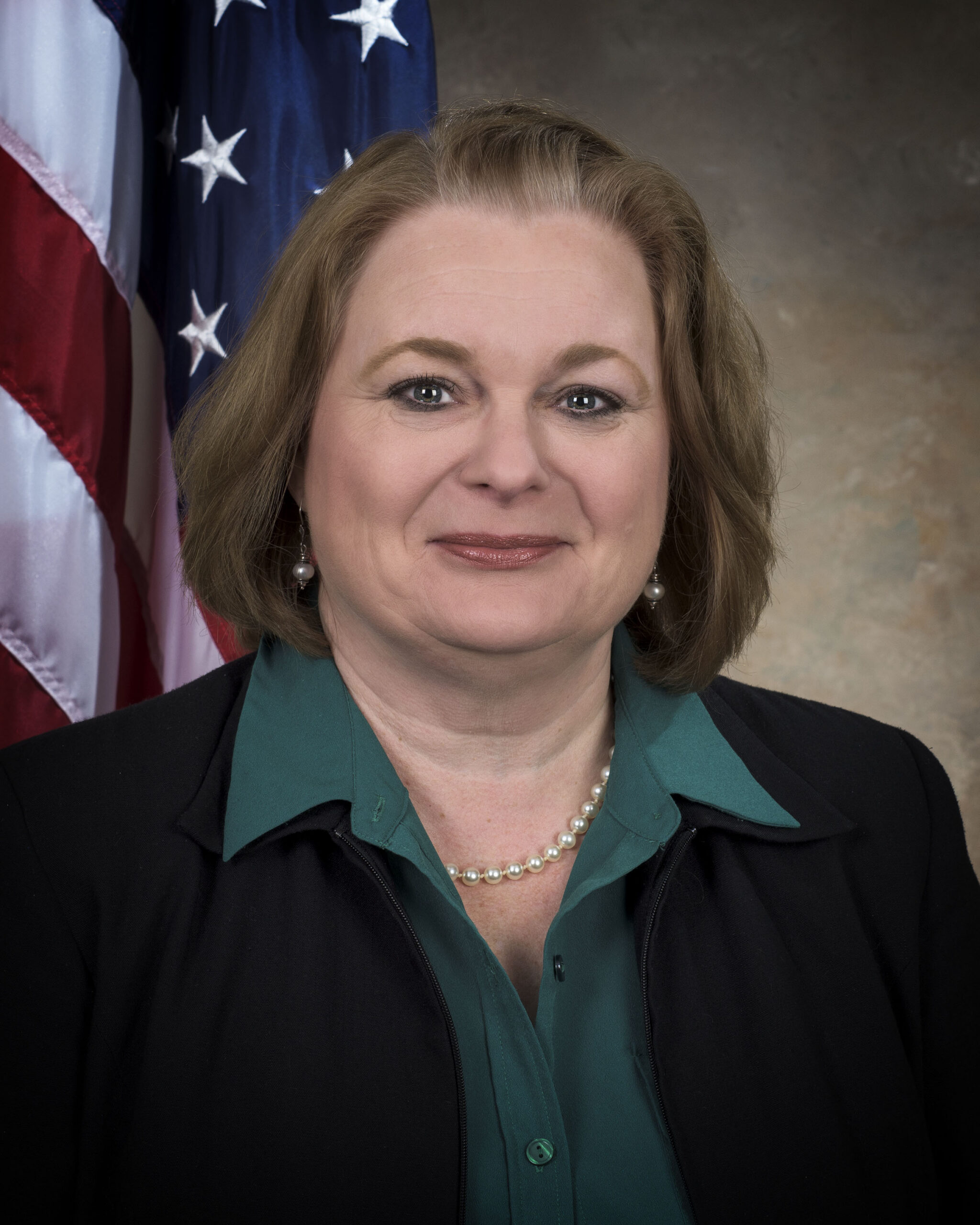
Carrie Dumas Olsen
Program Manager, Next Gen STEM, National Aeronautics and Space Administration (NASA) Office of STEM Engagement, NASA Headquarters
B.S. ASE 1985, Mississippi State University
M.S. ASE 1986, Mississippi State University
Ph.D. ASE 2001, The University of Texas at Austin
Carrie Olsen is the program manager for Next Gen STEM in NASA’s Office of STEM Engagement. Next Gen STEM is the agency’s premier program supporting K-12 students and their formal and informal educators, with content and programming connecting students with NASA’s missions, projects and people, inspiring them to persist in STEM learning to build the nation’s future STEM workforce.
Olsen received her B.S. and M.S. degrees in aerospace engineering from Mississippi State University and her Ph.D. in aerospace engineering from The University of Texas at Austin.
Her professional career began at NASA’s Marshall Space Flight Center (MSFC) in March 1987 as an orbit analysis engineer and flight controller for the Space Shuttle STS-35 mission. She supported five Spacelab missions in total before joining the trajectories, guidance and navigation team in 1995, supporting numerous programs such as Automated Rendezvous and Capture, X-33 and Reusable Launch Vehicle (RLV). She returned to operations at MSFC in 2000 when she was selected as one of the first International Space Station (ISS) Payload Operations Directors (POD). In 2004 Olsen accepted a position at Mississippi State University as an assistant professor of aerospace engineering, where she was instrumental in designing and implementing a dual-track aerospace engineering degree program.
Returning to NASA-MSFC in 2008, she served as the lead system integration engineer for the Ares I launch vehicle design. She was promoted in 2009 to chief of Guidance, Navigation and Mission Analysis organization at MSFC, and served in that role until 2015. Olsen then returned to ISS operations at MSFC, recertifying as a POD and helping lead the transformation of ISS payload operations to support a greatly expanding onboard research portfolio. In 2016 she became Chief of the POD Office, the technical authority for the entire MSFC payload operations effort. Olsen accepted a detail to NASA headquarters in Washington, DC in 2018 to serve as executive officer to the associate administrator for STEM Engagement. This detail led to the position she now holds.
Olsen considers her greatest personal accomplishments to be her leadership in ISS operations, shepherding the critical scientific and technology research onboard, her work creating a dual-track aerospace engineering program at Mississippi State, and her work expanding the staff and capabilities of the Guidance, Navigation and Mission Analysis group at MSFC. Her passion and greatest strength are building and leading high-performing teams. Her greatest pride comes from the successes of the many she has hired, mentored and led.
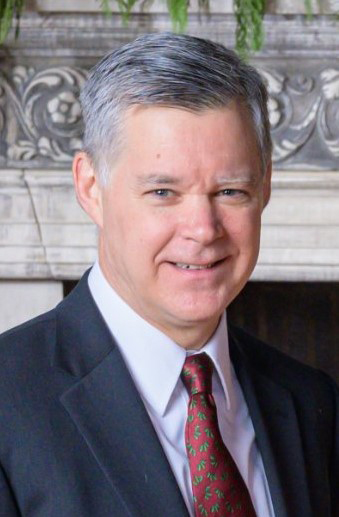
James Woodburn
Chief Orbital Scientist and Ansys Fellow, Ansys Government Initiatives (AGI)
B.S. ASE 1986, The Pennsylvania State University
M.S. ASE 1989, The University of Texas at Austin
Ph.D. ASE 1994, The University of Texas at Austin
Jim Woodburn is the chief orbital scientist at Ansys Government Initiatives (AGI) and an Ansys fellow. He is the technical lead of the Orbit Determination Tool Kit (ODTK) development team where he is responsible for product direction, algorithm development and software implementation. His research interests include advanced methods of sequential estimation, all forms of observation modeling and uncertainty analysis.
Woodburn received his B.S. degree in aerospace engineering from The Pennsylvania State University and his M.S. degree and Ph.D. degrees in aerospace engineering from The University of Texas at Austin.
He began his profession career at the General Electric Company in Springfield, VA in 1986 as a member of the Edison Engineering Program. After working on rotational assignments in orbit determination research, spacecraft operations and software development, Woodburn enrolled in graduate school at UT Austin. He returned to GE after completing his master of science degree as a software engineer. Jim returned to UT for his Ph.D. in 1991 and assumed his role as chief orbital scientist at Analytical Graphics, Inc. (AGI) upon graduation. At AGI, he was the lead astrodynamics developer for AGI’s flagship product, Systems Tool Kit (STK), formerly named Satellite Tool Kit, for nine years prior to becoming the lead developer for the Orbit Determination Tool Kit (ODTK) in 2003.
While at AGI, Woodburn has been a co-inventor on three patents which cover innovations in the areas of satellite visibility analysis, satellite conjunction assessment and orbit determination. He was the original author of many foundational capabilities within STK, which was elected for induction into the Space Foundation’s Space Technology Hall of Fame in 2024. Woodburn has been honored to provide direct to support numerous space missions using AGI software including TDRS, IBEX, Beresheet, LADEE and Astrobotic PM1. He has more than 50 publications in refereed journals and conference proceedings.
Woodburn serves on the Penn State Aerospace Engineering Department Industrial Professional Advisory Committee, formerly served on the American Astronautical Society Technical Committee, and was a member of the Peer Review Board for the LADEE lunar mission. He was named an Ansys fellow, a gated designation requiring election by the senior technical staff in 2023. While at UT, Jim participated in the sailing club and was a member of The University of Texas men’s club volleyball team.
Woodburn lives in Ardmore, PA with his wife Joyce and their son, Michael, who is studying biomedical engineering at Drexel University.
An in-person banquet and ceremony will take place on the UT Austin campus on April 4 to recognize these alumni for their achievements and to officially induct them into the academy.
View the induction ceremony photos.