
Engineering the Next Era of Aerospace
As The University of Texas at Austin approaches 100 years of aerospace education, ASE/EM is advancing research, developing the next generation of aerospace engineers and bringing industry, academia and government together to shape Texas’ aerospace future.

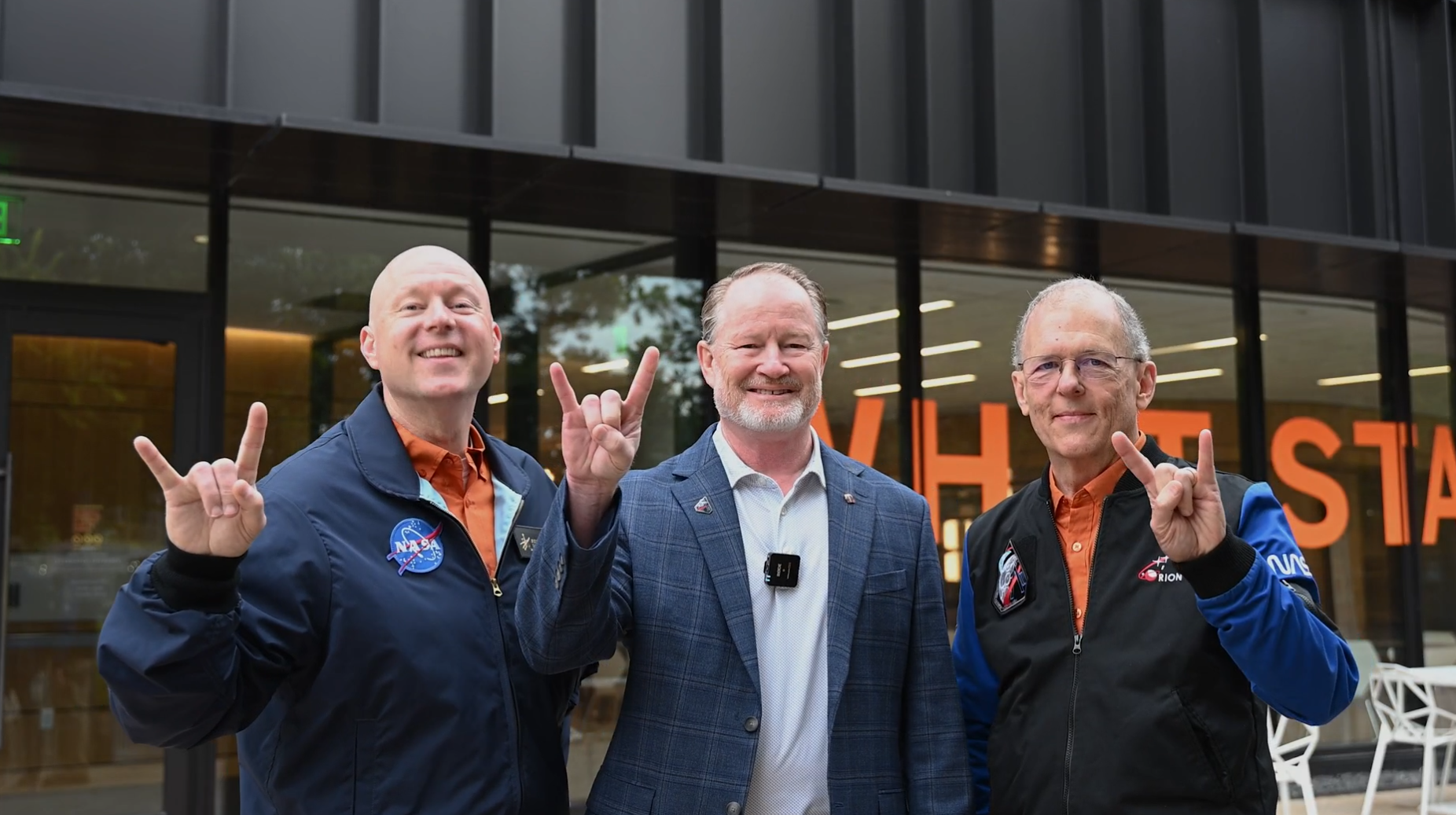
Attendees from industry, academia and government connect and exchange ideas during the Texas Aerospace Symposium.
In 1927, The University of Texas at Austin began offering aerospace courses at a time when powered flight was still in its early decades. Nearly a century later, the field has expanded far beyond the aircraft and engineering challenges that defined its early years.
Commercial spaceflight, autonomous systems, satellite navigation and national security now shape a field with growing implications for Texas and the world.
As Texas emerges as a major center for aerospace innovation, the Department of Aerospace Engineering and Engineering Mechanics (ASE/EM) is helping shape what comes next. Through research addressing emerging challenges, hands-on education and partnerships across industry, academia and government, the department is connecting the expertise and talent needed to advance the state’s aerospace ecosystem.
Connecting Texas’ Aerospace Ecosystem
That collaborative approach was on display this spring at the inaugural Texas Aerospace Symposium, hosted by UT Austin in partnership with Texas A&M University’s Department of Aerospace Engineering.
The two-day event brought together 168 participants from industry, higher education and the student community to discuss the technologies, talent and partnerships needed to advance aerospace across Texas. Designed as an annual event that will rotate among Texas aerospace programs, the symposium aims to strengthen connections across the state’s aerospace community.
Stephanie Murphy CEO and Executive Chairman, Board of Directors, Aegis Aerospace Inc.
When we combine industry, academia, and government together, we create bold ideas and connections that enable the talent, infrastructure, and technologies to come together, strengthening Texas’ leadership in aerospace. UT Austin played a vital role in convening this first collaboration, connecting research and education to the real-world needs in industry across Texas.
The symposium reflects a broader opportunity for universities to connect fundamental research and technical expertise with industry challenges and government priorities. By bringing these groups together, ASE/EM helps create pathways for ideas, talent and technologies to move beyond individual institutions and contribute to Texas’ aerospace ambitions.
Research for an Increasingly Contested Space Domain
As activity in space accelerates, protecting the systems that support navigation, communications and national security has become increasingly important. ASE/EM researchers are addressing these challenges, from developing tools to improve space situational awareness to investigating threats to essential navigation systems.
This year, UT Austin became the first university selected to receive funding from the Texas Space Commission to establish the Battle Management, Command, Control, Communications and Intelligence Tools, Applications and Processing Lab, known as the BMC3I TAP Lab.
Directed by Moriba Jah, professor of aerospace engineering and engineering mechanics, the lab brings together academic researchers, industry and government to develop technologies for space security. Its work also gives students opportunities to engage with complex problems at the intersection of aerospace engineering, data and national security.
“Texas already knows how to build and launch things,” Jah said. “What the state has not yet owned is the decision layer under deep uncertainty. My view is that whoever builds the trusted decision layer for space, including the ability to quantify and model ignorance, will set the terms for everyone else. Texas is now in a position to be that place.”
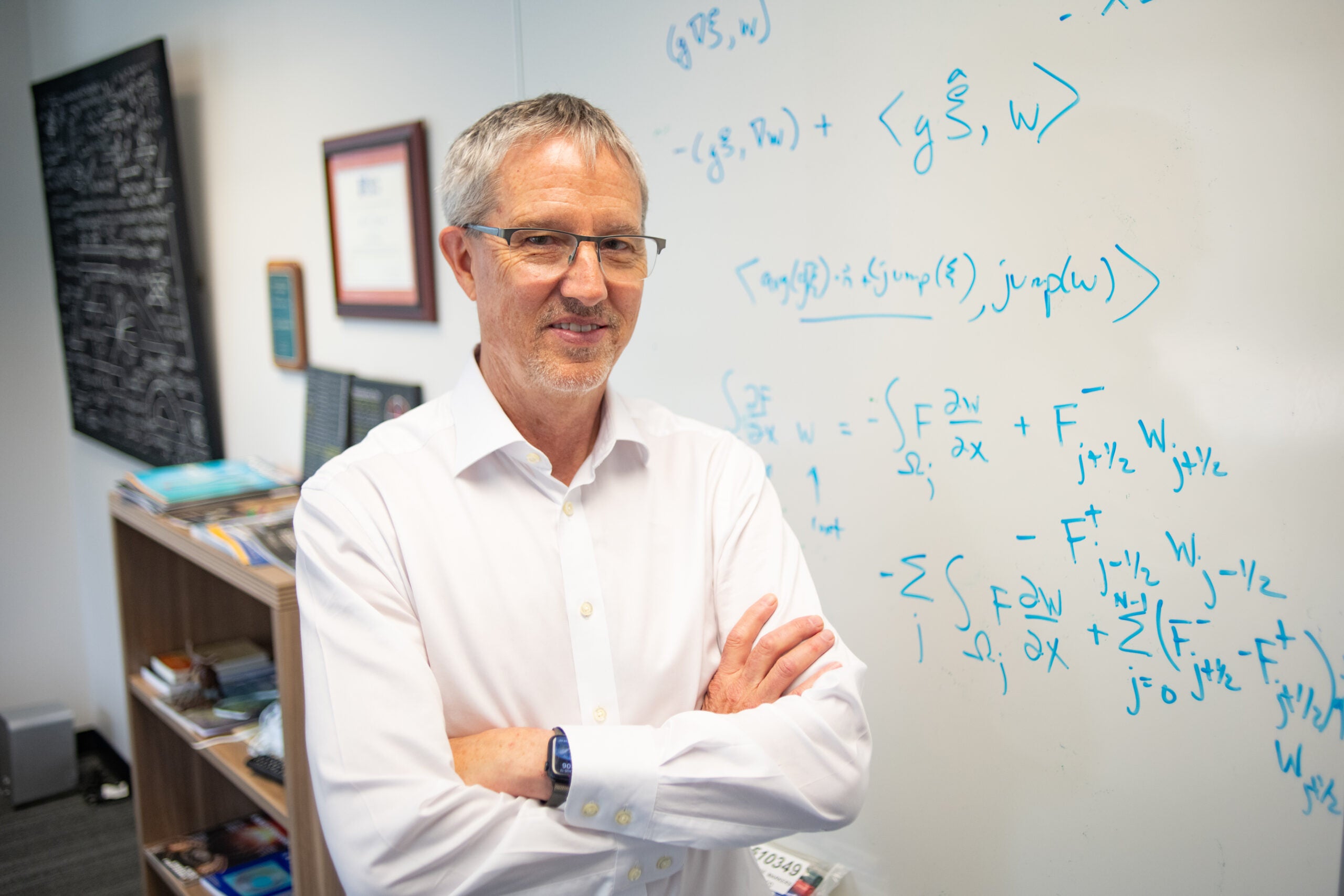
The need to understand activity in space is not theoretical. Research by Professor Todd Humphreys and his doctoral student illustrates how emerging threats can affect systems on which people and industries depend. This year, they identified Russian military satellites as the source of mysterious bursts of GPS interference detected across Europe, providing one of the first documented examples of human-made GPS interference originating from space.
GPS supports far more than navigation on a smartphone. Aviation, shipping and other critical systems rely on its signals for positioning and precise timing, making interference a concern that extends well beyond the space domain.
“It’s significant because so much of our economy and transportation depends on GPS,” Humphreys said. “High-powered interference with continental reach affecting the GPS L1 band — the primary band used for global aviation, shipping and precise timing — is of serious concern.”
“Like any other domain — land, sea or air — space will be contested,” Humphreys said. “As international competition heats up in space, we can expect more weapons, and jammers, like other electronic warfare weapons, will become increasingly common.”
“The U.S. will need to step up and monitor these signals,” Humphreys said. “The UT Radionavigation Lab is happy to show with a few examples how this can be done and why it’s important.”
Together, these efforts demonstrate how aerospace research can help address national priorities while preparing students to work on complex, real-world challenges.
Preparing the Next Generation of Aerospace Engineers
Developing the technologies that will shape aerospace’s future also requires engineers who can move from theory to practice. At ASE/EM, students gain that experience through research, design projects and opportunities to explore how aerospace systems are built, tested and brought to market.
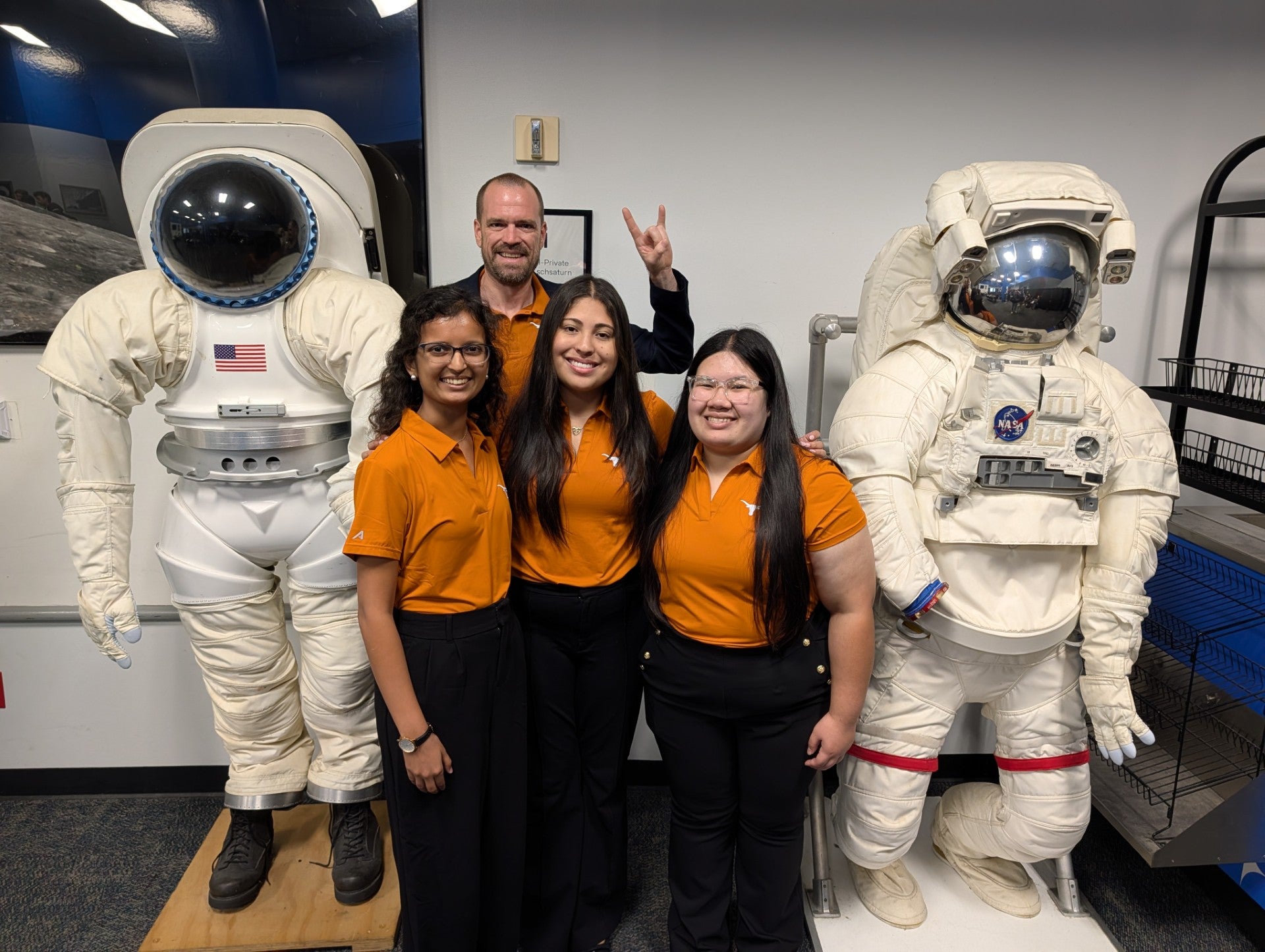
At the Texas Rocket Engineering Lab (TREL), an interdisciplinary research lab, students design, build and test rockets. Its guiding principle is simple: “We build people who build rockets.”
Over more than two years, TREL students developed Halcyon, a 28-foot rocket featuring bi-propellant cryogenic rocketry and an active guidance system capable of controlling its trajectory during flight. The project brings students together to tackle the technical and collaborative challenges involved in developing a complex aerospace system.
Other opportunities help students explore different parts of the aerospace field. Launch Texas, a joint program between ASE/EM and the Texas Innovation Center, connects space technology research with entrepreneurial education. In a senior design course, students also use virtual reality flight simulators equipped with headsets and motion platforms to explore aircraft behavior and test customizable aircraft and cockpit configurations.
These experiences give students opportunities to apply engineering fundamentals, work across disciplines and explore how ideas become technologies with practical applications.
Building on a Century of Aerospace Education
Texas’ aerospace growth will depend on more than attracting companies and investment. Sustaining that growth requires a strong technical workforce, continued research and collaboration among the organizations developing and deploying new technologies.
ASE/EM contributes across those areas through research on space security and navigation, hands-on student education and partnerships that connect universities, industry and government. Those connections can help research respond to real-world needs while giving students opportunities to work on challenges relevant to the state’s growing aerospace sector.
Students trained here on mission-relevant national security problems, with partners who are already in the state, are students who tend to stay. That is how you grow an ecosystem rather than rent one.
Moriba Jah, Professor and Director of BMC3I TAP Lab
As UT Austin approaches 100 years of aerospace education, the milestone offers a chance to look ahead as well as back. The next era will require engineers who can solve emerging technical challenges, research that advances capabilities and partnerships that bring ideas into practice.
At ASE/EM, that future is taking shape through research, education and collaboration aimed at strengthening Texas’ role in aerospace.