
More Than a Capstone: ASE/EM Students Put Their Designs to the Test
Senior design is where students put their engineering education into action, tackling real-world challenges with industry partners, NASA and alumni mentors. In 2026, these students earned awards, advanced to national competitions and saw their work reach an audience at the United Nations Office for Outer Space Affairs in collaboration with CesiumAstro.
Senior design is the final hurdle to earning an engineering degree and the launchpad into meaningful careers in aerospace. Here are three highlights from 2026.
Collaborating With Industry: CesiumAstro
Sponsors of a senior capstone design project can determine the scope of work for engineering students. CesiumAstro sponsored a senior design project with ASE/EM students Jeffrey Wang, Jacob Norris, Christian Ochola, Andrew Cook, Tristian Dominguez and Johem Avila.
The concept was to create a Lunar surface navigation device for astronauts to receive GPS-like signals from a Lunar satellite constellation to transmit a NASA-designed signal called the LunaNet Augmented Forward Signal. The technology will provide position and navigation services to astronauts on Lunar South Pole region landings.
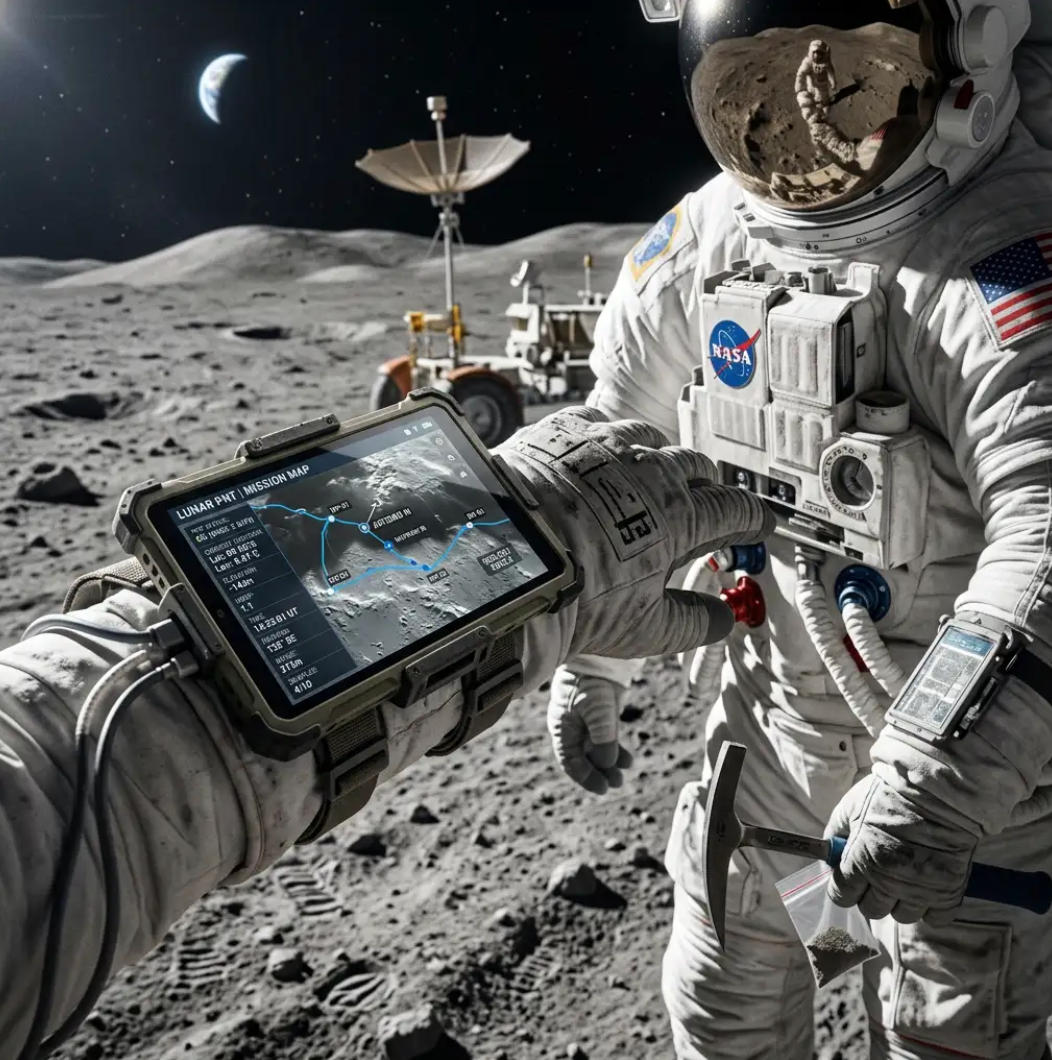
Students worked closely with engineers at CesiumAstro and contributed detailed thermal analyses through computer-aided design (CAD) models, prototype debugging and public interfacing.
CesiumAstro engineer and UT Austin alumnus Dylan Pfeifer (Ph.D. electrical engineering, 2013), presented a prototype device and an outline of the concept at the United Nations Office for Outer Space Affairs Workshop on Lunar Communications and Positioning, Navigation and Timing on Feb. 10-13 at the United Nations Centre in Vienna, Austria.
“It is thrilling to watch student engineers apply their minds and talent to challenges awaiting humanity as we plan missions for long-term lunar presence,” Pfeifer said. “Partnering with undergraduate students in their senior capstone clinics at the University of Texas at Austin Cockrell School of Engineering is a privilege for CesiumAstro and key to training a new workforce of explorers. I have thoroughly enjoyed collaborating with this student team and am proud of their work.”
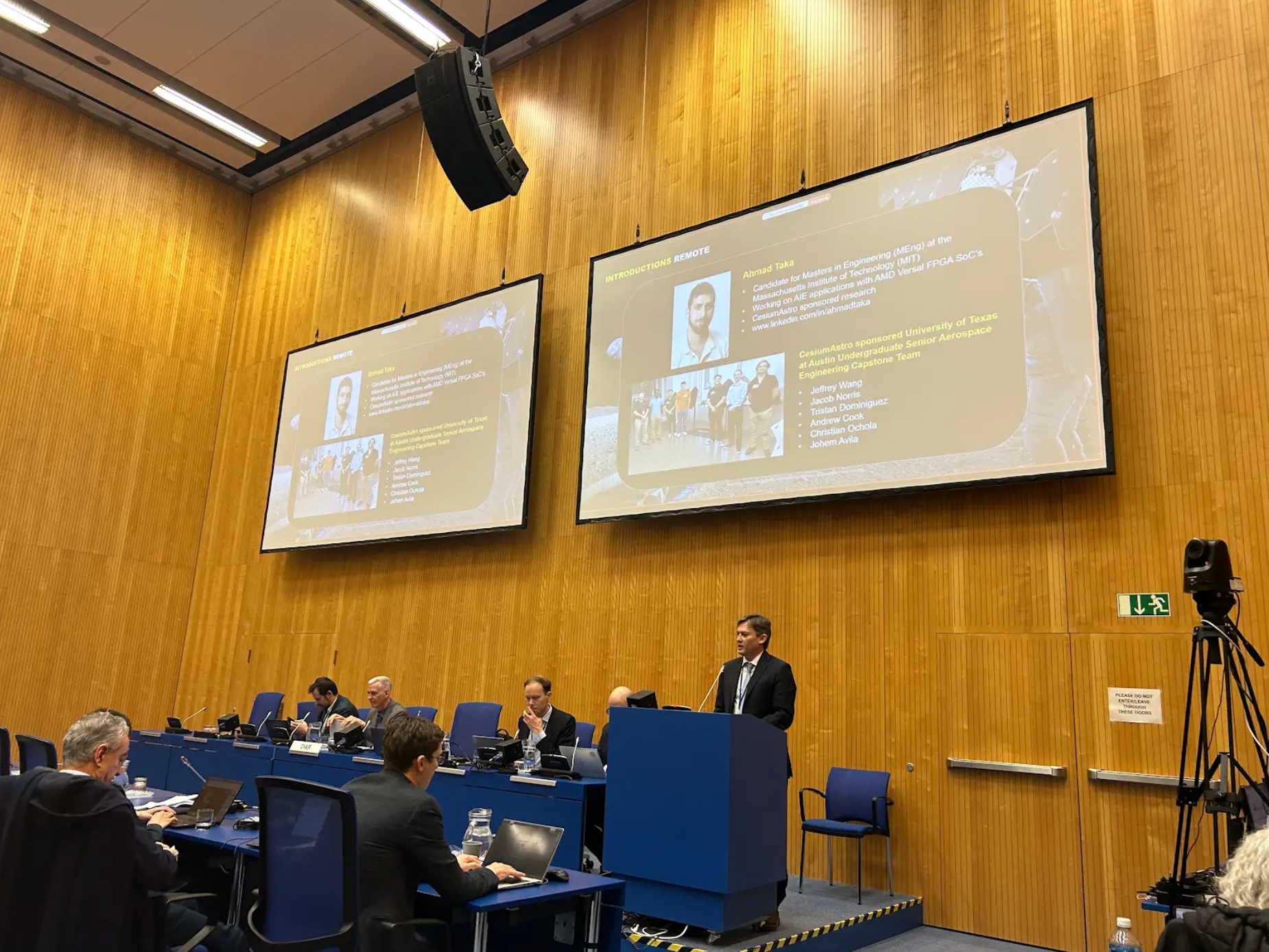
The workshop in Vienna brought together policy contributors from industry, government and academia to advance technologies that support future lunar exploration. Representatives from NASA were present and provided feedback to guide upcoming human landing missions. For senior Christian Ochola, the experience was an important milestone in his last year on the Forty Acres.
“As a senior, I never imagined I’d have the chance to collaborate with both NASA and CesiumAstro, and I definitely never envisioned being part of a presentation at the United Nations,” Ochola said. “It’s hard to believe that we’re working on something that could one day make its way to the moon, and I’m beyond grateful for the opportunity. I’m incredibly thankful to UT Austin for making this possibility a reality. It’s moments like these that remind me how far we can go when we dream big.”
Shooting for the Moon: NASA Competition Finalists
NASA competitions are a popular focus for senior design projects across the country. This year, two UT ASE/EM teams advanced to the finalist round of the NASA RASC-AL competition. Project Pharos advanced in the CPNT Architectures for Mars Surface Operations category, while Team Demonstration of Up-scalable Surface Treatment for Earth-Moon Economy (DUSTEE) advanced in the Lunar Technology Demonstrations Leveraging Common Infrastructure category.
Project Pharos tackled the challenge of maintaining reliable communications, positioning, navigation and timing capabilities on the Martian surface as human activity on Mars expands. The team developed a phased architecture that combines satellites in multiple orbits with optical and radio-frequency communications and ground terminals designed to store and forward data during outages. Using modeling and simulation tools, the team evaluated communication connectivity and positioning accuracy. They found that the proposed architecture could maintain continuous connectivity between Mars and Earth, except during solar conjunction, when the Sun blocks the communication path. The system also kept position accuracy within NASA requirements.
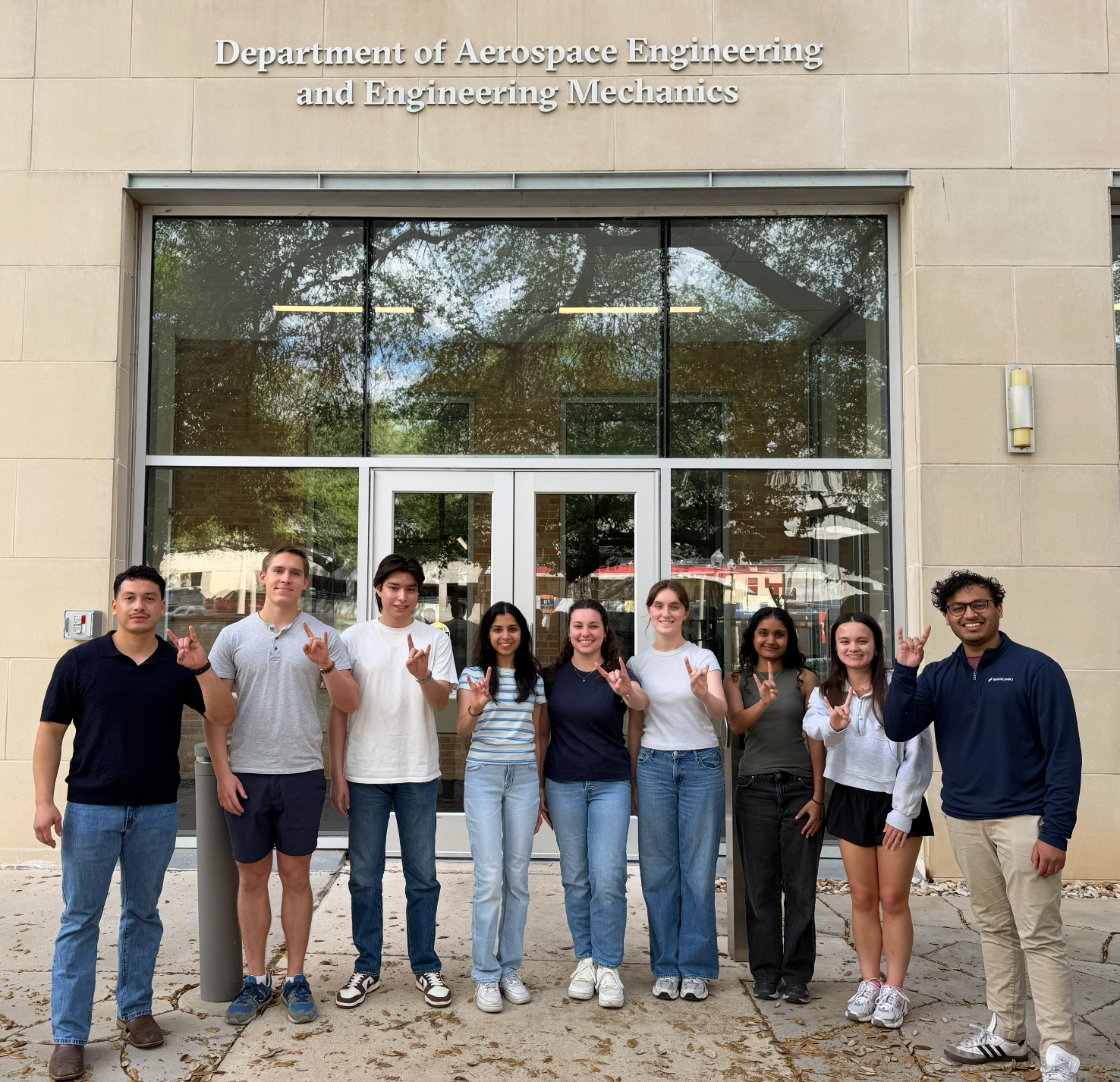
Project Pharos team from left to right: Alexis Gracia Rodriguez, Cooper Hamilton, Oswaldo Hernandez Soto, Vaidehi Joshi, Bohumila Jones, Kaitlyn Donnel, Meera Ravi, Saleen Nyman, Aditya Jaiswal
“From our earliest research into what a Martian CPNT system could be, to now having a functional, forward-looking design, it has been incredible to see how far the team has progressed,” said Aditya Jaiswal, project manager. “Each of us has gained valuable knowledge and grown significantly along the way.”
Each of us has gained valuable knowledge and grown significantly along the way..
Aditya Jaiswal
DUSTEE, short for Demonstration of Up-scalable Surface Treatment for Earth-Moon Economy, explored how to prepare the lunar surface for future infrastructure. The team focused on a fundamental challenge: how to build on the Moon when the surface is dusty, rocky and unstable. Rather than advocating for a single approach, the team designed a mission to compare several methods of preparing the lunar surface under the same conditions, including solar and laser sintering and surface compaction. They evaluated how different treatments could affect surface strength, stability and dust ejecta while also developing a system-level CAD model and conducting small-scale testing, including experiments examining plume interaction.
“We gave the rover one job: make the Moon less annoying,” said James Mitrushi, a member of the DUSTEE team.
The department’s involvement in NASA competitions extends beyond RASC-AL. An ASE/EM team comprising students Quynh Nguyen, Emily Arreola and Bhargavi Chauhan advanced to the finalist round of the NASA ORBIT (Opportunities in Research, Business, Innovation, and Technology for the Workforce) Challenge. It is a multiphase, student-focused competition designed to inspire and empower the next generation of innovators, engineers, entrepreneurs and researchers.
The team, dubbed CRYO-MORPH, worked together to expand on an idea for a lunar tower based on publicly available NASA intellectual property. The team’s design showcased a foldable helix tower that expands under specific temperature conditions and earned $15,000 in prize money.
“It was like a puzzle. We started with publicly available NASA IP. We had to go through and make sure we chose one we liked and could actually work for the business case,” Nguyen said. “This project made me open myself up more in a way, because I wasn’t just following class instructions. It was an impactful experience since I can show other people that I helped create this idea. It just feels like an achievement outside of an internship or just being at school.”
Professor Adam Nokes has supported student teams in NASA contests throughout his teaching career at UT since 2017. He said this project was especially meaningful given the increasingly fierce competition.
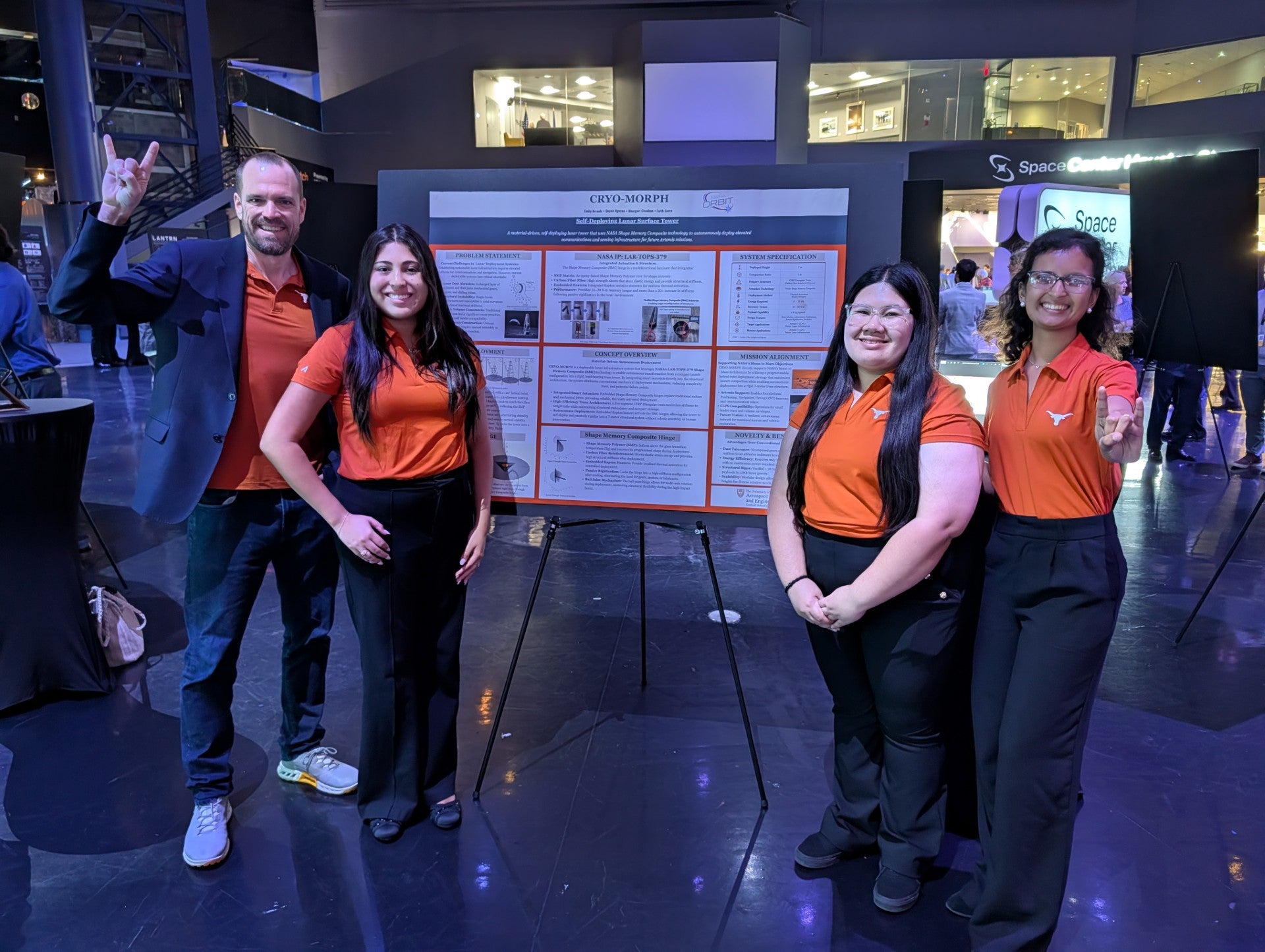
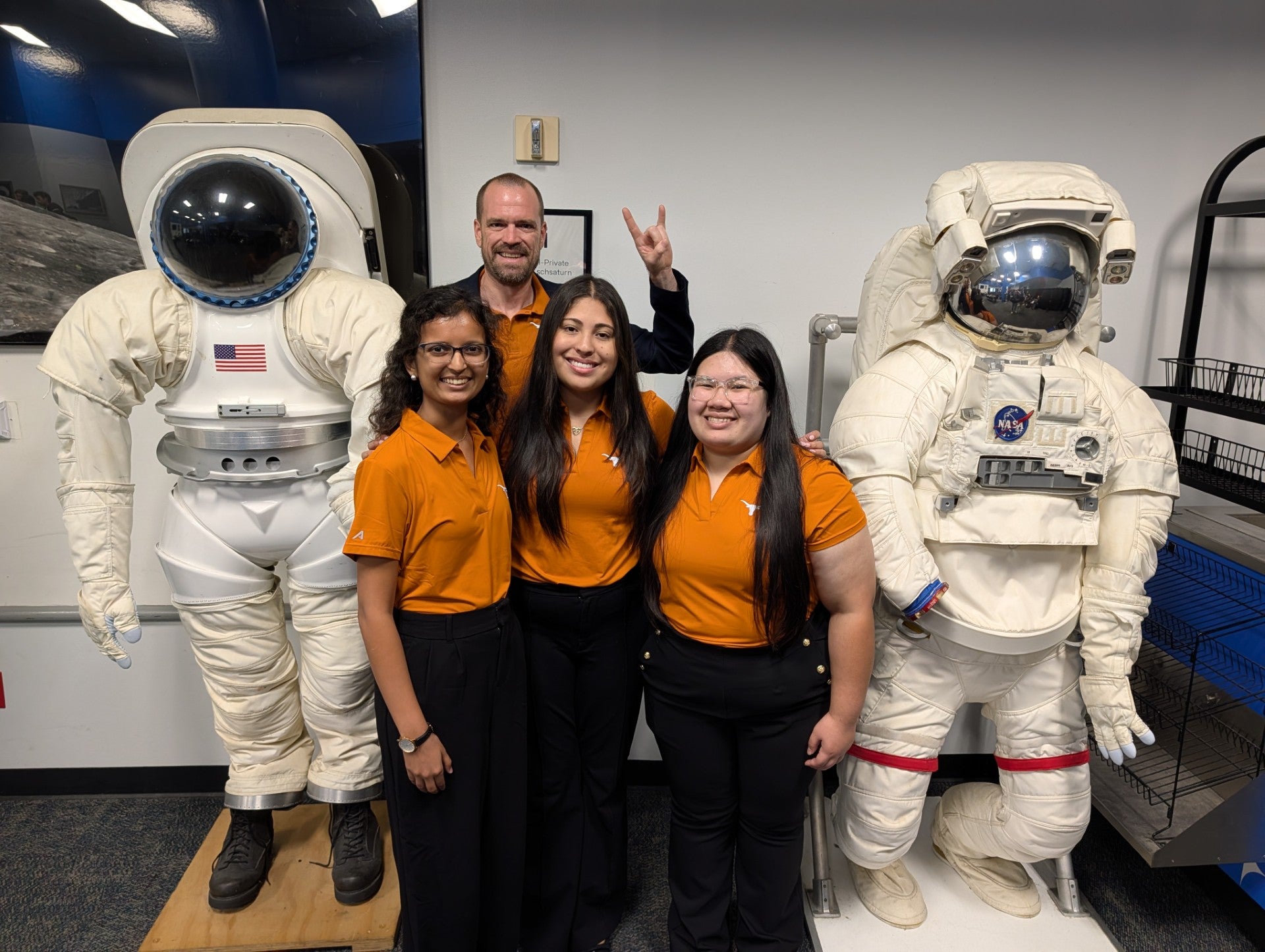
“Our students are putting their idea for space-based self-assembling towers head-to-head with the best aerospace student innovations in the country,” Nokes said. “The space industry is hot, and competition for that level of funding has been especially intense in recent times. I also want to celebrate this occasion as the first all-women travel team for a capstone that I have hosted in my time teaching with the department since the fall of 2018. It is especially meaningful to see the UT community rally around our capstone teams and help create opportunities for students to engage in ambitious, externally focused design work.”
Picking Up the Mantle: DARPA Heavy Lift
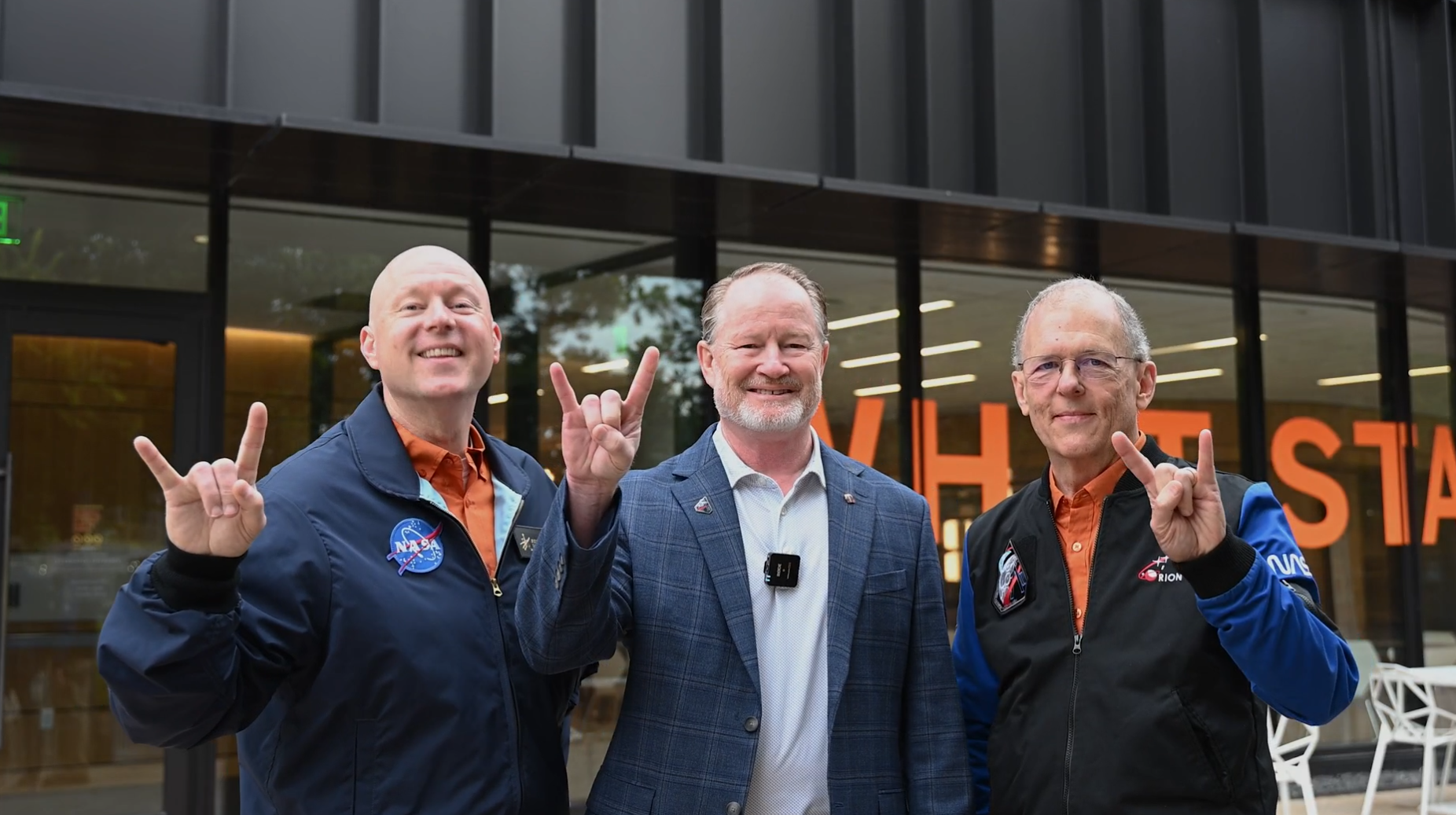
Keith Todd graduated from ASE/EM in 1979. After a successful career at NASA’s Johnson Space Center, he continues to find inspiration at the Forty Acres as a mentor for undergraduate spacecraft design projects.
This year, Todd pitched a senior design project related to the DARPA Lift Challenge, a competition in which teams design a drone that can lift four times its weight. Todd is the first Cockrell School alumnus to independently sponsor a senior design project.
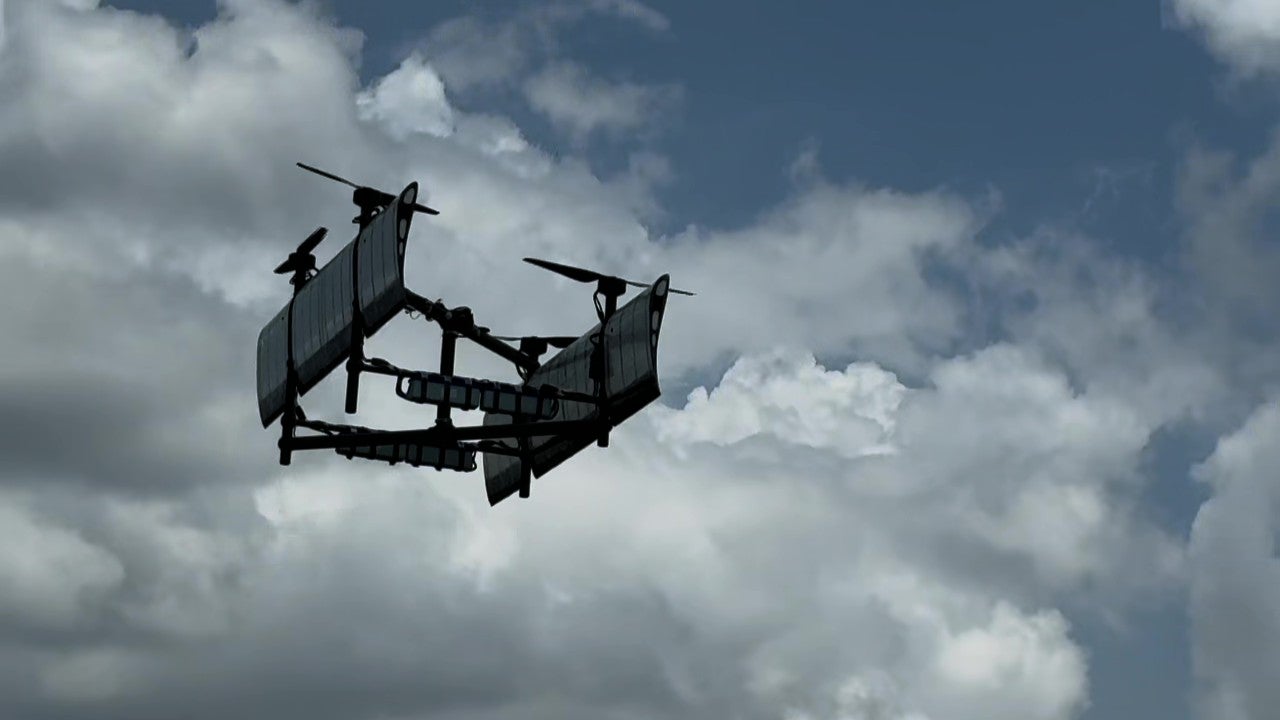
“I had a fantastic career at NASA, and I credit UT for getting that going. So, I took the opportunity to give back when I moved back by getting involved as a mentor for the senior design classes,” he said. “The DARPA Lift Challenge caught my eye. You know, it’s one of those where you wonder, ‘can it really be done?’ So I said, ‘What the heck?’ I was thinking about doing it in my own garage.”
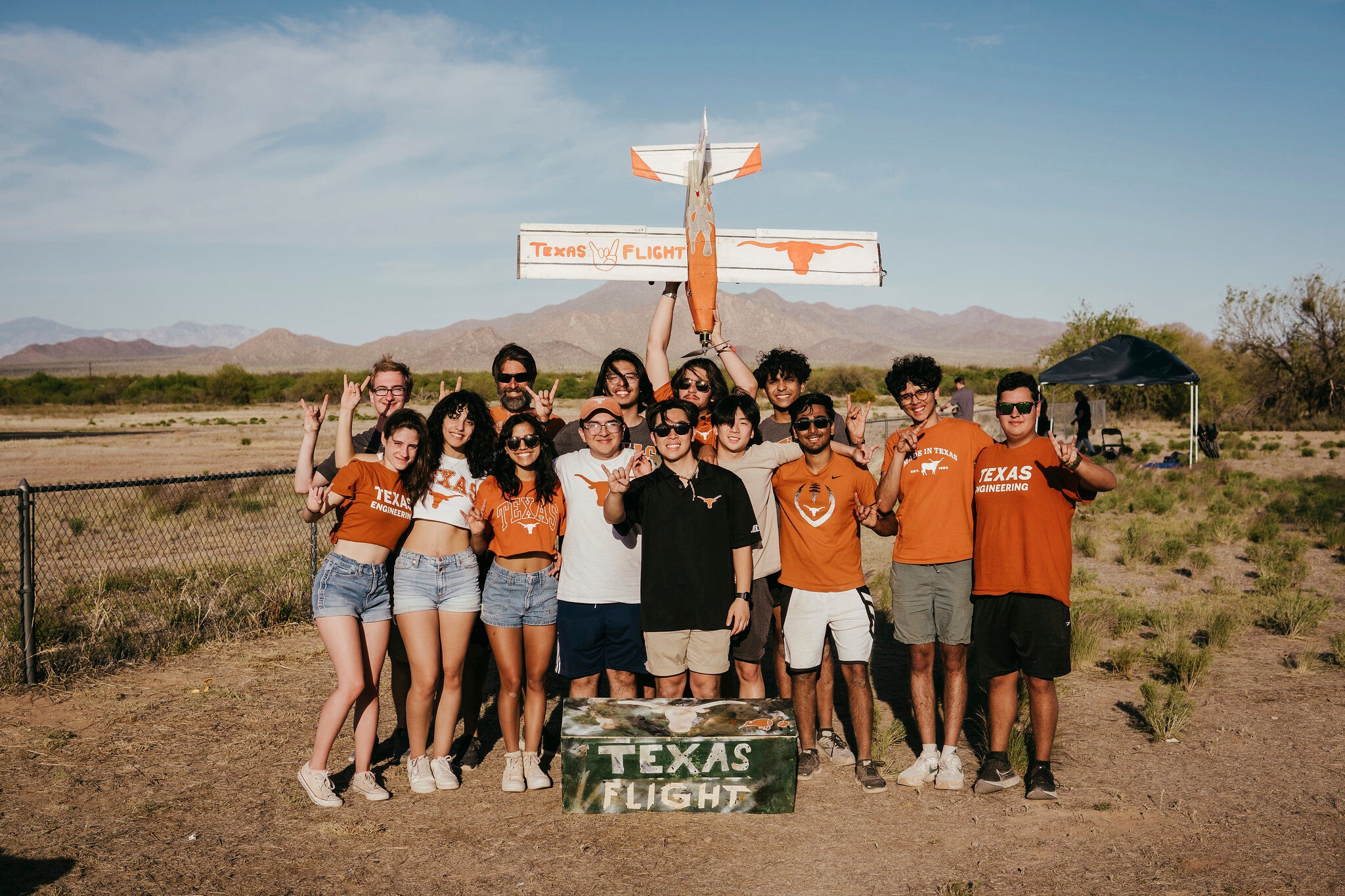
The team’s design was selected to compete in the final contest over the summer, but it crashed before there was enough time to make the necessary repairs. The students retain ownership of the project’s intellectual property, leaving the door open to build on their design and pursue future opportunities.
“I love technical challenges, but I found it very rewarding to talk to students, one on one, kind of mentoring them, not just on the technical side, but their careers in the real world,” Todd said.
When it comes to building the future of aerospace, ASE/EM students are already putting their ideas to the test. Through senior design, they are tackling ambitious challenges, working alongside industry and NASA and developing the technologies that could shape what comes next.
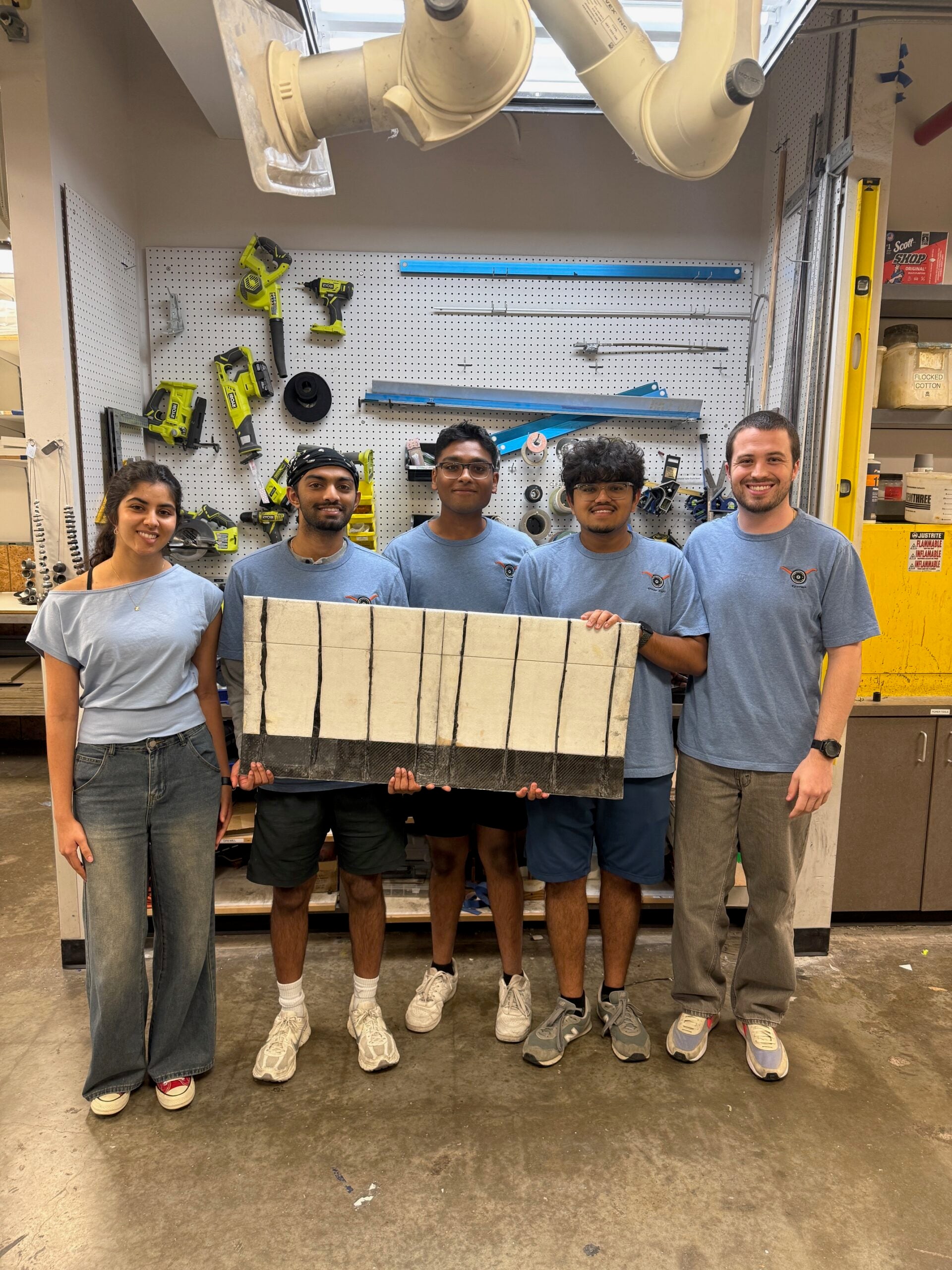
DARPA Heavy Lift summer team