From Propellers to Possibility
For students in aerospace engineering, a donation doesn’t have to be large to make a difference.
Sometimes, it looks like a propeller.
A $193 purchase of APC propellers helped provide parts for an ASE Senior Design II project, giving students the components they needed to turn a design on paper into something they could build and test.
Other gifts help students work with the same tools and technologies they may encounter in the aerospace industry. A $980 NVIDIA GeForce graphics card upgraded a computer in the Aircraft Systems Lab, allowing students to run X-Plane 12, a more advanced flight simulation platform than the lab’s previous systems could support.
For students, that upgrade means more than better graphics. X-Plane 12 serves as the software-in-the-loop simulation environment for Mission Planner, the interface students use to control unmanned aerial vehicles they build in the lab. Students can develop and test their aircraft in simulation, tune their autopilot and evaluate mission plans before taking their aircraft into the field.
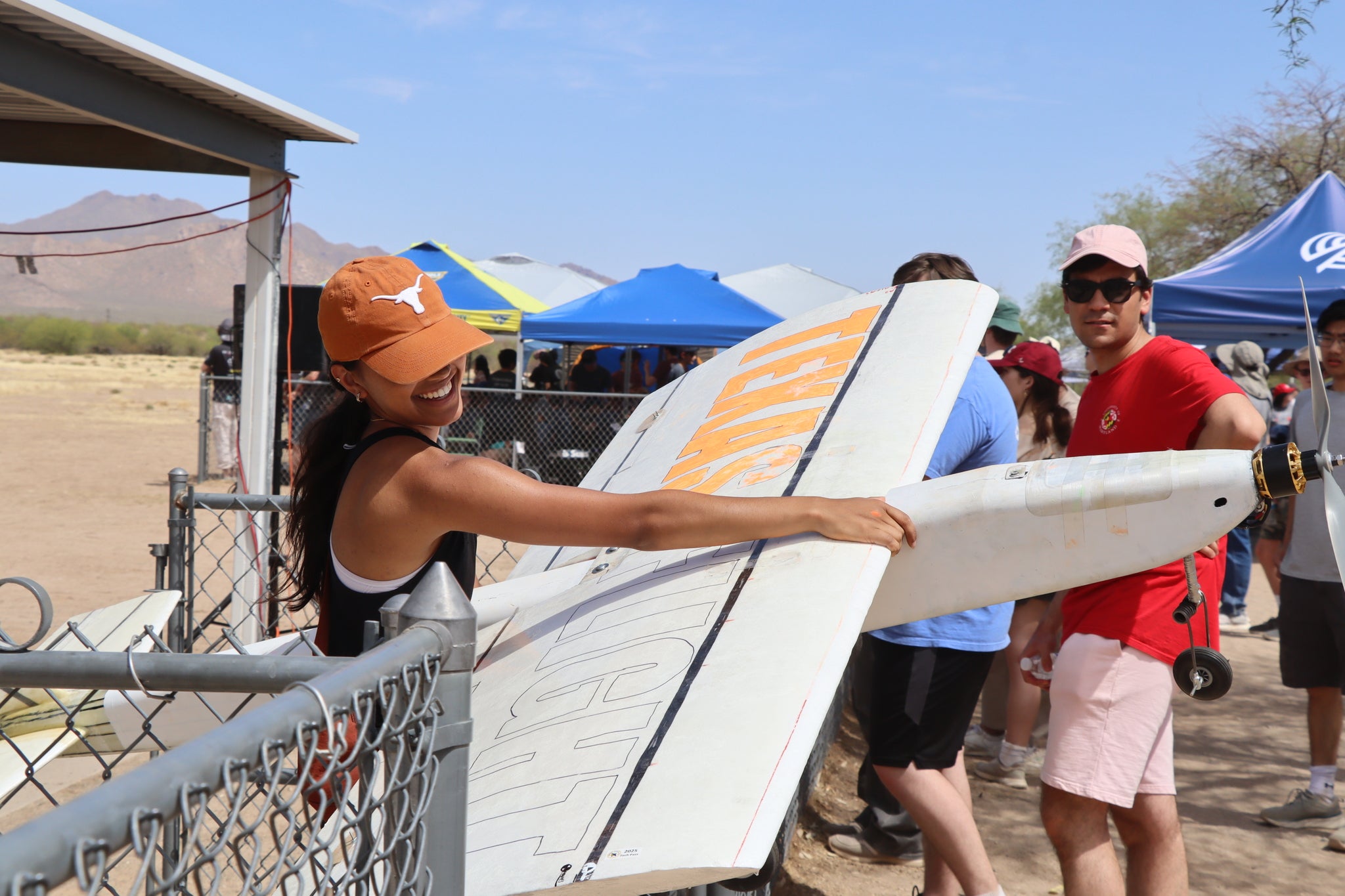
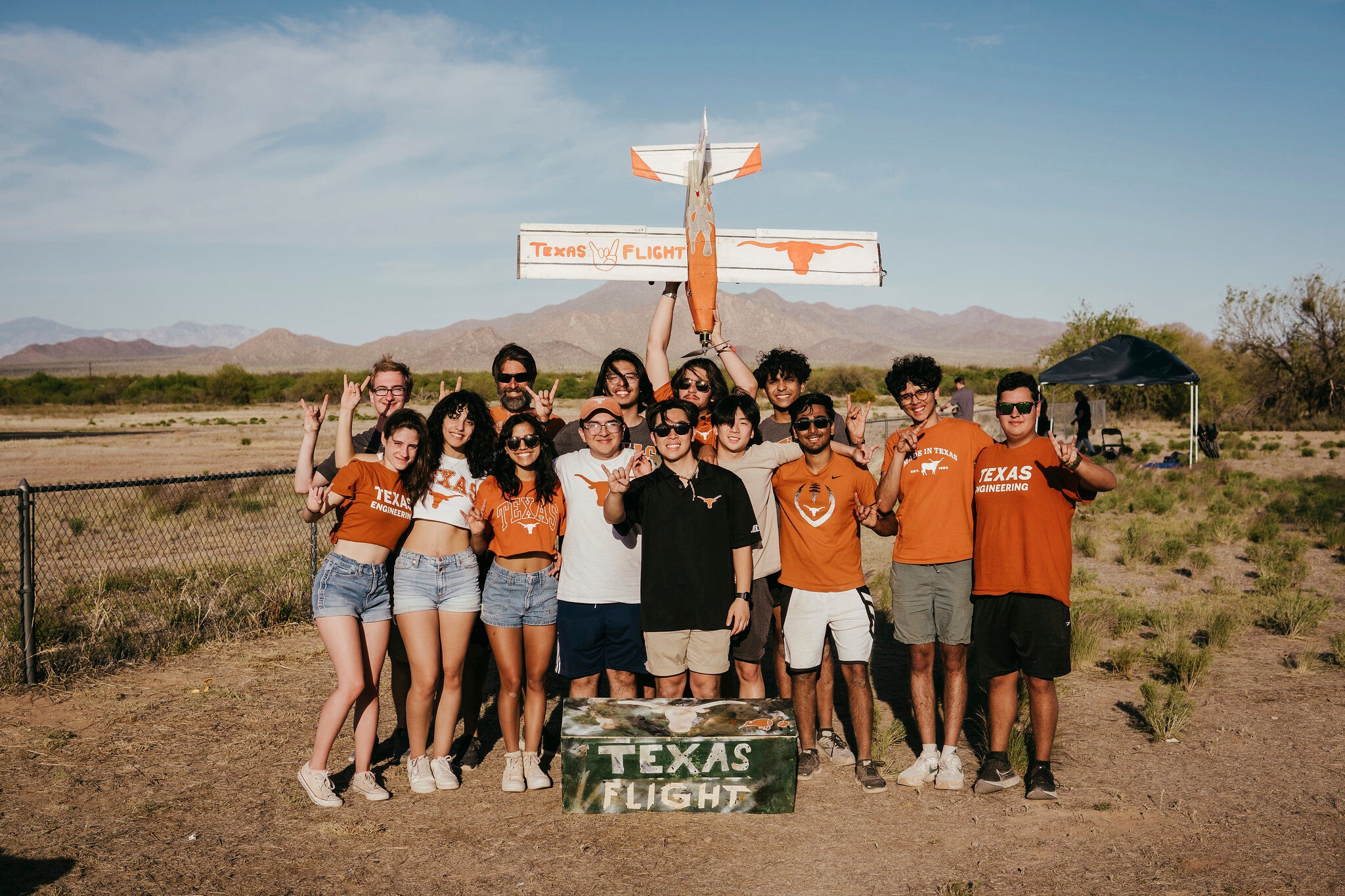
The upgraded system also gives students across the department more opportunities to experiment. Texas Flight, the design-build-fly student organization, has used X-Plane to model aircraft and test unconventional designs. Students in feedback controls have also used the simulator to test their code before installing it on the lab’s new VR flight simulator.
And sometimes, a $728 gift can help students see a problem before it becomes one.
A compact thermal camera gives students an infrared view of the electronics and wiring they assemble, allowing them to identify areas of excessive heat that might otherwise go unnoticed. Because wiring is part of nearly every project in the Aircraft Systems Lab, the tool can benefit students across a wide range of teams.
“These hands-on learning experiences turn a student into an engineer and prepare them for the next level,” said Daniel Deans, president and chief operating officer of MORI Associates, ASE/EM alumnus and member of the Department of Aerospace Engineering and Engineering Mechanics External Advisory Committee. “That is all set up through the generosity of our alumni. Again, there is no gift that is too small. They all make a difference.”
Three purchases. Less than $2,000. Countless opportunities for students to build, test, troubleshoot and learn.
That’s the power of giving to aerospace engineering at The University of Texas at Austin. A gift doesn’t simply purchase equipment. It puts tools in students’ hands, turns classroom concepts into real-world engineering experience and gives the next generation of aerospace engineers the chance to build something of their own.
For Deans, giving is personal. His father, a professor and advocate for undergraduate students, taught him early about the importance of giving students the foundation they need to succeed.
Daniel Deans
Giving is an affair of the heart, and generosity is an investment in others, which is always the most satisfying
And that impact reaches far beyond the lab.
As Texas continues to cement its place as a global aerospace hub, the state will need engineers who are ready to design the next aircraft, spacecraft, autonomous system and technology we haven’t imagined yet. Their work starts here, with the opportunity to learn by doing.
Every propeller, piece of equipment and upgraded computer is part of something bigger: preparing students to help shape the future of aerospace in Texas and beyond.
Whether it’s $193 or $1,000, a gift helps propel that future forward.
And when we give together, we help Texas continue to lead the way in aerospace.