
Leading by Example: George Davis on the Future of Aerospace
The president of the Academy of Distinguished Alumni reflects on leadership, the growing role of software in the space industry, and preparing the next generation of aerospace engineers.
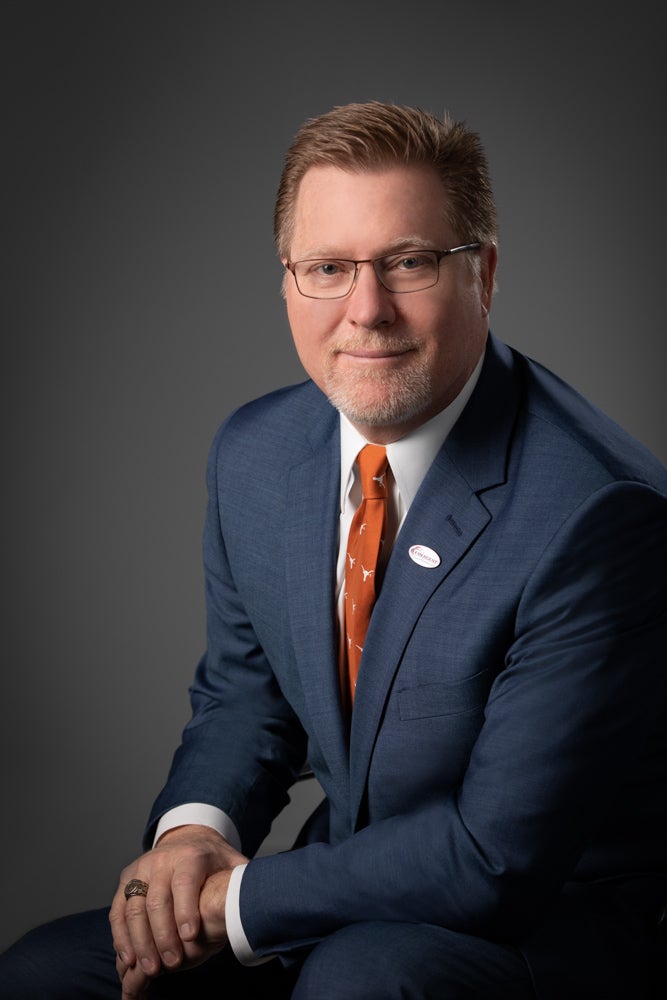
George Davis, Vice President of Software Engineering at York Space Systems, Inc.
The Academy of Distinguished Alumni was established in 2019 to recognize ASE/EM graduates whose careers exemplify leadership, innovation and service. With almost 100 academy members, the gamut of career paths runs from highly trained astronauts and fighter pilots to cutting-edge researchers and entrepreneurs.
This year, George Davis (B.S., M.S., Ph.D. aerospace engineering), vice president of software engineering at York Space Systems, Inc., serves as president of the academy. Throughout his career, Davis has led teams developing software for satellite missions while championing the next generation of aerospace engineers. He spoke with Liftoff about the future of the industry, the growing role of software and AI, and how the Academy hopes to inspire current students.
Could you tell us about your role at York Space Systems?
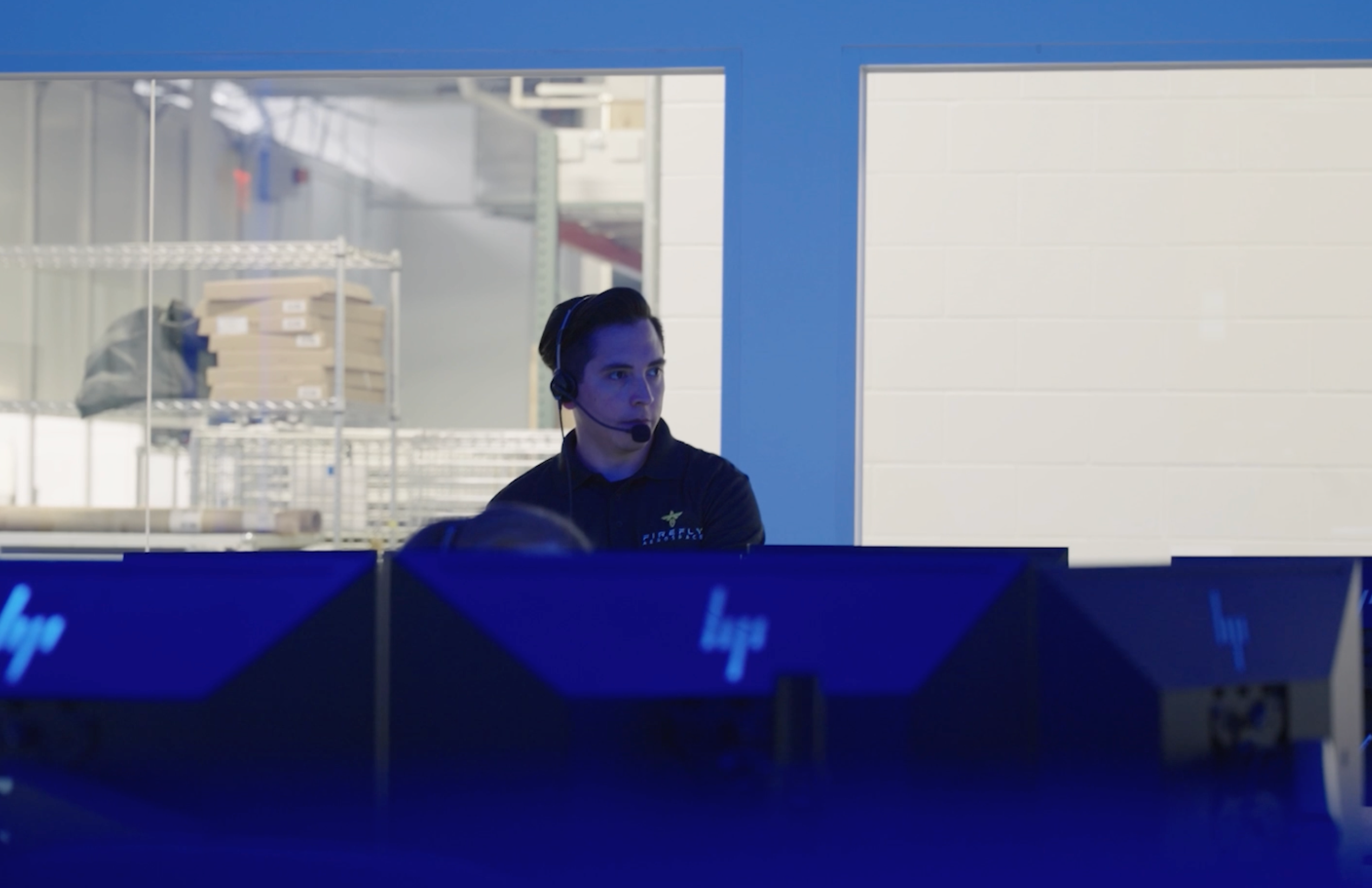
I’m responsible for the flight software that goes on satellites, the ground software that goes into the mission operations center, and the simulation software that’s used to test this software as well as our space vehicles. So, I have a lot of responsibility, but thankfully, I don’t have to write code myself!
Outside of setting the vision and strategic direction for my division, my work mainly consists of managing the managers, communicating status up to the CEO and horizontally to the other vice presidents, and then communicating information that comes from above back down below to my team.
It’s really orchestration and management. I’m way past my engineering problem-solving days, but I was once a really good aerospace engineer myself and I’ve been around for a long time, so I know the right questions to ask. I have accumulated decades of experience from doing my own work, then running teams, then running a company and now running a division in a much larger, publicly traded space company.
What’s the most exciting part of your work in aerospace right now?
The most exciting part of my job is seeing how critical software has become in the aerospace industry and being responsible for the software that keeps over 50 satellites in orbit at our company. We have three different constellation planes in space right now, plus a couple of individual satellite missions that are separate.
Our software, along with York’s mission operations team, manages them all. It turns out there’s a lot that has to be done to manage constellations of satellites as opposed to just one. And it’s only going to get more complex. When you think about how SpaceX has thousands of Starlink satellites in orbit, the only way you can manage them all is with really good software. It is becoming the critical part of space flight. Automation, autonomy and AI are all accomplished through software.
What excites you about the future of the aerospace industry?
First, its commercialization of the industry. Companies are now doing things that once only government space programs were capable of achieving. I think this is necessary to the long-term industrialization of space. Second, it’s the seriousness about going back to the Moon and having something permanent there. It has been talked about for so long, and I’ve been around long enough to have seen all the starts and stops. We seem to be more earnest about it, politically and commercially, and so the opportunities for jobs in the aerospace industry seem limitless now.
How can students and young professionals best prepare themselves to enter the workforce?
I tell all the students who come talk to me to learn to write software. Even if it’s just Python. And even if it’s not going to be your main job. Learn something about it, i.e., about how it is used now and how it will be used in the future.
I remember doing hand calculations in school and then writing Fortan and MATLAB code for orbital mechanics early in my academic career. Now there’s commercial software for this. We rarely write code to do these things anymore. We either buy it or use open source. However, there is so much other code to write. So just be aware of how, when and where software is used, and where it’s going to go.
On that same note, experiment with AI, be smart about it and understand its limits. Don’t treat it as if it’s this omniscient entity that knows everything, because it doesn’t. We’re doing projects with it, and it’s quite clear that it can hallucinate, so you have to have senior-level people review what goes in to the model and what comes out of it. So much of the future is going to be wrapped around software technology, and this inevitably includes AI; you should not be ignorant of it — that’s a practical thing.
I still think the most important skill students can develop is how to communicate well. In the workplace, being able to communicate ideas, plans, designs, results, etc. is important. I encourage everyone to read books. The more you read, the better command of the language you have, and the better command of the language you have, the more effectively you can communicate. I see that at the executive level for sure — people who are better communicators tend to rise up as a result. A lot is changing in this industry, but that is one thing that is still essential.
What does it mean to be part of the Academy of Distinguished Alumni?
It’s humbling. There are astronauts, general officers, entrepreneurs, and world-class engineers and scientists. Sometimes I think, “how did I get in here again?”
The academy reflects what’s possible with an education from our University and our department. The people who are going into UT are so high quality that it shouldn’t be that unusual that some graduate and do great things, but when they do, we want to recognize them. Look at the people that came out of ASE/EM and did all these amazing things! You get out what you put in; you can’t put in cheap materials and somehow produce distinguished alumni like ours. That doesn’t just happen.
I hope current students and young alumni can feel proud that their school has these people in it. Each of the academy members were just students at one time, just regular people, but they went on to do amazing things, and therefore, it’s possible for current students to do it, too.
That’s why I think it’s important for us to find more women for the academy, because I want the young women who are entering undergraduate or even graduate school to see that and say, “wow, they did it. I could do that, too.”